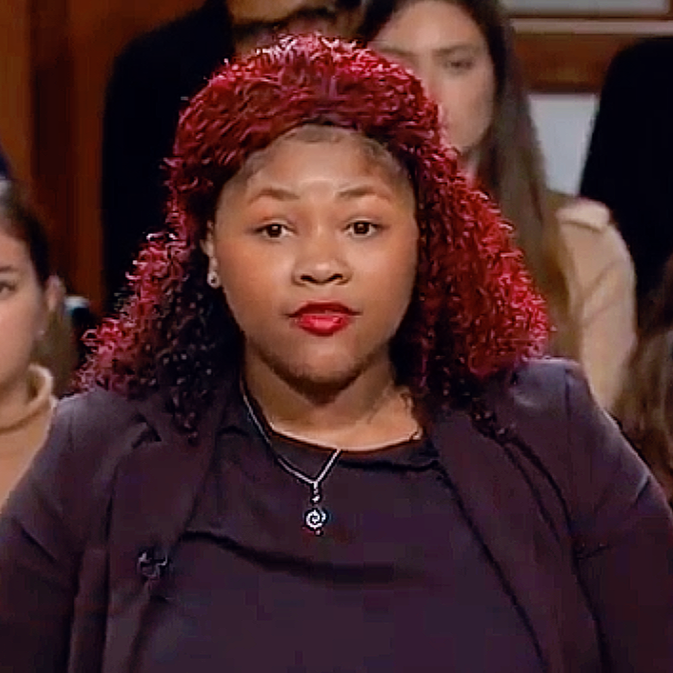
By the time Alicia Alexander’s case reached Judge Judith Sheindlin’s courtroom, the argument had already moved through a family home, down a roadway, and into the hands of police. At the center was a complicated relationship: two women, children with the same man, a disputed phone, and sharply different accounts of what happened one December night. Before the hearing ended, the court would also hear a second dispute involving a $4,000 payment, a mobile home that allegedly could not be titled, and a seller who did not own the property.
Together, they showed how private conflict can become a legal dispute—and how testimony can unravel when the sequence of events does not remain consistent.
Case One : Alexander v. Benton
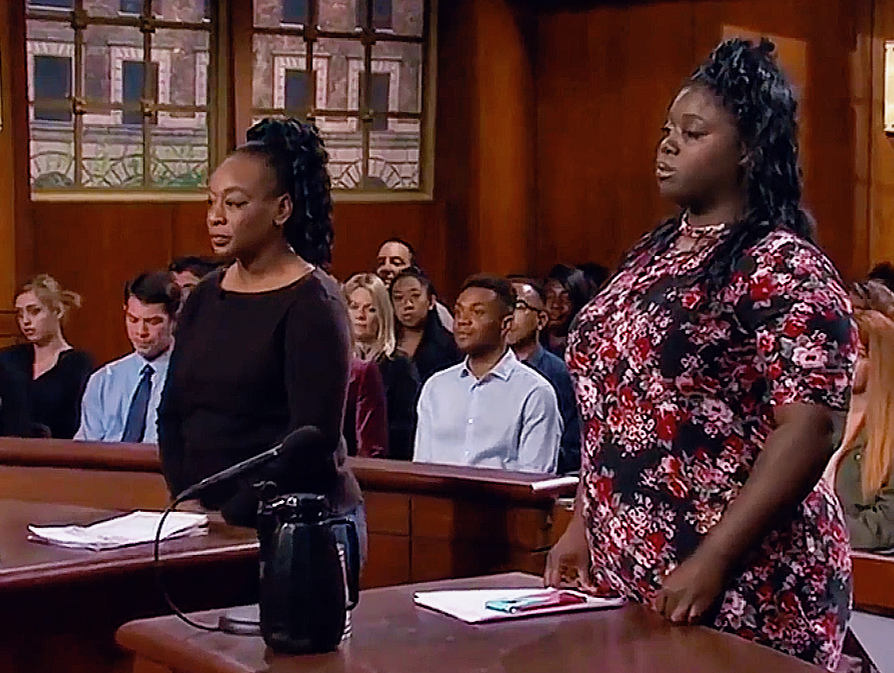
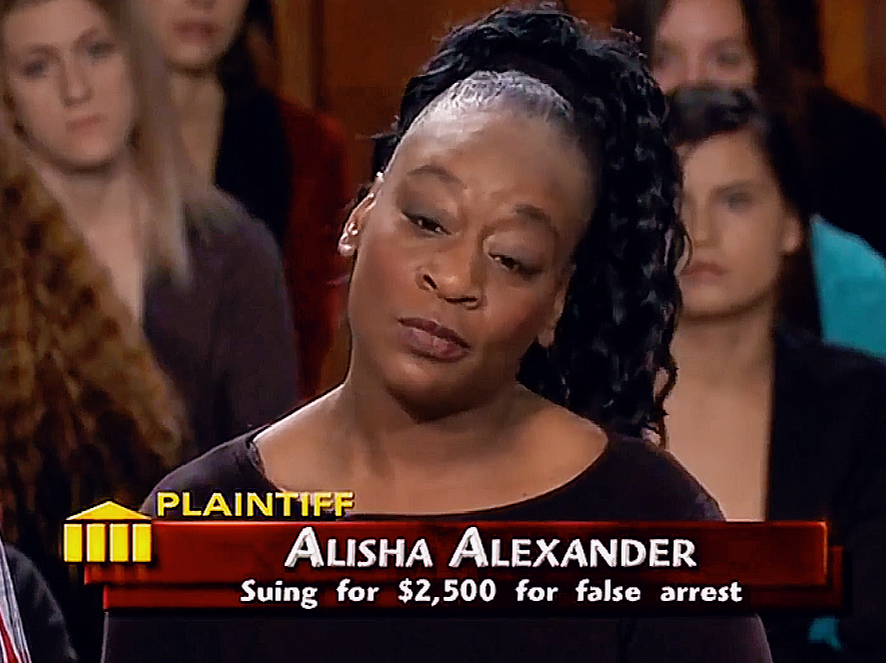
The first dispute was identified in court as Alicia Alexander v. Cornelia Benton. Alexander sued Benton over what she described as a false arrest. The hearing quickly established that the conflict was connected to a long-running and unstable relationship involving a man who had children with both women.
Judge Sheindlin called the man to testify. He was identified as 28 years old, working as a cook and earning approximately $500 per week. He said he had been living with Alexander for several years. Before that, he had lived with Benton, and he acknowledged having four children with Benton and two children—twins—with Alexander.
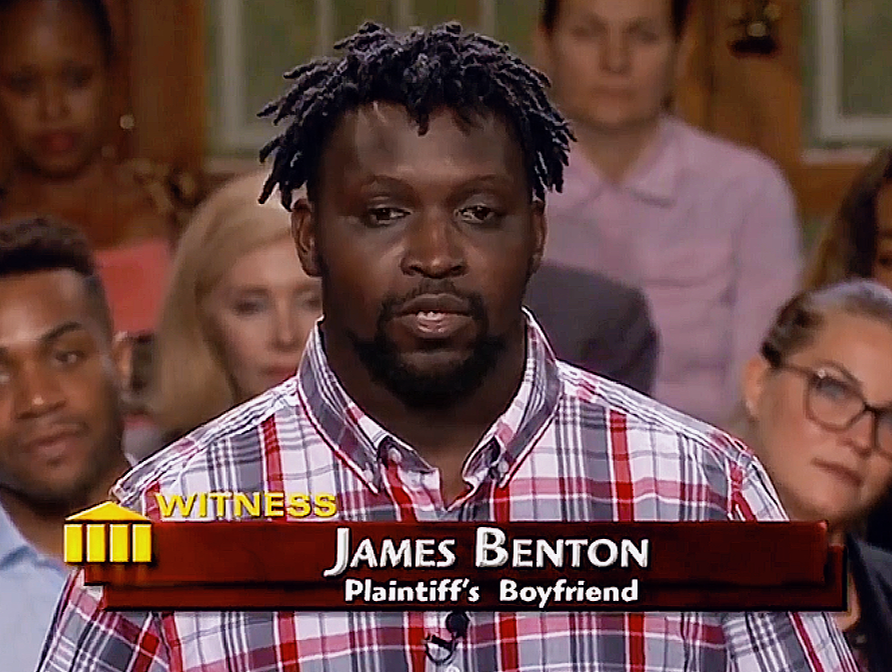
The testimony also made clear that the two relationships overlapped. When asked whether he had been involved with both women at the same time, he answered yes. He said they did not know about each other at first, but that the situation became known shortly before Alexander became pregnant.
Benton testified that she and her children had also been living with her sister. Under questioning, she acknowledged that she and the man had shared a room in January, even though he was also living with someone else. She described him as her husband and said she had allowed him to stay because he needed a place. When Judge Sheindlin pointed out that needing a place to stay did not require sharing a bedroom, Benton responded that she had loved him at the time.
She also described the arrangement as something that had happened “on and off” and admitted it had been a bad decision. That testimony supplied the backdrop to the confrontation: overlapping relationships, children in the household, temporary housing, and unresolved resentment among adults who continued to encounter one another.

What happened on December 19
The central incident took place on December 19, according to the hearing. The man said Alexander drove him to the home of Benton’s sister. He explained that he was being dropped off because he was temporarily staying there. After spending time away for what was described as a birthday, he returned to the area with Alexander at approximately 8:00 or 8:30 p.m.
Benton gave a different account of the moment Alexander arrived. She said Alexander pulled into the yard quickly while playing loud music. Benton said she went to the door and responded because Alexander was speaking loudly. She then described Alexander backing up rapidly and said the vehicle nearly struck her as she walked toward it.
Judge Sheindlin repeatedly pressed Benton on why she had left the front door. Benton initially said she had walked toward Alexander’s car. The judge noted that Benton knew who Alexander was and that the man had already exited the vehicle. Benton said Alexander had been calling her names, which made her angry.

The confrontation then moved away from the house. Benton said the man ran through a path toward the next street and that she chased him. Her younger brother, identified in the courtroom as Court Travius, encountered them while he was on the phone. According to Benton, he said the police wanted to speak with her.
Benton said she stopped chasing the man and took the phone so she could speak with police about what had happened. She also said the children inside the home had become frightened and called the police because they believed a fight might occur. The judge characterized the scene as sufficiently alarming that the children feared the adults were about to fight.
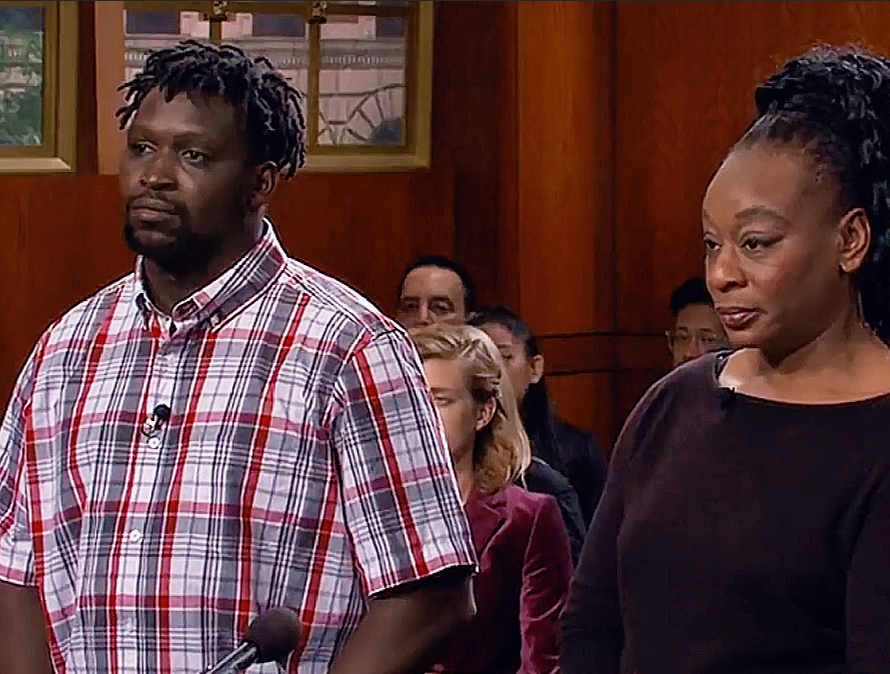
Benton then described Alexander driving up the road and nearly hitting her and her brother. Benton said she and her brother moved out of the way. She said Alexander returned to the residence, where Benton’s sister came outside.
At that point, the testimony became especially important. Benton said Alexander remained in her vehicle while Benton returned from chasing the man. Benton said she was holding her brother’s phone because she was speaking with police. She later testified that Alexander got out, kicked toward Benton’s sister, and that Benton’s sister kicked back. Benton said she pushed her sister away while still holding the phone. She then claimed Alexander grabbed the phone from her hand, closed the car door, and drove away. Benton said police stopped Alexander farther down the road.
The phone, the police report, and conflicting accounts
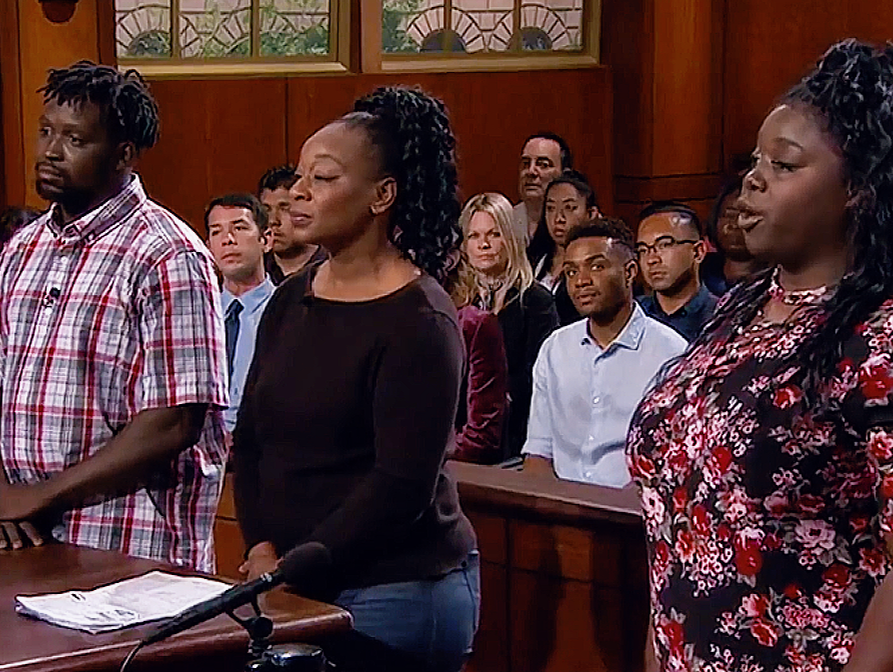
The court’s focus shifted from the emotional history to the reliability of Benton’s account. Judge Sheindlin examined what Benton had told police and compared it with what she had said in court.
Benton denied describing the phone incident as a robbery. She said she told police that Alexander had snatched the phone from her hand. The judge reviewed the police report and highlighted a discrepancy: in court, Benton had first described leaving the home, chasing the man, and later returning to the residence. The report, however, stated that Alexander had dropped him off, that Benton came outside, and that Alexander punched Benton in the arms.

When Judge Sheindlin asked about the alleged punch, Benton said that part had not come out when she was answering questions in court. She argued that the judge had told her to get to the point, so she had skipped directly to what she considered the main event. But the explanation did not resolve the larger problem: the sequence and nature of the alleged physical contact had changed.
The judge also noted that the responding officer had observed no marks, bruising, or other visible evidence of an assault. Benton did not go to a doctor or hospital after the alleged incident. She told the court that she spent a night and part of another day in jail, and that the arrest occurred months after the December report, sometime in March.
Benton maintained that she had not fabricated the phone allegation. She said Alexander did take the phone from her hand. Still, the court was weighing more than whether the phone changed hands. It was evaluating whether the report that led to Alexander’s arrest was supported by a consistent and credible account.
The ruling in the false-arrest case
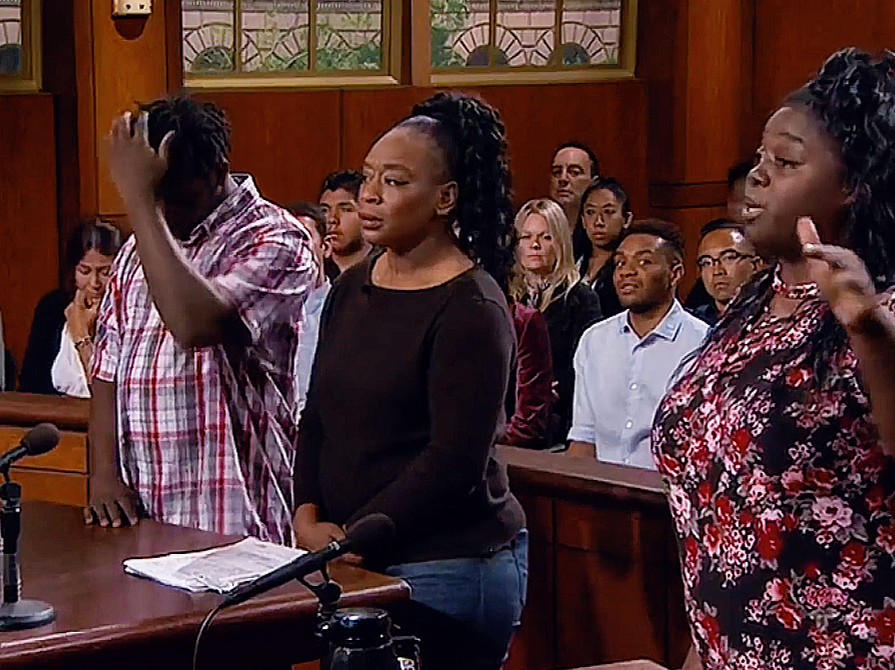
After questioning Benton about the phone, the alleged assault, the police report, and the absence of medical evidence, Judge Sheindlin ruled for the plaintiff. The judgment was $2,500 in favor of Alicia Alexander.
The transcript does not provide a separate written explanation of the legal theory behind the award. The ruling followed the judge’s examination of the inconsistent accounts surrounding the December confrontation and the arrest that followed months later.
After the judgment, the personal conflict continued in the courtroom. Benton said she wanted the man to give her the divorce she had been asking for. Alexander responded that although he might be Benton’s husband, he was Alexander’s man. Alexander also told Benton to stop texting and calling her every night and to leave her alone. The exchange underscored that the lawsuit had not erased the relationship conflict that brought the parties into the same courtroom.
Case Two : Whitworth-Lopez v. Owens
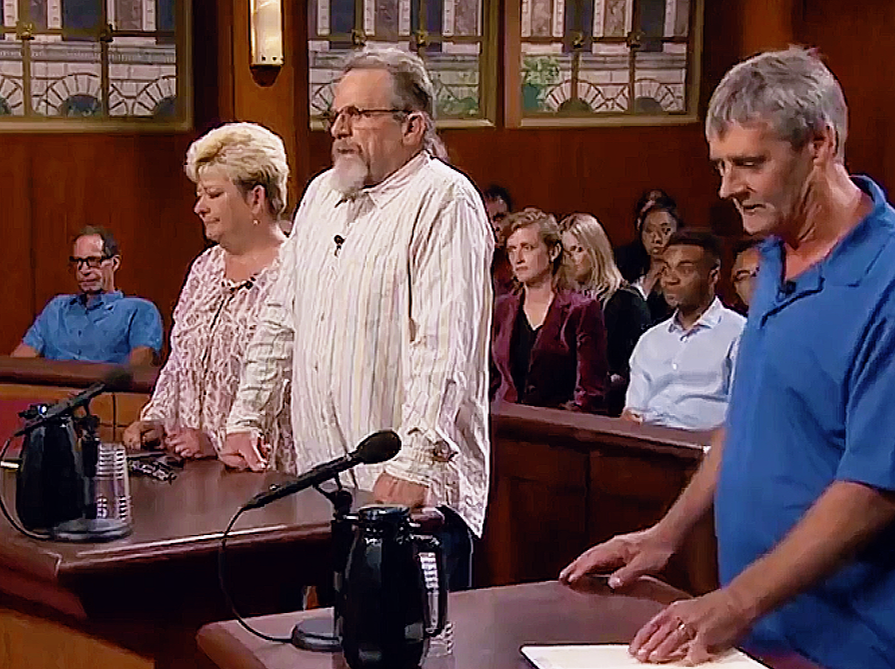
The next case involved James Whitworth and Connie Lopez against Kenny Owens Jr. The plaintiffs said Owens had scammed them in the sale of a trailer or mobile home. Owens filed a counterclaim for defamation of character and harassment.
Unlike the first case, this dispute centered on a transaction rather than a domestic confrontation. But it also turned on credibility, ownership, and whether a seller had the right to offer property for sale.

Whitworth and Lopez were described as being in an emergency housing situation. Lopez found an advertisement on Facebook for a mobile home. The property was listed for $4,500, and the plaintiffs gave Owens $4,000, according to the testimony.
Owens acknowledged listing the mobile home even though he did not own it. He identified the owner as Robert Brown. Owens said Brown was in the hospital and was losing the home because of back rent. Owens claimed that Brown was not capable of handling the sale himself, which was why Owens had listed it.
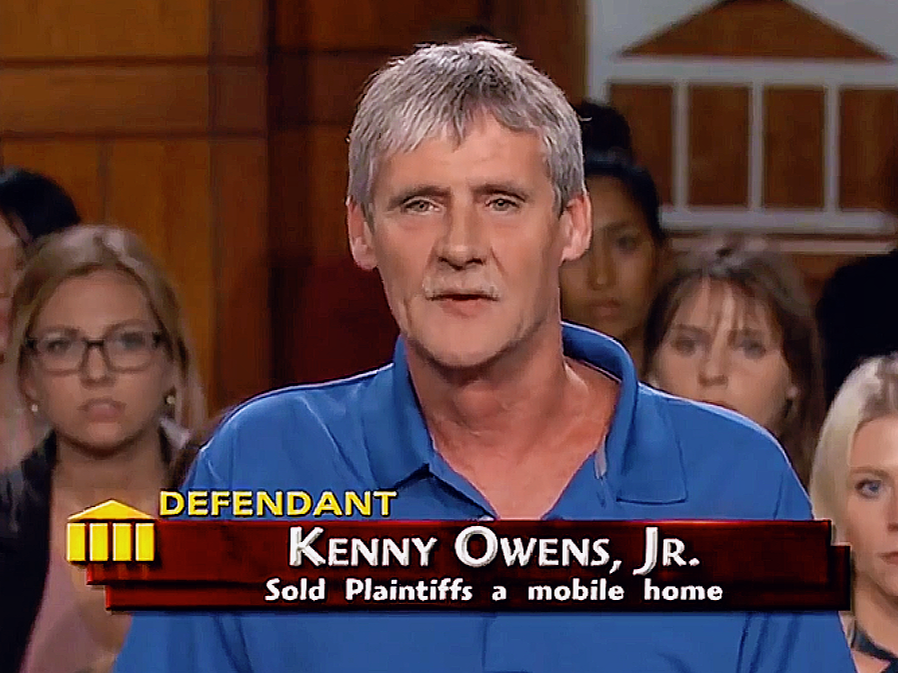
When Judge Sheindlin asked where the $4,000 had gone, Owens said he gave it to Robert Brown and hoped to get it back from him. The plaintiffs’ proof of payment consisted of a bank withdrawal. That evidence established that money had been withdrawn, while Owens’s explanation placed responsibility on a third party who was not the person who had received the judgment claim in court.

A mobile-home sale without clear ownership
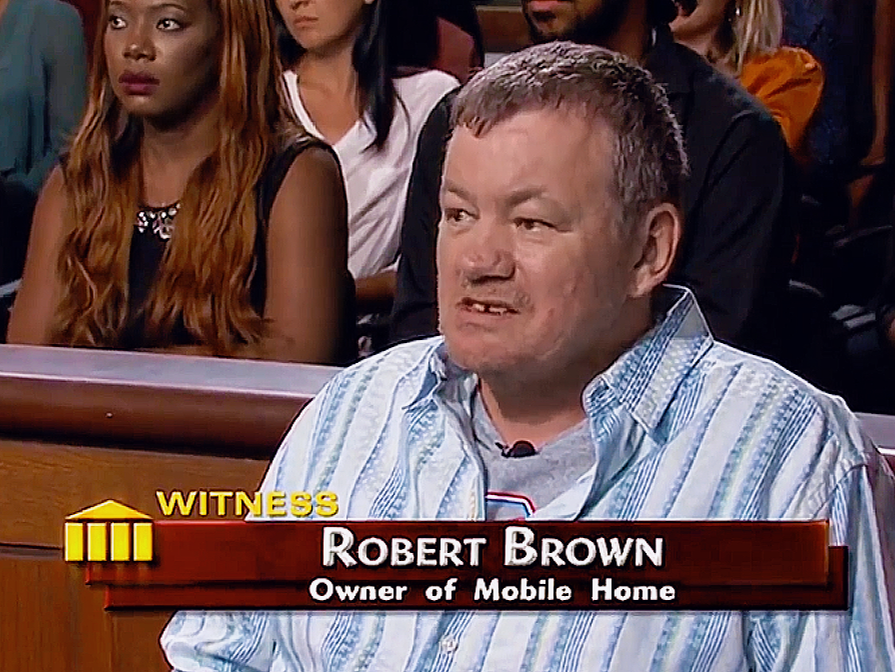
The ownership issue became decisive when the court examined the police report and brought Robert Brown into the discussion. Owens had said Brown was in the hospital, but Brown was present in court. When asked whether he was Robert Brown, the person confirmed that he was.
Brown said the mobile home had been sold to the complainants. But the plaintiffs did not have the property, and they did not live in it. Another statement indicated that the home had been resold after they left. The testimony left the court with a transaction in which the plaintiffs had paid money, the advertised seller did not own the home, and the property’s title status was unclear.
Judge Sheindlin asked repeatedly for the title. Owens first referred to taxes, but then acknowledged that he did not have a title. The testimony further indicated that there had been no title and no taxes paid, and that the property could not be titled. The mobile home had allegedly been in that condition for almost 12 years.
The court did not need to resolve every detail of the property’s history to decide the central dispute. Owens had offered a mobile home for sale without clear ownership or title, accepted money from the plaintiffs, and then faced a claim for the amount paid. Judge Sheindlin described Owens’s counterclaim as lacking merit because the plaintiffs had complained about a transaction involving property he did not own.
The court’s decision
Judge Sheindlin dismissed Owens’s counterclaim for defamation and harassment. She then entered judgment for the plaintiffs in the amount of $4,000.
Taken together, the two cases showed two different forms of courtroom exposure. In the first, a volatile personal dispute turned on conflicting descriptions of a confrontation and a police report. In the second, a housing emergency led to a payment for property that the seller did not own. In both hearings, Judge Sheindlin returned to the same basic questions: What happened, who had the right to do what they did, and what evidence supports the story being told?

FAQ
Who sued whom in the first Judge Judy case?
Alicia Alexander sued Cornelia Benton, alleging that Benton had her falsely arrested. The case involved a confrontation on December 19 and competing accounts about a phone, alleged physical contact, and the resulting police report.
How much did Alicia Alexander receive?
Judge Judith Sheindlin entered judgment for Alicia Alexander in the amount of $2,500.
What was the relationship between the people in the first case?
The testimony stated that the two women had children with the same man. He testified that he had four children with Cornelia Benton and twins with Alicia Alexander, and that he had been involved with both women at the same time.
What was the second case about?
James Whitworth and Connie Lopez sued Kenny Owens Jr. over the sale of a mobile home or trailer. They said they paid $4,000, while Owens acknowledged that he did not own the property.
What happened to Kenny Owens Jr.’s counterclaim?
Judge Sheindlin dismissed Owens’s counterclaim for defamation of character and harassment.
How much was the judgment in the trailer dispute?
The court awarded $4,000 to James Whitworth and Connie Lopez.