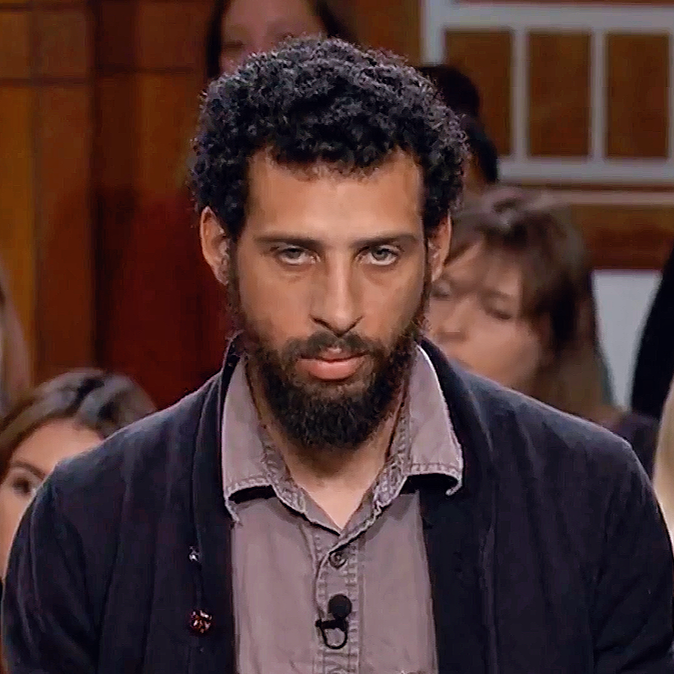
A gate opened. Two dogs rushed through. On another day, a tree came down—but the argument over what it damaged refused to stay in the yard. In two unrelated cases before Judge Judith Scheindlin, ordinary disputes over rent, animals, property damage, and unfinished work became tests of a more basic question: when something goes wrong, who is prepared to prove what happened?
Case One: The Tenant, the Dogs, and the Unpaid Rent
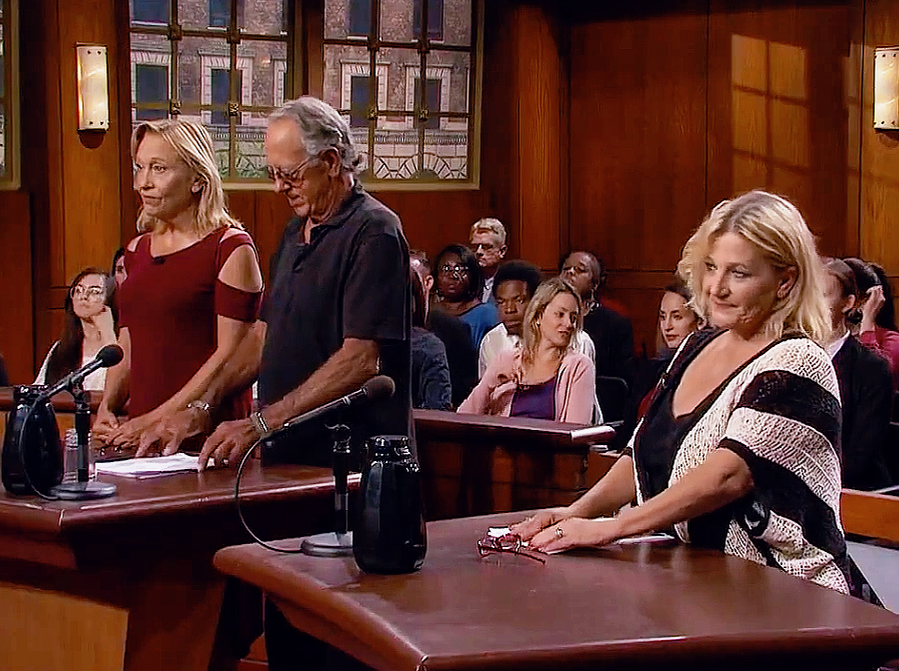
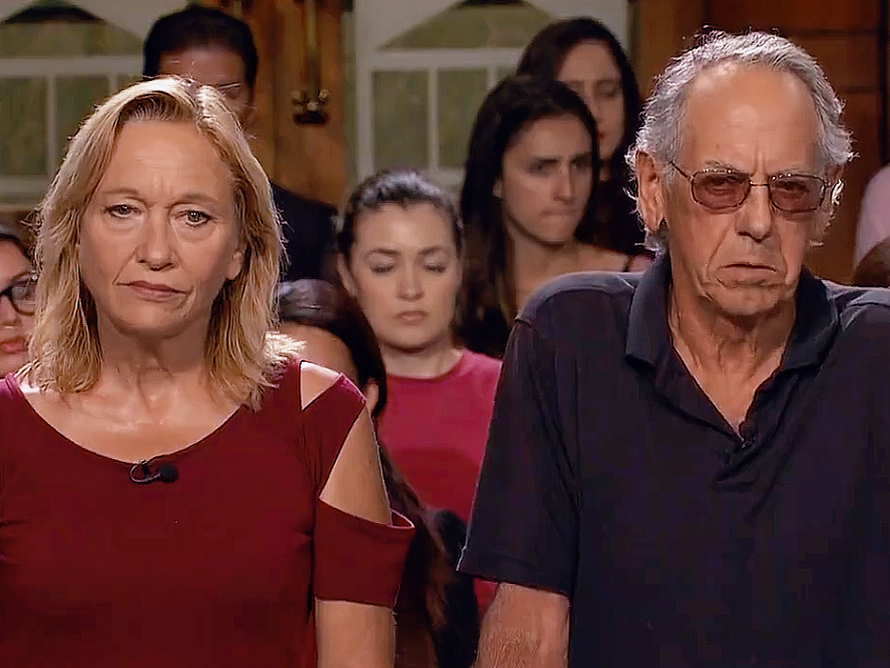
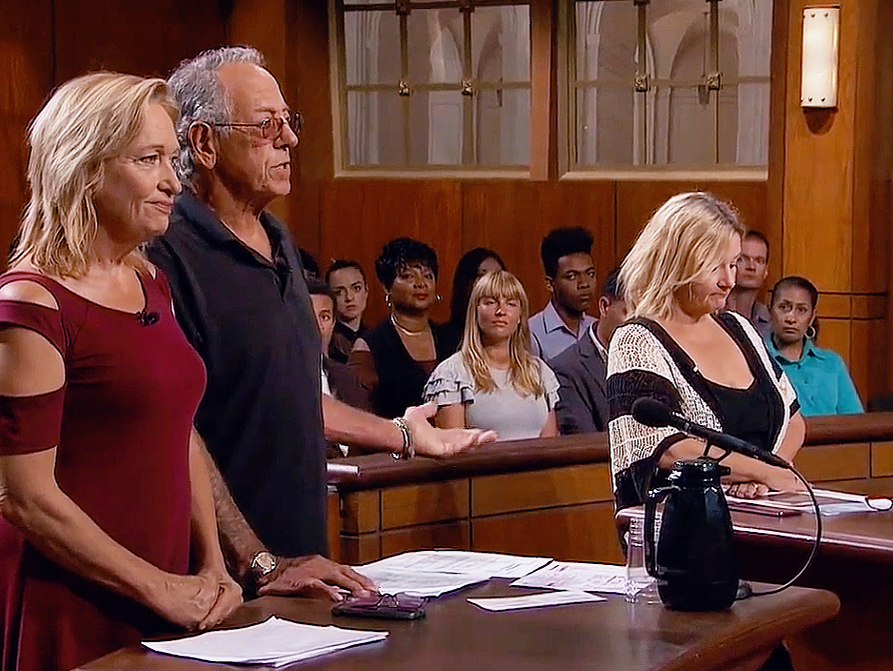
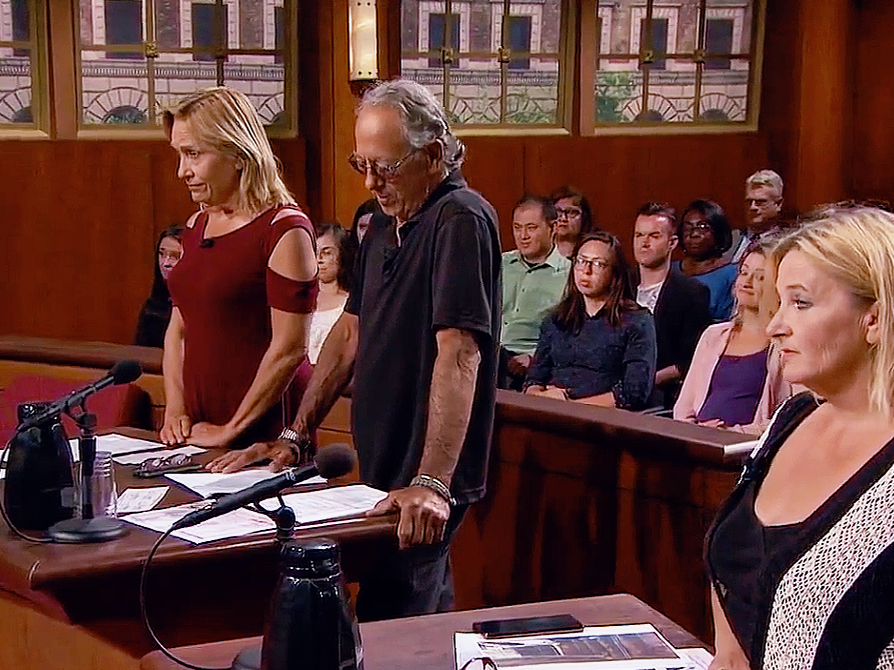
The first case, identified in court as Napolitano-Koch versus Dominick, placed Jerry Napolitano and his girlfriend, Elke Koch, against their former tenant, Michelle Dominick. The plaintiffs said Dominick owed money connected to car damage and a dog attack. The case also unfolded against a larger housing dispute: according to the testimony, Dominick had moved into the lower half of the property—a cabin or house—not an apartment—and had stopped paying rent after April.
Judge Judy began with the timeline of the tenancy. Dominick said she believed she had moved in during April. She described a difficult series of moves before that: a short period in Reseda, seven months in Tehachapi with her adult son after separating from her husband, and a life in Bakersfield with her husband before the separation. She said she did not work and supported herself through Social Security disability benefits. Earlier in the year, she had briefly tried working at a grocery store for a couple of months.

The central financial question was simple: when had she last paid rent? Dominick answered May, then hesitated when the judge pressed her about the date and the months that followed. Judge Judy summarized the plaintiffs’ position: Dominick had paid for April, had not paid in May, June, or July, and was still in the property while the owners were attempting to evict her.
The exchange became tense when Judge Judy described living in someone else’s property without paying rent as squatting. Dominick disagreed, but she also acknowledged the basic obligation to pay rent. She said “circumstances” had intervened. The judge rejected that explanation, emphasizing that the owners had rented the space because they needed additional money and were being forced to spend time and money pursuing an eviction.

Michelle Dominick’s Housing History
The housing issue was not formally the eviction case before the judge, but it shaped the courtroom’s understanding of the dispute. Napolitano and Koch were not relatives of Dominick. Judge Judy repeatedly returned to the fact that this was a private rental arrangement—not an informal arrangement with a family member. When Dominick said she wanted to leave, the judge’s response was direct: if she could not afford the rent, she needed to move out.
The plaintiffs said Dominick had received papers connected to the eviction process. There was confusion over whether a housing-court date had been set or missed. Napolitano said she had not responded, while Dominick said she had not been aware of a date. She explained that she was using document-preparation help from paralegals rather than a lawyer. Judge Judy advised the plaintiffs that if they wanted to remove a tenant efficiently, they should get an attorney, while also making clear that the lawsuit in front of her concerned different claims.
That distinction mattered. The courtroom could not simply turn the damages case into an immediate eviction order. Still, the testimony showed how the unpaid-rent conflict had become the backdrop for every other disagreement between the parties.
The July 6 Dog Attack
The second part of the case concerned two dogs Dominick had brought to the property: a pit bull and a smaller black dog that she called a “wiener dog,” which Judge Judy identified as a dachshund. Dominick acknowledged that the smaller dog bit Koch and that the larger dog knocked her down.
Koch described the incident as taking place on July 6. She had returned home from work the previous day and was outside watering plants in the morning. The dogs’ gate was next to the area where she was taking the hose from the wall. According to her testimony, the gate jammed open. The dogs then came through and attacked without much barking, jumping onto her.
The property’s separation had already been a problem. When Dominick first moved in, there had been one gate. After the dogs escaped through it sometime in April, Napolitano insisted that another gate be installed to secure the entrance. Koch testified that on July 6 the dogs managed to open or squeeze through both gates. She said she was on the property where she lived with Napolitano when the attack happened.

Koch said the pit bull pushed her off balance and caused her to land on her back. The smaller dog bit her foot. She went to the emergency room, received shots, and had the foot X-rayed. She testified that the tendons became swollen and that the injury later became infected. Koch also said Dominick never came over to apologize and did not answer emails seeking a response. She showed the court an email that, according to the discussion, referred to insurance, although the testimony became disputed over whether the message had been received.
Napolitano said he helped Koch after the attack, pushed the dogs back into Dominick’s area, closed the gates, and brought Koch upstairs to administer first aid. The testimony did not establish a separate medical judgment in the excerpt, but it established why the dog incident became part of the plaintiffs’ broader claim against the tenant.
The Car-Damage Claim and the $3,000 Judgment
The case was introduced as involving both car damage and the dog attack. In the courtroom exchange, however, the rent dispute and the attack received the most attention. Judge Judy was openly skeptical of Dominick’s explanations about payment, the housing process, and her plans to leave. She also dismissed an argument about a dog crate as irrelevant to the decision.
When Dominick asked whether she could step out, the judge told her the hearing was over. Judge Judy then entered judgment for the plaintiff in the amount of $3,000. The transcript does not provide a separate itemization explaining how that figure was divided among the claims. The case ended with Napolitano and Koch receiving the judgment and Dominick leaving the courtroom.
The result was not an eviction order. It was a monetary judgment in the damages case. That difference is important: the testimony described an unresolved housing process, while the ruling addressed the lawsuit before the court.
Case Two: The Fallen Tree and the Damaged Porch
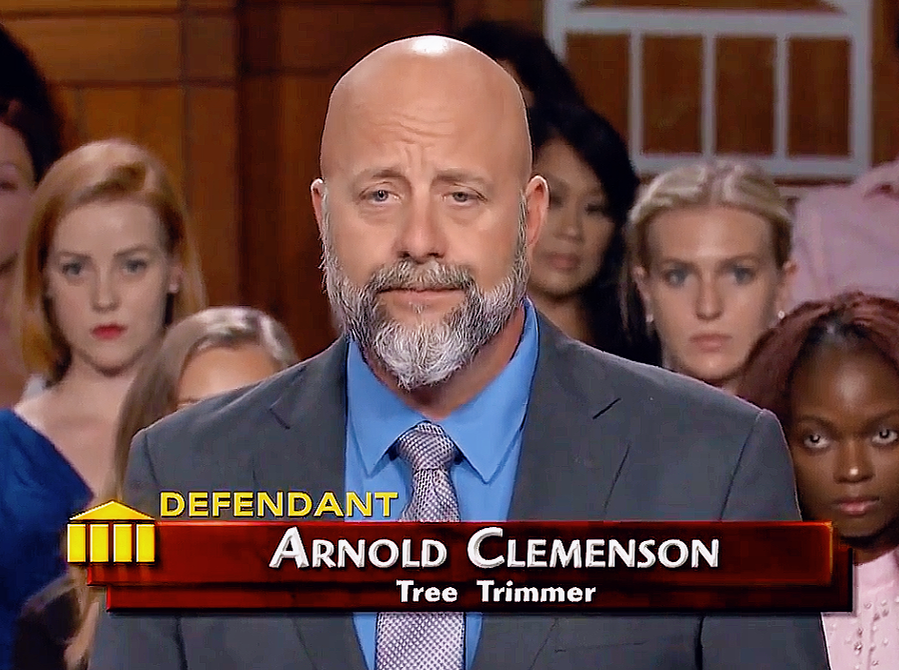
The next case shifted from a tenant dispute to a property-damage disagreement between Ming Hang and Arnold Clemenson, a self-employed tree trimmer who operated Leaning Trees Tree Service. Hang said Clemenson damaged his back porch while cutting down a tree. Clemenson countersued for the unpaid balance of the job.
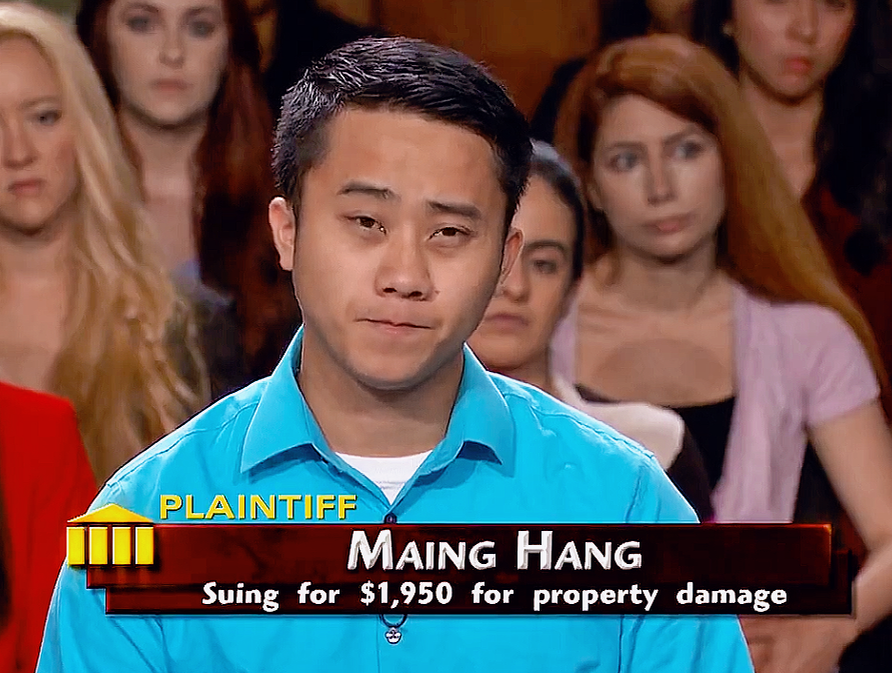
Clemenson testified that he had been trimming trees for 15 years. Hang hired him to remove a tree from the backyard. The estimate was $1,500, and Hang paid $1,000. Clemenson said the tree was dropped on April 21. He did not consider the work complete until he returned approximately a week and a half later—around April 30, he believed—to pick up the debris.
The delay, he explained, was caused by approximately two feet of snow. The truck could not get in until some of the snow melted. Hang’s claim was that part of the tree fell onto the back porch, damaging the deck and siding. Clemenson’s counterclaim was for the remaining $500.
What Happened on April 21
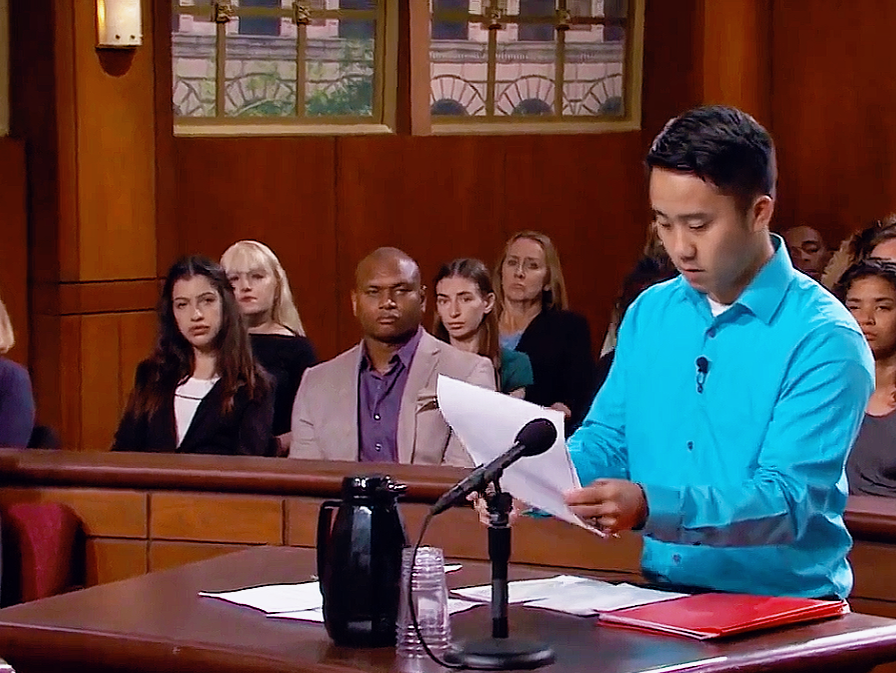
Hang said he discussed the damage with Clemenson after the tree came down. According to Hang, Clemenson said he would return within about a week, take the remaining $500 after finishing, and repair the damaged deck after the brush was removed. Hang described a series of later texts and emails in which he asked when Clemenson would return, whether he had matching siding, and when the broken patio or deck would be addressed.
Judge Judy reviewed messages from April and May. One message dated April 25 referred to a daughter’s birthday party planned for May 6 and asked when the crew would return. Another exchange on April 27 concerned transportation and the need to wait until the following week. Clemenson characterized the messages as part of an investigation process: he said he had been trying to determine how the damage could have appeared after he left.
The judge focused on the language in those messages. If Clemenson was asking whether there was spare siding and saying he would match the piece as best he could, Judge Judy reasoned, those statements suggested that he recognized a problem requiring repair. She also pointed to a message in which Clemenson offered Hang the choice of keeping the $500 and fixing the damage himself—or having someone else do it.
Clemenson maintained that there had been no damage to the deck or house on the day he dropped the tree. He said he had video evidence showing the condition of the property. He further testified that he had personally inspected the deck and house before leaving and that a technician later called to report damage. He said his messages were an attempt to catch Hang in a lie rather than an admission of responsibility.
Texts, Video, and the $1,750 Award
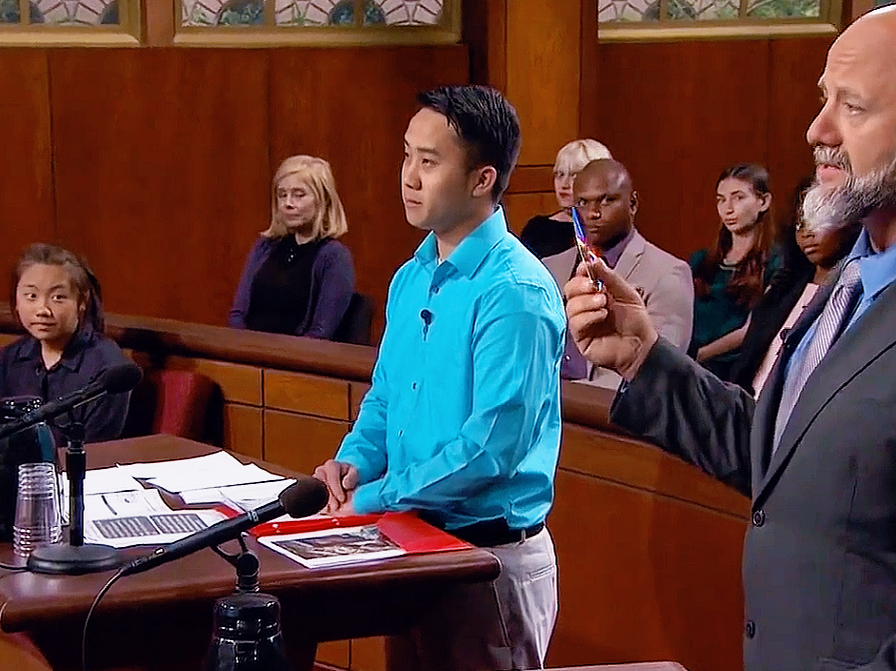
The court examined photographs and video. Hang pointed to the location where he said the damage appeared, near the steps and a section of siding. He had not yet repaired the damage and presented an estimate for the siding and deck. When Hang mentioned lawn damage as well, Judge Judy cut that issue off, saying she was interested only in the deck and the single piece of siding connected to the lawsuit.
Clemenson’s defense did not persuade the judge. Judge Judy criticized his refusal to acknowledge a mistake and told him that a responsible business owner should say, in substance, “I made a mistake. I’ll fix it.” She also rejected his attempt to frame the communications as merely investigative. The judge said the messages supported the conclusion that the deck and siding damage resulted from his negligence.

The court awarded judgment for the plaintiff, Ming Hang, in the amount of $1,750. Clemenson’s counterclaim for the unpaid $500 was dismissed. The judgment did not adopt every possible damage claim; the judge specifically limited the discussion to the deck and the piece of siding at issue.
Afterward, Clemenson said the judge had made the right call and that it was what it was. He repeated that he had been investigating and trying to catch Hang in a lie. The closing commentary also cautioned viewers not to hire people without a license and to take more pictures—a practical lesson that echoed the central theme of the case: documentation can become decisive when memories and explanations conflict.
What These Two Cases Showed
The cases were unrelated, but both turned on the gap between what someone said and what the record supported. In the first, the court heard a tenant acknowledge the duty to pay rent while the plaintiffs described months of nonpayment, a pending eviction process, and a dog attack. In the second, the court weighed a contractor’s denial against written communications, photographs, and a video showing the disputed area.
Neither dispute was resolved by dramatic evidence alone. The rulings followed the judge’s effort to separate the claims, test the timeline, and identify which explanations held together under questioning. One case ended with a $3,000 judgment over the tenant-related claims presented. The other ended with $1,750 for property damage and no recovery on the contractor’s counterclaim.
FAQ
What were the two Judge Judy cases in this episode segment?
The first was Napolitano-Koch versus Dominick, involving Jerry Napolitano and Elke Koch against tenant Michelle Dominick over claims connected to unpaid rent, car damage, and a dog attack. The second was Hang versus Clemenson, in which Ming Hang sued tree trimmer Arnold Clemenson over damage to a porch, while Clemenson countersued for $500.
What happened in the dog-attack case?
Elke Koch testified that on July 6, two dogs escaped through gates at the property. She said the pit bull knocked her down and the smaller black dog bit her foot. She went to the emergency room, received shots, and had the injury X-rayed. The court entered a $3,000 judgment for the plaintiff.
How much rent did Michelle Dominick pay?
According to the testimony, Dominick moved in during April and said she had last paid rent in May, but the discussion established that the plaintiffs disputed receiving that payment. Judge Judy concluded that she had paid for April and had not paid in May, June, or July.
How much did Ming Hang receive in the tree-damage case?
Judge Judy awarded Ming Hang $1,750 for the claims involving the deck and siding. Arnold Clemenson’s $500 counterclaim for the remaining job balance was dismissed.
What was the main evidence in the tree case?
The court considered Hang’s photographs, video, estimates, and text or email exchanges with Clemenson. The judge focused particularly on messages discussing spare siding, repairs, and the unpaid $500.