
A friendship cruise ended with one woman boarding a taxi, another standing with luggage in a Florida terminal, and a van caught in the middle. In the next case, an $800 sectional became the center of a dispute involving a house, a boyfriend, a U-Haul, and text messages whose authenticity was challenged in court. In both matters, Judge Judy was asked to sort out what friendship had blurred: money, property, and responsibility.
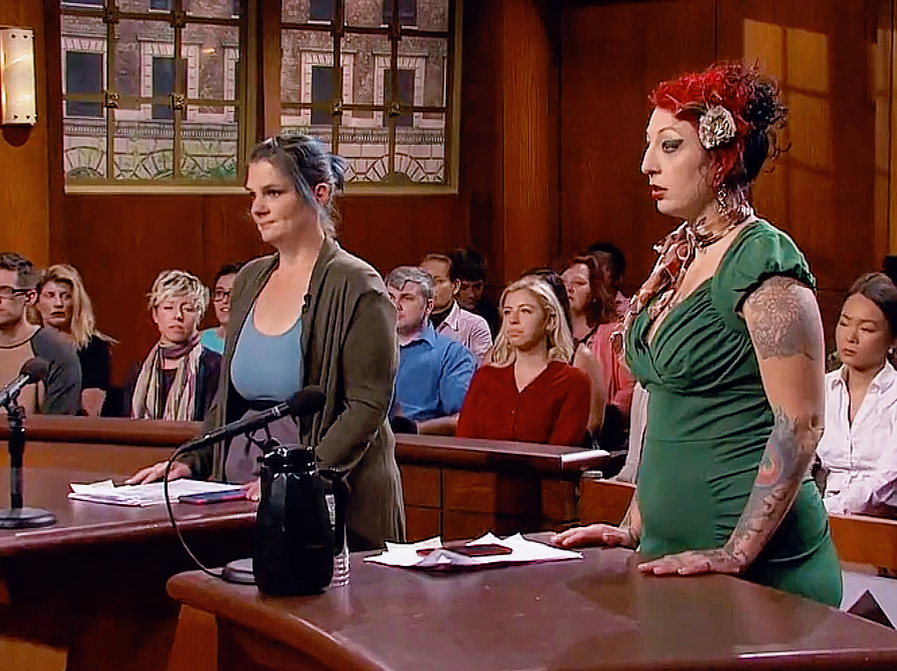
Case One : Jessica Baldwin and Jennifer Russ: The Cruise That Fell Apart
Baldwin testified that she and Russ were friends when Baldwin won a cruise for two through the Elite Players Group at a casino. The cruise was scheduled for March 26, and Baldwin invited Russ. The cruise and meals were covered; Russ was expected to pay her own incidental expenses.
Baldwin lived in Missouri, while the ship departed from Florida. The two women drove together, leaving Thursday night at 11 p.m. and arriving around 10 a.m. on Saturday morning. Baldwin said they shared the driving and used her van, which belonged to Baldwin and her husband.
Her husband did not go because the couple had two toddlers. Baldwin also said she had invited Russ partly to celebrate the opening of a tattoo shop they planned to open together. That business did not survive the conflict that followed the cruise.

About four days into the seven-day trip, Baldwin and Russ argued. Baldwin described the dispute as beginning after she suggested a promotion for the tattoo shop. Russ was unhappy with the idea, walked away upset, and, according to Baldwin, nearly every later conversation became an argument. For the remainder of the cruise, the two women either did not speak or argued when they did.
The tension also affected their plans for returning home. Baldwin wanted to leave the ship early on Easter Sunday so she could get back to her children. She said Russ had told her they might depart at 7 or 9, depending on whether their luggage was handled by the ship. Baldwin maintained that she communicated where she was when it was time to disembark.

The Van, the Keys, and the Financial Question
The dispute over the vehicle became central. Baldwin testified that the van’s key had been hanging from a lanyard on a wall. During the cruise, after Baldwin went out to call her husband following an argument, she returned and noticed the key was gone. She said Russ later told her she had taken it because she feared Baldwin would leave her behind.
Russ challenged Baldwin’s account of the van’s ownership. She said Baldwin had indicated that the vehicle could be used because Baldwin had enough cars and that the van had been hidden at Baldwin’s father’s house. Russ testified that the vehicle was being kept there so the people listed on its title could not find it and have it repossessed.
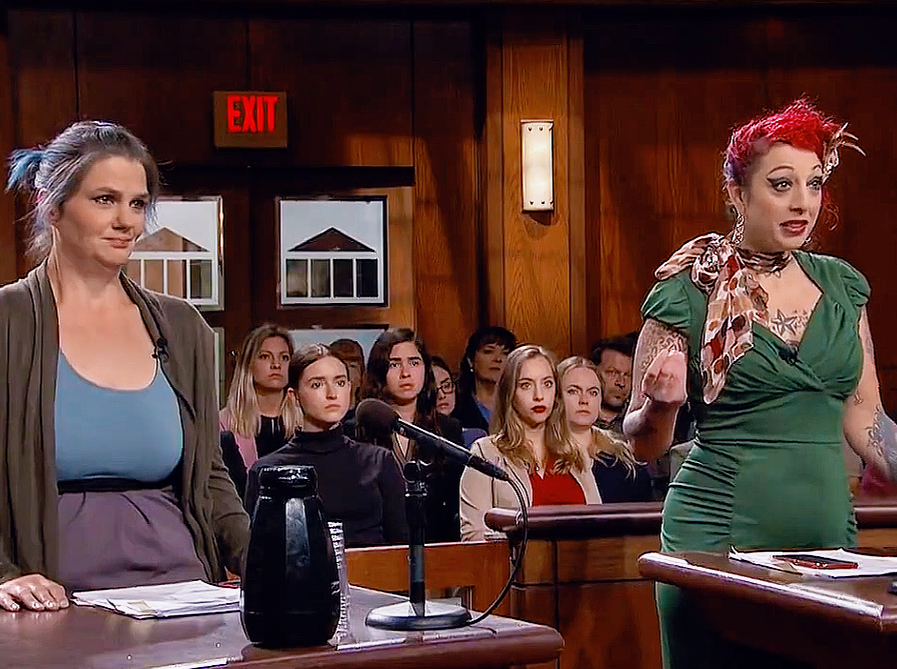
The testimony established that Russ placed the van on her Safe Auto insurance while the women were driving to Florida. Baldwin said she had insurance through GEICO. When Judge Judy asked about the lienholder, Baldwin identified Consumer Portfolio Services, or CPS. Baldwin acknowledged that in March 2018 she was behind on payments by roughly three months. The van had not been repossessed, but she was still working on the payments and estimated that four or five months remained.
Judge Judy pointed out the practical consequence of that testimony: if the vehicle was being hidden because of missed payments, Baldwin should not have been using it as though the ownership issue did not exist. The judge told Baldwin that the rightful owner was entitled to get the van back, while also noting that Russ’s use of the vehicle did not automatically resolve the separate question of what happened after the cruise.

What Happened After the Ship Docked
Baldwin’s version was direct. After passing through customs, she put down her belongings and waited for Russ, because Russ had taken the car key days earlier. Baldwin said Russ came out, threw down her belongings, and tossed the key toward her. Baldwin put the key’s lanyard around her neck and bent down to collect her luggage.
According to Baldwin, Russ then pulled the lanyard from her neck and said, “Hell no, you stupid, you’re not leaving me here.” Baldwin said she avoided a confrontation near customs, crossed toward the shuttle, and watched Russ get into a taxi and leave. Baldwin claimed Russ took the van, forcing Baldwin to fly home and deal with other responsibilities.
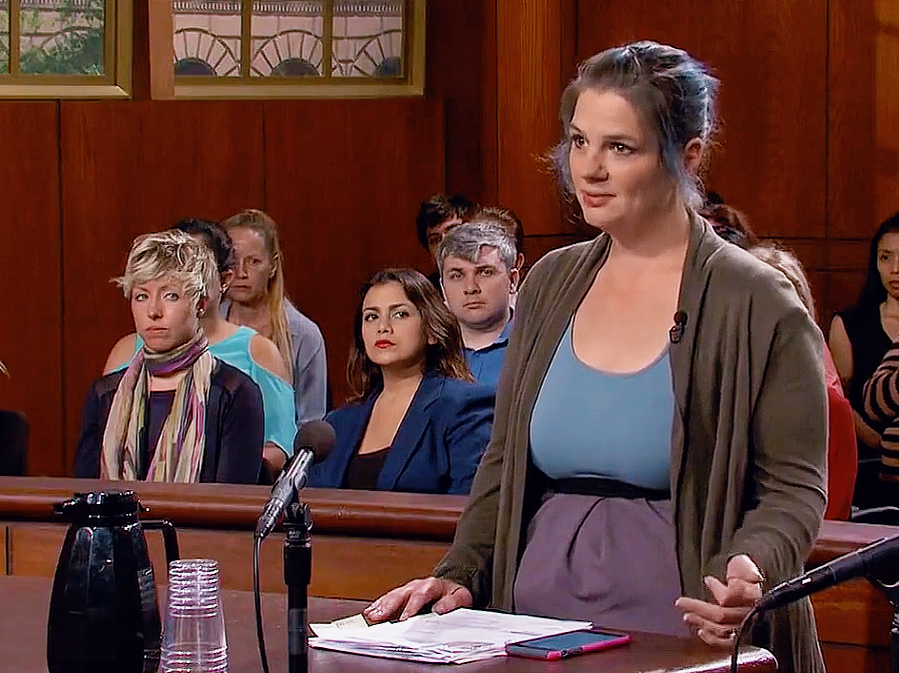
Russ described the scene differently. She said Baldwin became angry and threw the keys at her, announced that she was taking a plane, and left Russ with her suitcases and the keys to Russ’s van. Russ said she then tried to communicate with Baldwin by text, but Baldwin did not respond. She also said she did not know where the van was and had to locate it.
The parties disputed the meaning of their text messages. Baldwin questioned whether Russ had edited the evidence and accused her of impersonating a police officer at one point. The transcript does not establish a finding on that accusation. Judge Judy instead examined the broader communications and observed that the messages showed an escalating conflict and an exchange that made Russ say she did not feel safe driving home in a car with Baldwin for 20 hours.
The language used to characterize the argument also became a point of contention. When Judge Judy said the messages suggested the interaction had become physical, Russ objected to the word “handsy,” saying it had stressed and irritated her for two months. Whatever label the parties preferred, the messages reflected a relationship that had broken down before either woman reached the parking lot.

Judge Judy Dismisses Baldwin’s Case
Judge Judy rejected Baldwin’s claim for relief. The judge noted that Russ had to get the van out of the parking lot, pay the parking expense, and pay for the gas used. Baldwin had flown home. The case was dismissed.
Afterward, Baldwin continued to say that Russ had left her stranded in Miami and accused her former friend of turning the situation around. Russ, for her part, said she had believed Baldwin was a good person and that the conflict showed how little people may know about one another.
The ruling did not erase the hostility between them. It established only that Baldwin’s lawsuit, as presented in court, did not succeed.

Case Two : Brittany Johnson and Angel DeLong: Furniture, Moving Help, and Rent
The episode then turned to Johnson v. DeLong. Brittany Johnson sued Angel DeLong for the value of a sectional couch and patio furniture, along with punitive damages.
Johnson said she was moving into her mother’s house while selling her own home. During that transition, she sold used furniture to DeLong. The parties agreed that DeLong took possession of the sectional but had not paid for it in full.
DeLong acknowledged that she had not finished paying, but she said the arrangement included more than a furniture sale. She claimed she paid for a U-Haul, obtained her brother’s truck, and helped Johnson move. Josh, DeLong’s boyfriend, also helped. DeLong testified that the parties agreed to call the furniture debt even in exchange for the moving assistance.

The case also became entangled with Johnson’s house. After Johnson moved in with her mother, she rented the property to Josh. Josh said he moved into the house on or around April 1, although he qualified the date with “I want to say.” He testified that he paid rent monthly, but received an eviction notice dated May 18. He said he had paid rent on May 5 and was looking for another place.
Johnson explained that she had been planning to sell the home and did not want Josh and DeLong communicating there in a way that conflicted with that plan. Judge Judy made clear that the rental dispute was not the central issue before her. The judge told Josh that living somewhere requires paying rent and then turned back to the furniture claim.

The $800 Sectional and Conflicting Texts
The parties disagreed about the price. DeLong said the January agreement was for $800 and that the sectional was the only item she purchased. Johnson disputed that figure and said the agreement was for $1,500. The text messages became the key evidence.
Johnson presented messages that Judge Judy read as showing an original figure of $1,500 followed by an agreement to accept $800. The testimony also suggested that the relationship had deteriorated after a dispute involving Josh. In the messages, the price appeared to rise again as the conflict intensified, with Johnson demanding $1,500 and telling DeLong that Josh should leave the house.
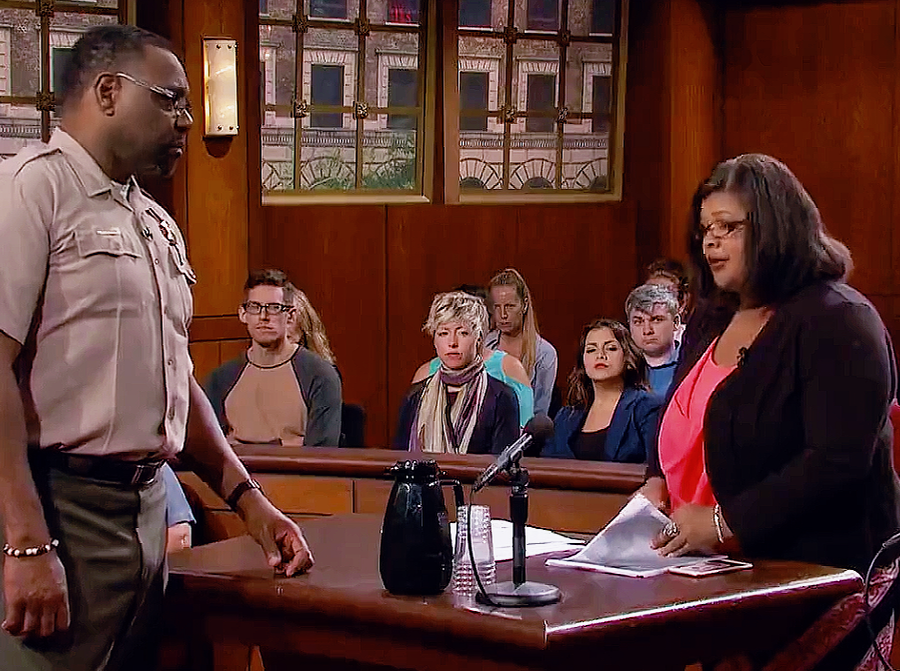
DeLong challenged the messages, arguing that someone could place a phone number under a different contact name and make a message appear to come from another person. Judge Judy acknowledged that such manipulation was technically possible but accepted the messages presented in court as relevant evidence. The judge also distinguished between the original furniture agreement and later figures connected to other matters, such as carpet or another item.
Another factual dispute concerned the move itself. DeLong said she rented the U-Haul for one day at a cost of $54.74. She said Johnson reimbursed her for that amount, but the moving help remained part of the agreement in her account. DeLong said she and Josh loaded the U-Haul from about 3 p.m. until 7 p.m., when Johnson returned from work.
Johnson disputed Josh’s role in moving her belongings. She said he helped move furniture to DeLong’s home rather than to Johnson’s mother’s house. The patio furniture was eventually returned to Johnson. Johnson did not want the sectional back, saying DeLong had allowed her dog to sit on it.

The Judgment in Johnson v. DeLong
Judge Judy did not accept DeLong’s claim that the moving work erased the furniture debt. The judge said she believed DeLong had been reimbursed for the U-Haul and believed that DeLong wanted to help Johnson move so Josh and his brother could move into the house quickly. But the judge did not believe DeLong’s account that the furniture debt had been canceled as part of that arrangement.
The court identified the enforceable figure as $800 and entered judgment for the plaintiff, Brittany Johnson, in that amount. The matter was then concluded.
In the closing comments, the parties remained divided. One said the result was fair because it matched the amount they had agreed upon. The other said it was unfair because the agreement had been for $1,500. The final commentary attributed the conflict to jealousy and messages from Josh to Johnson about the house, while also underscoring the broader lesson of the episode: once friendship becomes a business arrangement, informal promises can become difficult to prove.

FAQ
What was Jessica Baldwin suing Jennifer Russ for?
Jessica Baldwin sued Jennifer Russ after Russ allegedly took Baldwin’s van following a cruise and left Baldwin in Florida, requiring her to fly home. Judge Judy dismissed Baldwin’s case.
Why did Jessica Baldwin and Jennifer Russ argue during the cruise?
Baldwin said the argument began after she proposed a promotion for the tattoo shop they planned to open. The testimony stated that the disagreement occurred about four days into a seven-day cruise and continued through the trip.
Who owned the van in Baldwin v. Russ?
Baldwin testified that the van belonged to her and her husband. Russ challenged the ownership circumstances, saying the van had been hidden because of missed payments and possible repossession. Judge Judy determined that the rightful owner was entitled to the van back but dismissed Baldwin’s lawsuit.
How much did Angel DeLong owe Brittany Johnson for the sectional?
Judge Judy entered judgment for Brittany Johnson in the amount of $800. The parties disputed whether the price was $800 or $1,500, but the court accepted $800 as the relevant agreement.
Did the patio furniture return to Brittany Johnson?
Yes. The testimony stated that Johnson received the patio furniture back. She did not want the sectional returned because she said DeLong’s dog had sat on it.
What was the outcome of Johnson v. DeLong?
The judgment went to Brittany Johnson for $800. Judge Judy did not accept DeLong’s argument that moving assistance and the U-Haul arrangement canceled the furniture debt.