On a December evening, a small French bulldog ran loose across the grass outside an apartment complex. Minutes later, its owner was accusing a neighbor of striking the animal—and was left with a damaged tooth after a confrontation involving a flashlight. In a second case, a shared decision to bring home a puppy became a dispute over rent, alleged unsanitary conditions, missed work, and who had really accepted responsibility for the dog.
Neither case turned on a dramatic mystery. Both turned on something more difficult to prove: what two people had agreed to, what they remembered, and whether their own choices undermined the claims they brought to court.
Case One: A Loose Dog and a Flashlight
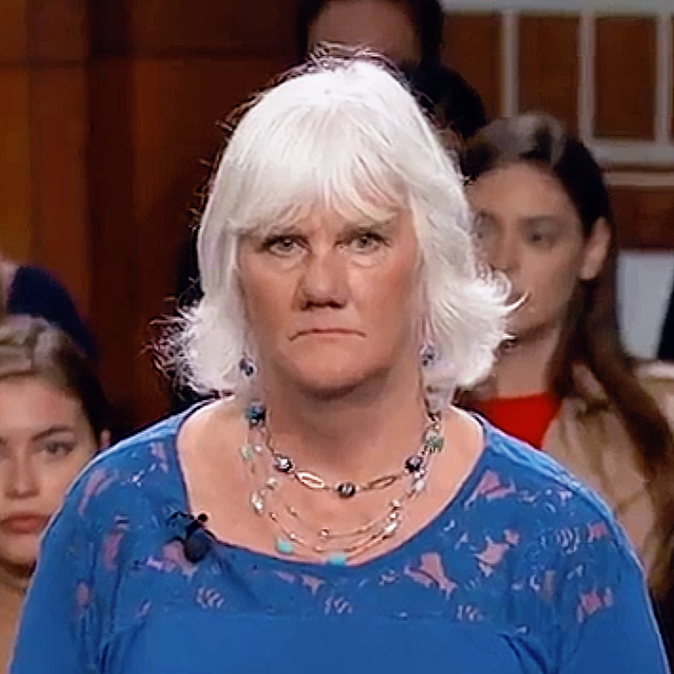
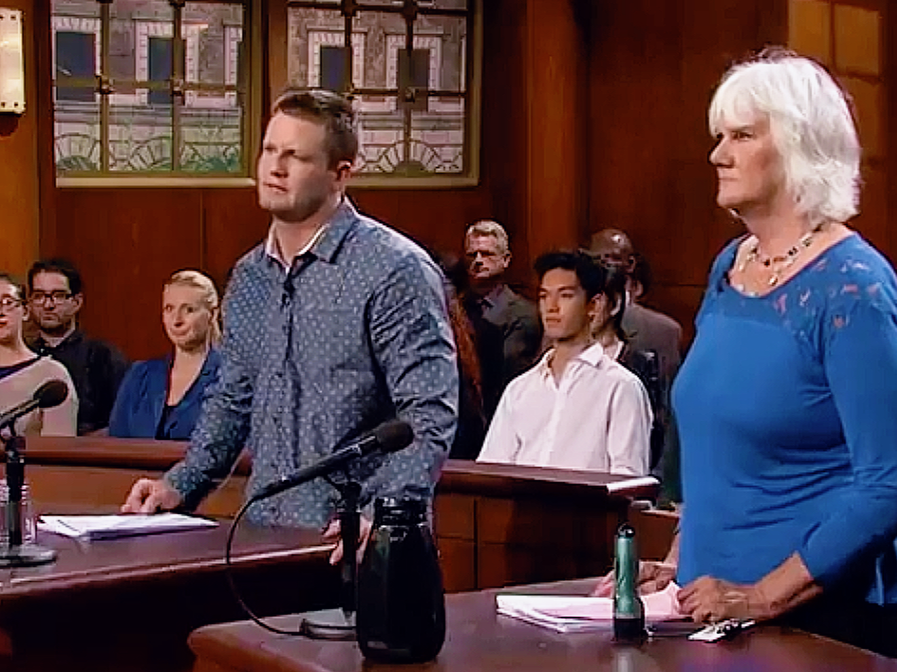
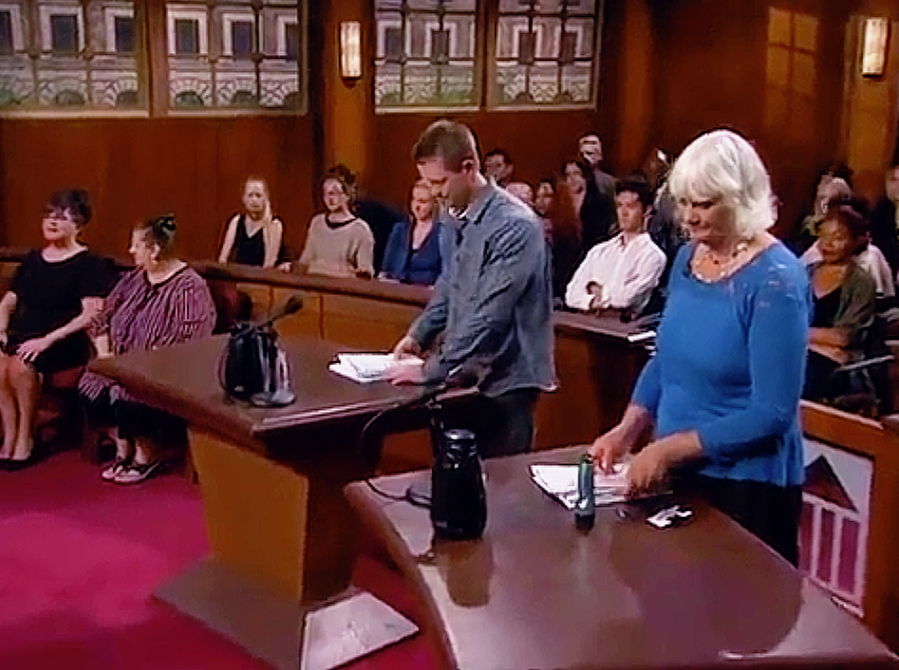
The first case, Davis v. McDavid, involved former neighbors Tanner Davis and Marion McDavid, who lived in the same apartment complex. According to the courtroom introduction, Davis sued McDavid for medical bills connected to an assault. McDavid filed a counterclaim seeking attorney’s fees, moving expenses, and money related to what she described as the consequences of the dispute.
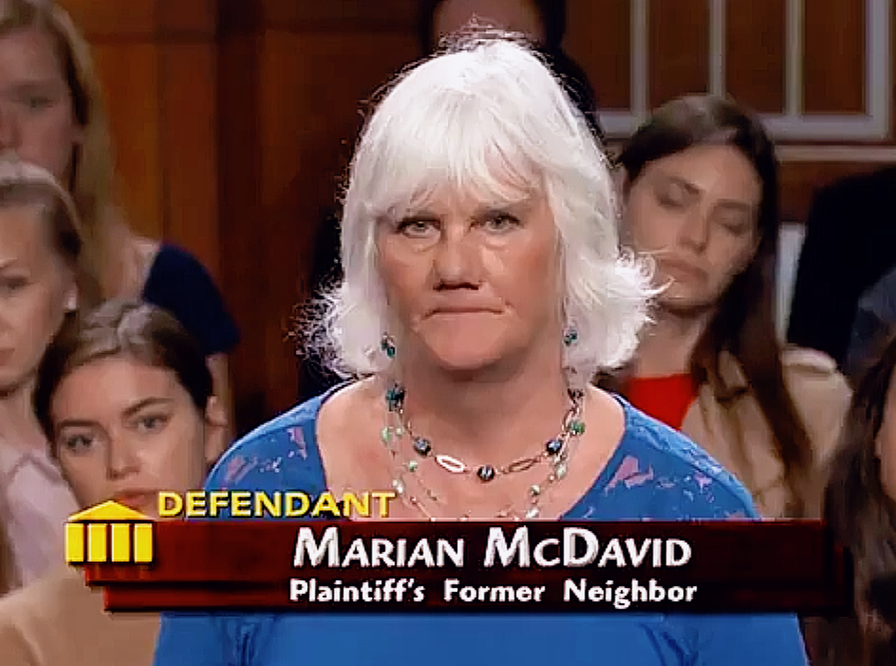
The encounter took place on December 18 of the previous year, at approximately 7:15 p.m. The two neighbors had not known each other before the incident, and neither had previously seen the other’s dog. Davis had lived in the complex for approximately six or seven months. McDavid was walking two Labrador Retrievers. Davis had a small French bulldog, approximately two and a half years old and about 30 pounds.
The physical setting mattered. It was evening, and the testimony placed the two men and women near an apartment entrance, a sidewalk, and a grassy area. The initial dispute began when Davis’s dog was off leash.

The December Encounter
Davis testified that he had returned from work, gone home, and later gone to Smith’s Grocery Store. He said he came back carrying his dog. When he reached his front door, he put the dog down so he could take a key from his pocket. From there, the dog ran roughly 30 feet across the grass toward McDavid and her two leashed dogs.
McDavid said she told the dog to get away from her. Davis then came toward her, picked up his dog, and began accusing her of kicking it. Davis maintained that the area was well lit and that he could see what had happened. He also said that the dog was not barking and that he had not taken it to a veterinarian because he found no injury.
The dog’s condition became an important detail. According to the questioning, the animal was not injured, did not cry out, and did not immediately run back to Davis. Instead, Davis acknowledged that it remained near McDavid and her dogs until he approached and picked it up.
That sequence raised a basic question for the court: if the dog had just been kicked, why did it not retreat toward its owner? Judge Judith Scheindlin did not declare that the alleged contact with the dog could not have happened. She pointed out that the behavior did not fit comfortably with Davis’s account and said she had not yet decided what had occurred.

A Story That Changed Under Questioning
The more significant problem emerged when Davis’s testimony was compared with his written complaint. In court, he agreed that he had put the dog down to reach his key. The judge noted that his complaint described the dog differently—as though it had jumped out of his arms rather than being placed on the ground.
The courtroom also focused on the conversation that followed. Davis initially described asking McDavid why she had kicked his dog. The judge pressed him for the exact sequence. Davis said McDavid did not answer him, that he then said he was calling the police, and that she struck him in the face. He identified the injury as a lost or damaged tooth.
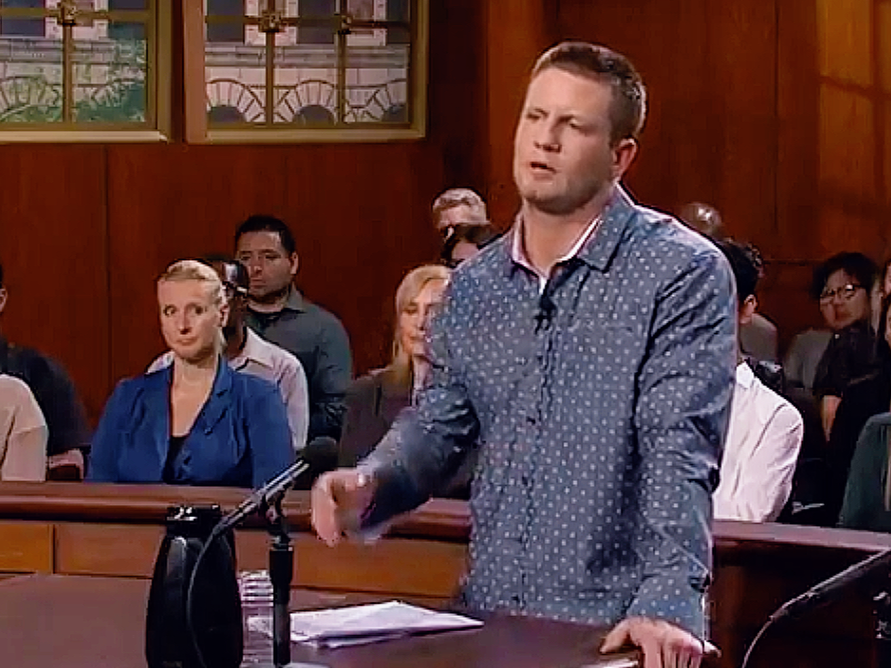
McDavid offered a different account. She denied kicking the dog. She said Davis came close to her, continued yelling that she had kicked it, and stood in front of her. It was dark, she explained, so she shined her flashlight to see who he was and told him to get away from her. She said that was when the flashlight made contact with him.
The judge observed that there was no question McDavid had connected with Davis and that he had been injured. The issue was how the confrontation developed and what responsibility each person bore for remaining in it.
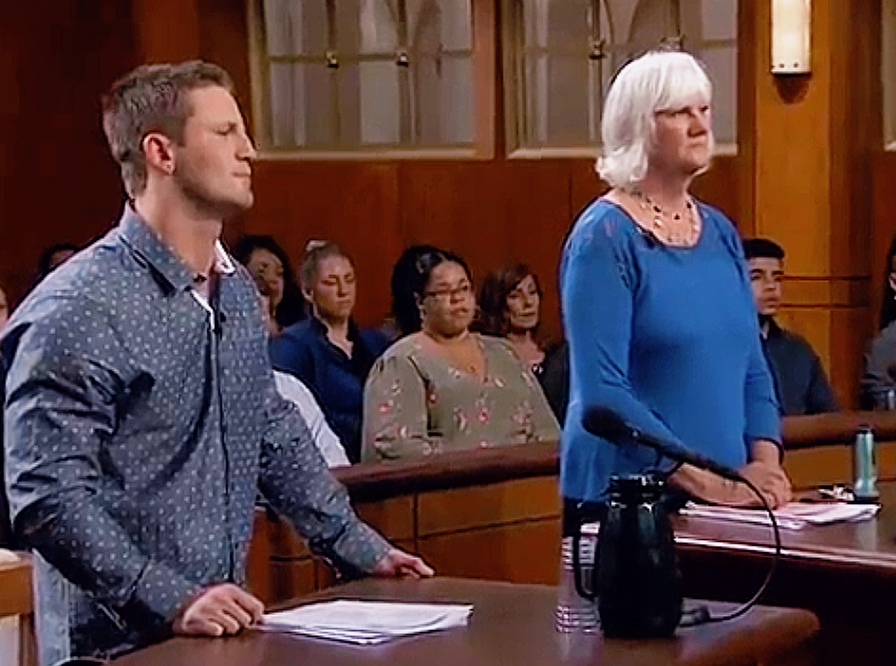
Davis was asked why he did not simply leave after retrieving his uninjured dog. He acknowledged that he should have. The judge emphasized that McDavid could not know whether an unfamiliar unleashed dog might bite her, even if Davis believed the dog was harmless. In the judge’s assessment, allowing the dog to run loose was Davis’s fault at the beginning of the encounter.
The Judge’s Reasoning
The testimony became more difficult for Davis when he said he had been at work, returned home, picked up the dog, and went to a grocery store where dogs were not allowed. The judge questioned why he would take the dog to the store if that was where he had been going, or why he would leave it in a locked car while shopping. Davis’s mother was present in the courtroom, but the judge continued to address the inconsistencies in Davis’s own account.
The central issue was not simply whether a flashlight had struck Davis. The judge accepted that contact and injury had occurred. The problem was the broader credibility picture: the changing description of how the dog escaped, the unexplained decision to stay and argue, and the fact that the dog showed no apparent injury despite the accusation that it had been kicked.

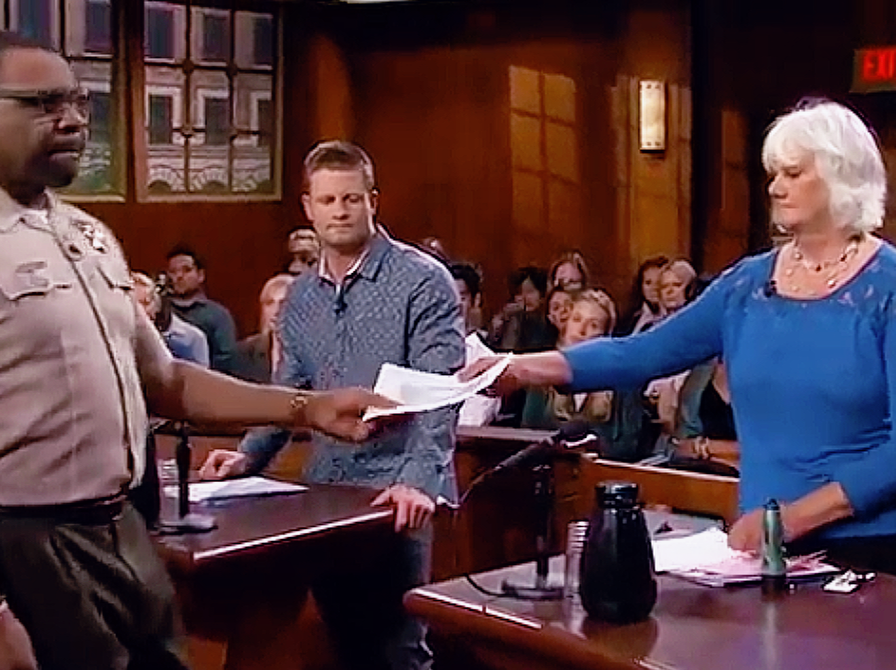
After reviewing the testimony, Judge Scheindlin dismissed Davis’s case. She also dismissed McDavid’s counterclaim. McDavid did not receive the attorney’s fees or other expenses she had requested through the counterclaim, even though the judge told Davis that he may have overreacted.
Outside the courtroom, Davis said half of his front tooth had been chipped by the flashlight and said he wanted justice and the money for his dental injury. McDavid said she did not kick dogs and suggested that a flashlight powerful enough to knock out a tooth would be difficult to reconcile with Davis’s description. The SRT does not provide an independent medical record or a separate witness account resolving those competing statements.
Case Two: The Puppy, the Lease, and the Apartment
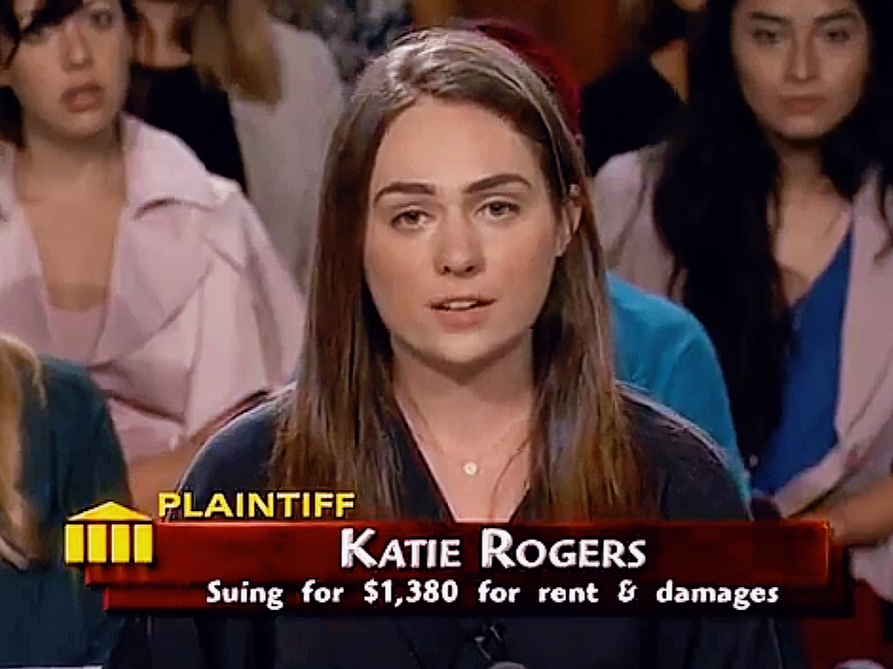
The second dispute, Rogers v. Della Bella, involved 22-year-old Katie Rogers and her former roommate, Pamela Della Bella. Rogers sued for rent and damages she attributed to Pamela’s dog. Della Bella filed a counterclaim for actual and punitive damages connected to the end of the lease.

At first, the case appeared to be about reimbursement. Rogers had moved out before the lease ended, but she had continued paying her half of the rent for April and May because her name remained on the lease and she still owed the landlords that money. She wanted that money returned because, in her view, the apartment had become uninhabitable.
The reason, she said, was dog waste. Rogers testified that there was dog urine and feces throughout the apartment every day. She said Della Bella had obtained a puppy without consulting her and that the conditions eventually forced her to leave.
What the Roommates Agreed To
The questioning quickly revealed that the two women had not been strangers to the dog decision. Rogers acknowledged that Della Bella had asked whether she could get a dog and that Rogers had agreed. The women had looked at pictures of the puppy together. They also went together to Indiana to pick the animal up, with a friend driving them.
Those details complicated Rogers’s claim that the puppy had been imposed on her without her knowledge. The puppy had been obtained after the lease was signed, but the trip to collect it was planned, not a surprise. Judge Scheindlin repeatedly returned to that point.
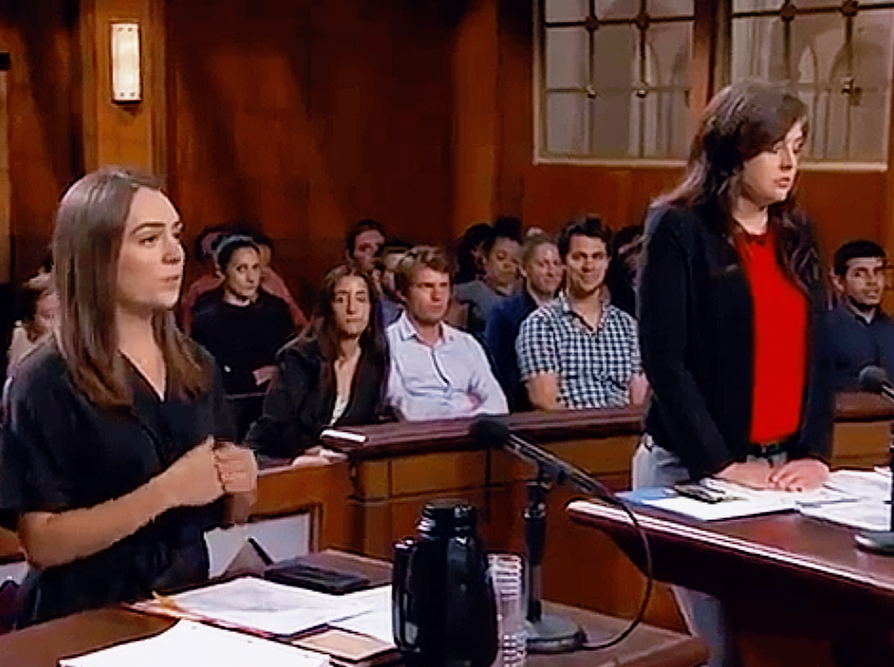
Rogers said she was willing to have a dog in the apartment but argued that the arrangement became unworkable. She described the puppy as being left alone for as long as 16 hours at a time and said the animal’s needs contributed to the condition of the home. Della Bella disputed that account. She said she loved dogs, had grown up with four dogs, and believed Rogers was responsible for cleaning the apartment.
Della Bella also said the puppy had been abused and was not living a proper life for a husky puppy. Rogers denied that characterization in court. The testimony established that the puppy and a cat were in the apartment, and that the puppy had been acquired before the women moved into the apartment at issue—but after the lease was signed.
The Indiana Trip and the Contradiction
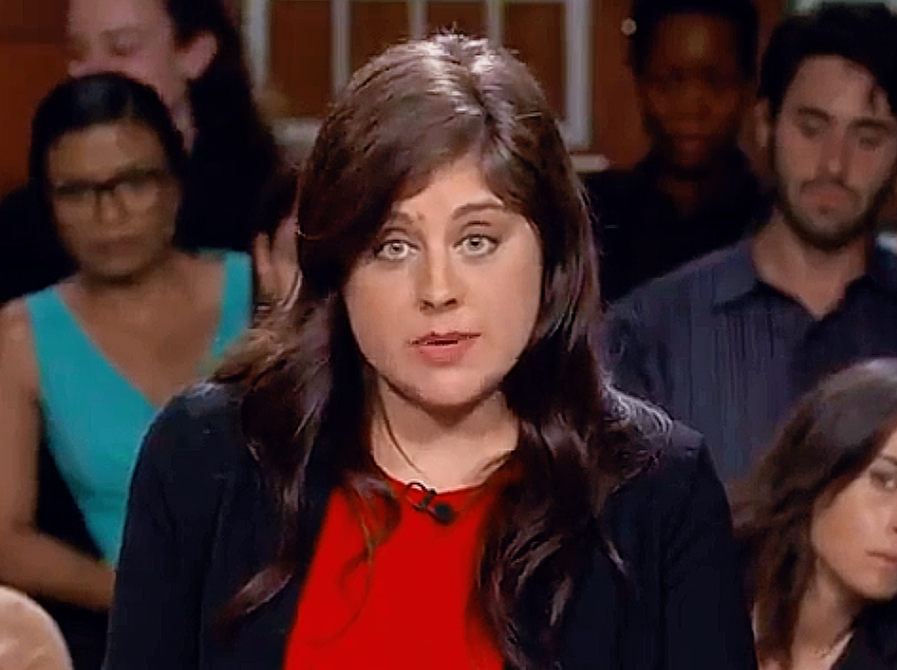
The Indiana trip became the turning point. Rogers had initially presented the dog as a central reason for seeking the rent back. But when the judge asked whether she went with Della Bella to get the puppy, the answer was yes. The visit had been planned, and both women participated.
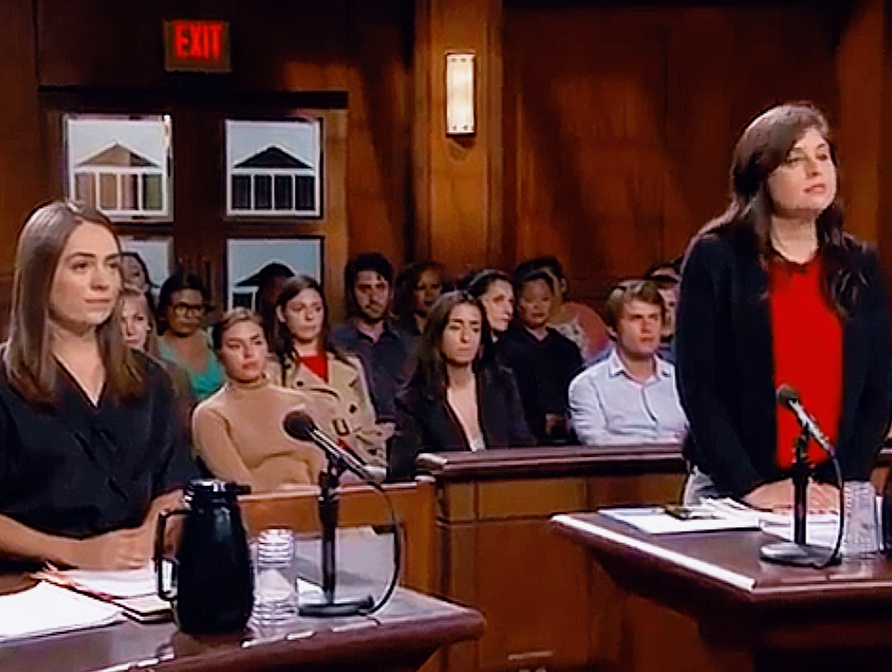
Judge Scheindlin told Rogers that her claim was ridiculous. Della Bella then presented her counterclaim. She sought reimbursement for work she said she missed after Rogers abandoned the dog the day after they brought it home. She also requested moving expenses, explaining that she had arranged for the dog to stay with her aunt and uncle. She referred to a doctor’s letter stating she was allowed to have a dog and to text messages concerning the care arrangement.
The judge did not accept that counterclaim either. When asked where the dog was, Della Bella said it was still with her, though her friend Amanda was caring for it at the time. Della Bella had moved out and was living on her own. She said the dog was now completely housebroken.

Two Claims, Two Dismissals
The courtroom outcome was concise. Rogers did not receive her rent back. Della Bella did not receive the requested compensation for missed work or moving expenses. Judge Scheindlin told both women that they were out of the apartment and in new places, and that they should move forward.
The SRT’s preview of the next program included competing statements about the dog’s care. One side said the women had adopted the dog together under a 50–50 care plan, that one roommate came home during breaks, and that the apartment was uninhabitable because the other roommate did not clean. The other side said she had provided a loving home and that the dog was happy and fully housebroken. Those statements belong to a separate preview and do not change the ruling in the case presented here.
Across both cases, the courtroom record shows how quickly a dispute about animals can become a dispute about credibility, boundaries, and personal responsibility. In the first case, an unleashed dog set the encounter in motion, but the later confrontation became the focus. In the second, a roommate’s participation in choosing and collecting a puppy weakened her argument that the animal had simply been brought into the home without consent.
Neither dismissal establishes that every allegation was fabricated. It shows that the claims, as presented, did not persuade the court to award damages. The decisive evidence was not a hidden confession or a dramatic forensic discovery. It was the ordinary detail: where the dog was, who agreed to what, what happened next, and whether the testimony stayed consistent.
FAQ
What was Davis v. McDavid about?
Tanner Davis sued Marion McDavid for medical bills after a confrontation involving Davis’s unleashed French bulldog and McDavid’s two leashed Labrador Retrievers. Davis alleged that McDavid struck him with a flashlight after an argument about the dog.
Did the court find that Marion McDavid kicked the dog?
The SRT does not show the court making that finding. McDavid denied kicking the dog, and Davis said the dog had not been injured or taken to a veterinarian. The judge focused on inconsistencies and ultimately dismissed Davis’s case.
Did Tanner Davis win compensation for his tooth injury?
No. Judge Scheindlin dismissed Davis’s case. McDavid’s counterclaim was also dismissed.
Why did Katie Rogers want her rent back?
Rogers said she had continued paying her share of the rent for April and May because her name remained on the lease, but argued that the apartment was uninhabitable because of dog urine and feces.
Did Katie Rogers agree to the puppy?
The testimony established that Rogers agreed when Della Bella asked whether she could get a dog, looked at puppy pictures with her, and traveled with her to Indiana to collect the puppy.
What happened to the second case?
Rogers did not receive her rent back, and Della Bella’s counterclaim for missed work and moving expenses was not awarded. The case ended without either side receiving the requested compensation.