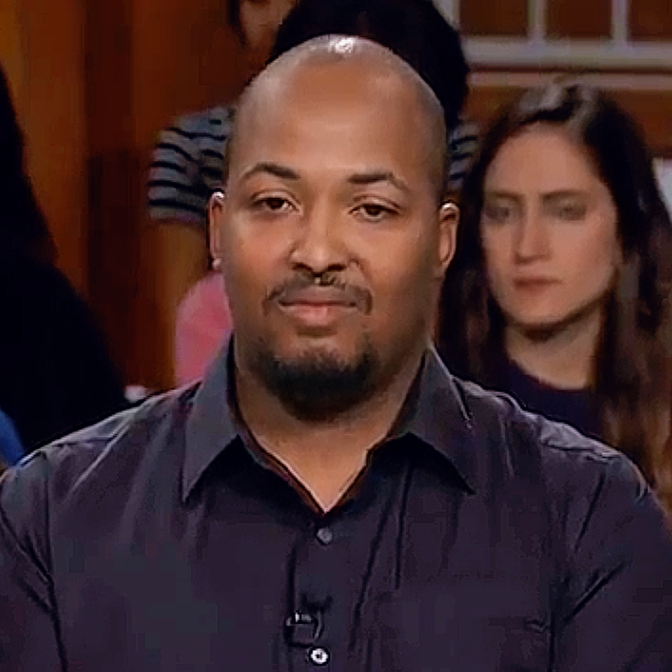
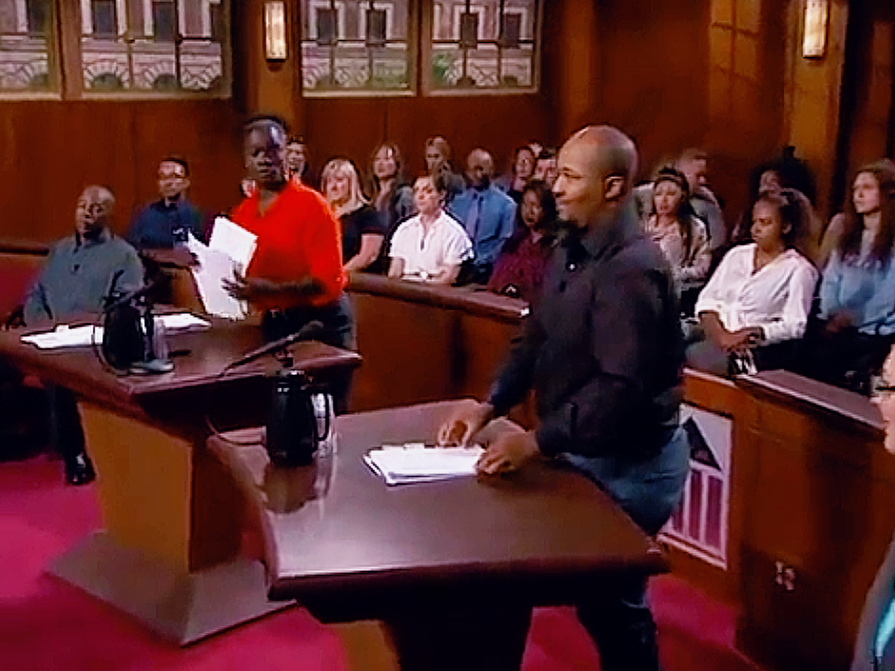
The morning began with children making breakfast in a shared apartment. It ended with a roommate claiming he had been struck, a police report filed two days later, and a lease dispute that reached Judge Judy’s courtroom. At the center of the case was a question that could not be separated from the rent: when does a volatile living arrangement become an unsafe environment—and who remains responsible after someone moves out?
A Lease Built on an Uneasy Arrangement
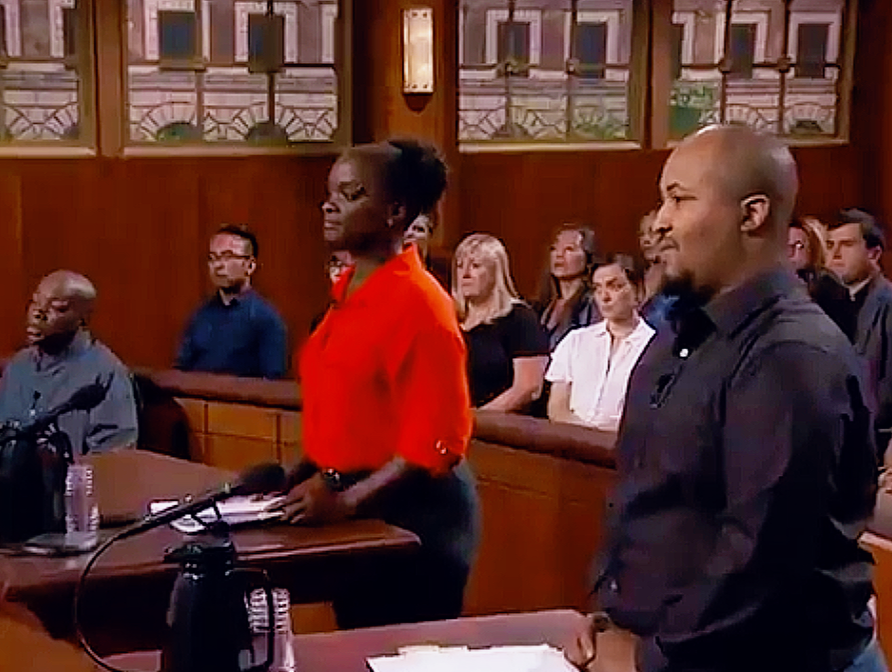
Mary Buzzard and Joshua Beaumont leased a three-bedroom apartment together beginning June 12, 2017. Mary said she occupied the master bedroom, while Joshua described the other rooms in the context of visits from his children and his girlfriend’s daughter.
The financial arrangement appeared straightforward. The rent was divided evenly, with Mary paying $800, and the utilities were also split down the middle. But the household itself was more complicated than the lease suggested. Joshua had children. His girlfriend had a daughter and was pregnant at the time. Mary lived without children and worked at Amazon, as did her boyfriend, Anthony Jordan. The two worked in the same building, though not necessarily the same shifts.

Joshua later described the arrangement as one in which the children and his girlfriend came over on weekends. He said his girlfriend had visited the apartment about four times during the five months he lived there, and that November 19 was the last visit. Judge Judith Scheindlin’s questions focused on how the apartment was being used, how many people were present, and whether the living arrangement matched the original lease arrangement.
The lease was scheduled to run beyond Joshua’s departure. Mary wanted him held responsible for rent from November through June. Joshua argued that the circumstances of his departure made the apartment an unsafe environment for himself, his children, and his pregnant girlfriend.
The November 19 Morning
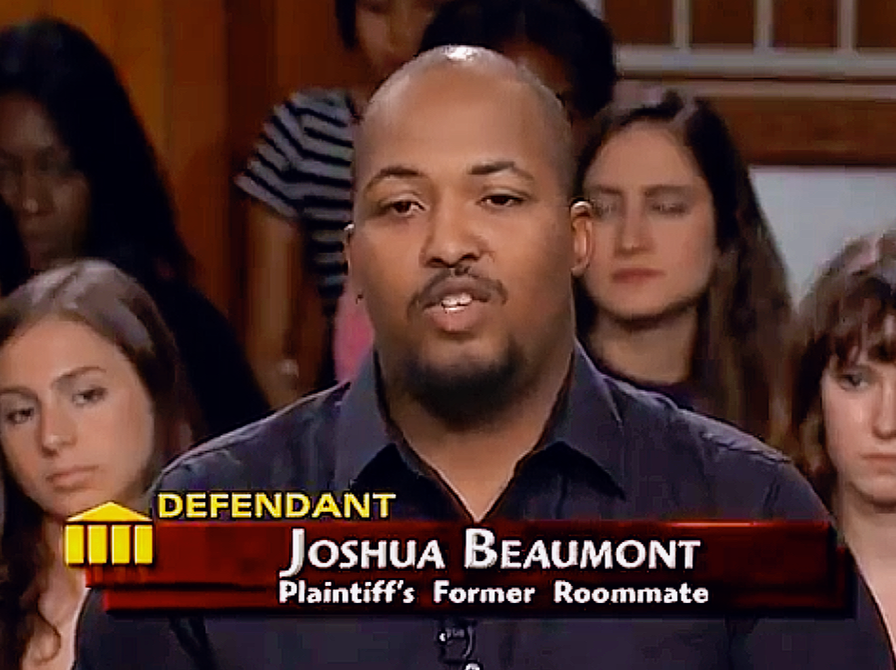
The conflict unfolded on the morning of November 19, after the roommates finished an overnight shift at Amazon. Joshua testified that peak season had placed them on a schedule running from approximately 6 p.m. to 6 a.m. Mary gave a different account of the immediate timing, saying they returned after work, ate, and eventually went to their rooms. Both accounts placed the dispute on the same morning.
Joshua said the children woke up and the apartment became noisy. The sounds included a microwave door being closed repeatedly, drawers opening and closing, and the ordinary commotion of children preparing food. Mary went into the room and asked the occupants to keep the noise down because they had just returned from work and were tired.
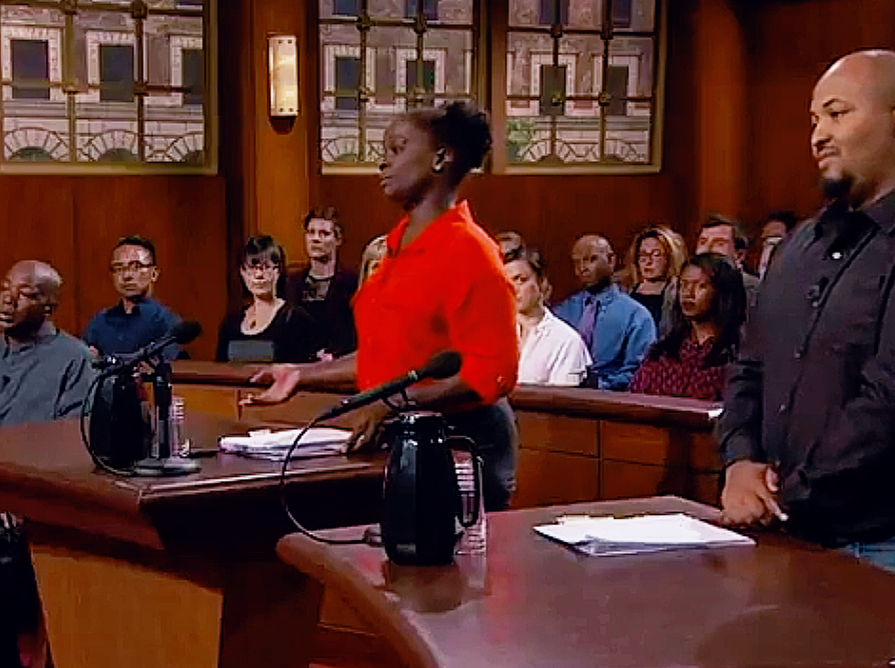
The apartment’s layout became important in court. Joshua referred to a photograph showing a small kitchen beside a dining area. The dining table was across from the kitchen, and the two spaces were close enough for the kitchen to be visible from the dining area. Judge Scheindlin questioned whether the children were unsupervised while the adults remained in bed.
Joshua said the children were two eight-year-olds and one six-year-old. He maintained that they did not all use the kitchen at once. One child prepared food in the microwave and then went to the nearby table before another entered. Judge Judy nevertheless returned to the fact that Joshua and his girlfriend were in bed while the children moved through the kitchen and dining area.
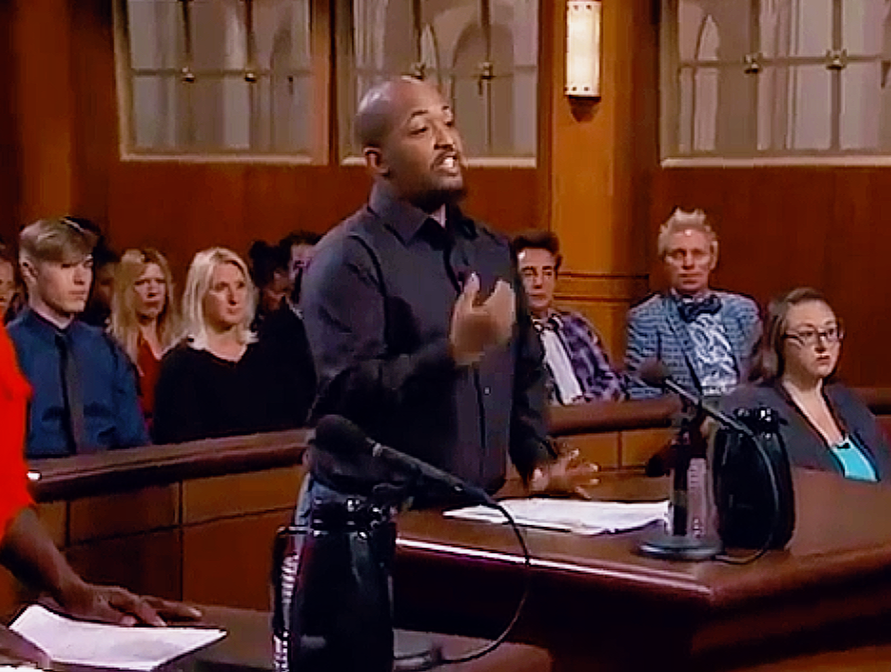
The Argument in the Kitchen
According to Joshua’s testimony, the confrontation began when Mary objected to his girlfriend’s eight-year-old daughter using the kitchen. He said Mary described the child as loud and told him to get her out of the kitchen, adding that she did not belong there.
The quoted language became central to the hearing. Joshua said he reminded Mary that he was also on the lease. He told her the child could prepare breakfast in the microwave and that the kitchen was not solely hers. The disagreement intensified as Mary insisted that she wanted the girl out of “my kitchen.”
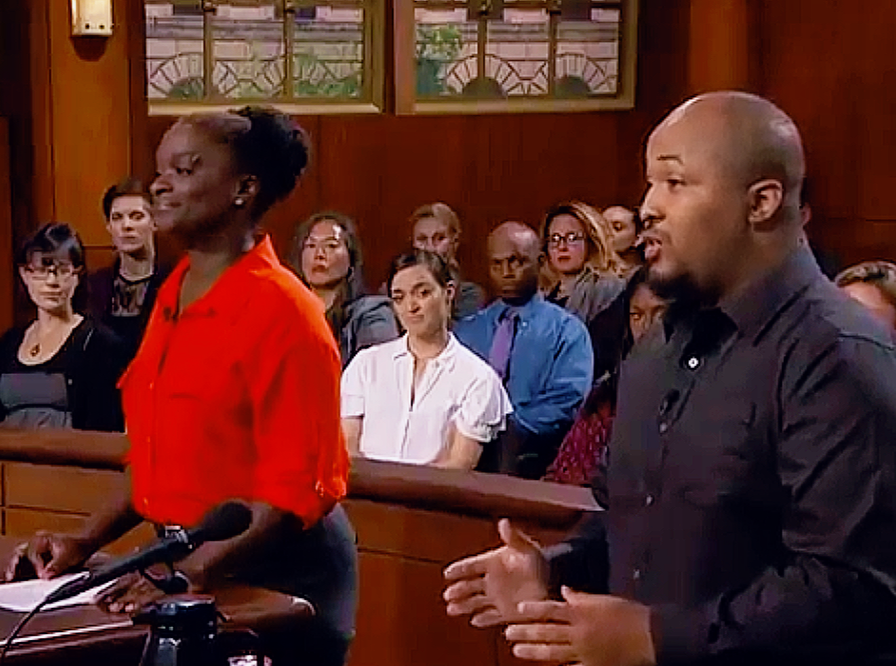
Joshua testified that his girlfriend came out of the bedroom after hearing the argument. The child was crying, he said, and his girlfriend tried to deal with the situation. Joshua told the court that he said the girl could make waffles and eat. He then described Mary striking him in the jaw.
Joshua said he stood still for a moment before his girlfriend became upset. He alleged that Mary then moved over him and hit his girlfriend, scratching or striking her near the ear. Joshua said he pushed Mary away and told her he could no longer remain in the apartment if that was how she was going to act. He emphasized that his girlfriend was pregnant.
The transcript records competing accounts of the physical contact. It does not establish an independent finding about the assault allegation. What it does establish is that Joshua said he made a police report, that a restraining-order application was later denied, and that the lease dispute proceeded in Judge Judy’s courtroom.
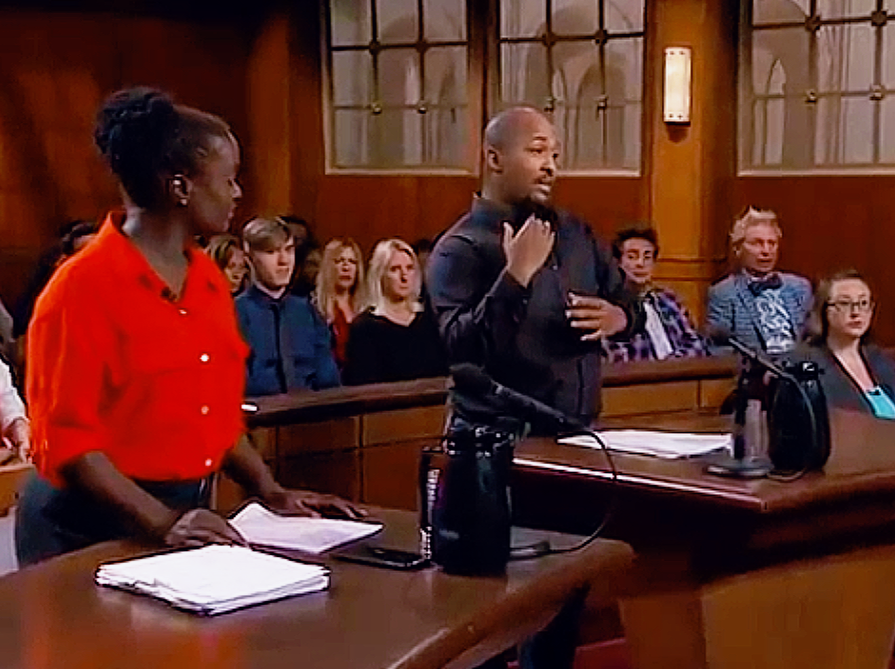
Police Reports and a Denied Restraining Order
Joshua said he made a police report after the incident. The report date identified in court was November 21, two days after the confrontation. When asked about contact with the investigating officer, he described difficulties caused by overnight work schedules and several attempts to reach one another.
The dispute also entered another court process. Joshua said he received a call and then a subpoena by mail. He went to court on December 13, 2017, in connection with a restraining-order application. The application was denied after a hearing in which both parties testified.
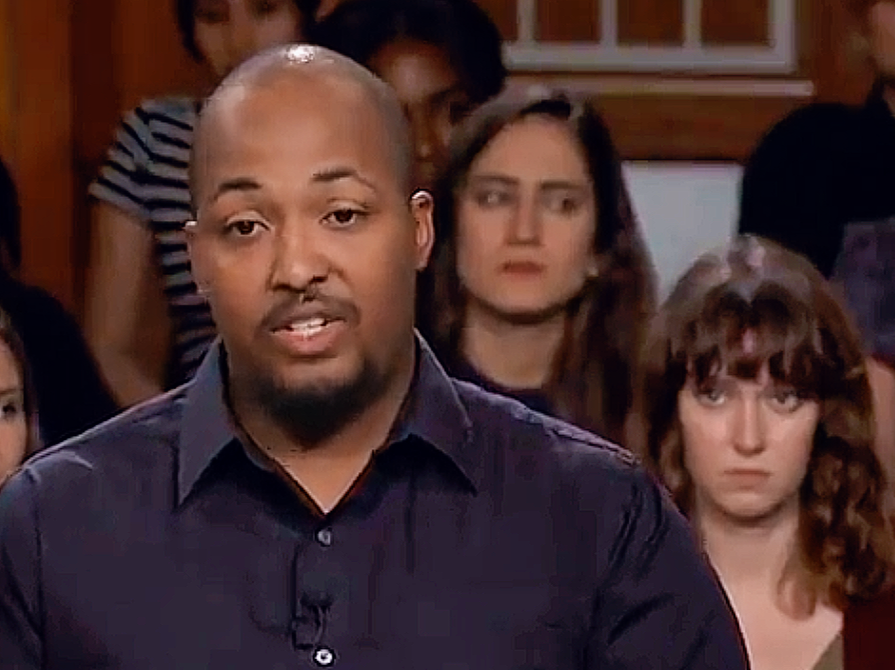
Mary claimed that the judge in that proceeding told her to take Joshua to court over the lease. Judge Judy rejected that statement as hearsay because Mary did not produce the minutes of the earlier hearing. The transcript also records Mary’s claim that Joshua had said he needed a protective order to get out of the lease, while Joshua’s position was that the living environment had become unsafe.
Those details mattered because the restraining order was one of the claims Mary brought into the televised dispute. The case introduction described her claims as including a broken lease, a stolen phone, and a false restraining order. The courtroom discussion, however, concentrated heavily on the lease, the November 19 confrontation, and the credibility of each side’s explanation.

Why the Rent Claim Collapsed
Judge Judy did not accept Mary’s demand that Joshua pay rent through June. The court’s reasoning, as reflected in the transcript, included the timing of the move, the possibility of finding another roommate, and Mary’s decision to wait rather than resolve the remaining rent issue earlier.
Mary argued that Joshua left in late November and that she could not have found another roommate for December. Judge Judy indicated that she was prepared to award Joshua’s share of December’s rent because he left near the end of November and a replacement might not have been found within that month. But Mary sought payment extending through the end of the lease, and the judge rejected that approach.

The judge also learned that Mary had a roommate in January. That fact weakened the claim that Joshua should remain responsible for every month through June. Judge Judy told Mary that she could not wait until the end of the lease and then sue Joshua for the full remaining period.
The final ruling was abrupt. After Mary continued trying to explain the arrangement and Anthony Jordan’s role, Judge Judy dismissed the case, telling Mary that she was not paying attention. The dismissal ended the claim presented in this case for the remaining rent. The transcript leaves the wider household conflict unresolved: a shared apartment had become a place where adults, children, exhaustion, competing expectations, and allegations of violence collided.
The transcript does not provide an independent resolution of the phone allegation or a verified finding that the restraining-order application was false. What it does show is why the lease claim failed in this courtroom. The judge focused on evidence, timing, and the practical consequences of Mary’s decision to obtain another roommate rather than award the amount requested.
FAQ
Who sued whom in this Judge Judy case?
Mary Buzzard sued her former roommate, Joshua Beaumont. The case introduction identified claims involving a broken lease, a stolen phone, and an allegedly false restraining order.
Why did Joshua Beaumont leave the apartment?
Joshua said he left after a November 19 argument involving children, his girlfriend, and Mary. He described the apartment as an unsafe or hostile environment after alleging that Mary struck him and his pregnant girlfriend.
What happened on November 19?
After an overnight work shift, children woke up and prepared food in the kitchen area. A dispute over noise and the child’s use of the kitchen escalated into competing allegations of physical contact.
Was a restraining order granted?
No. Joshua testified that the restraining-order application was heard on December 13, 2017, and denied.
Did Mary Buzzard receive the rent she requested?
No. Judge Judy dismissed Mary’s case and rejected the demand that Joshua pay rent from December through June. The judge noted that Mary later had another roommate.
What is the source of this account?
This article is based on the supplied subtitle transcript for Judge Judy, episode file JudgeS23E20.srt. Claims are attributed to the speakers and are not presented as independently verified findings unless the transcript identifies a court ruling.