The first dispute turned on a single answer written on a home-sale form: there were no known defects in the pool. The second began after Thanksgiving dinner, a card game, and a disputed collision in a driveway. In both cases, Judge Judith Scheindlin focused less on emotion than on the details people had put on paper—and the details their stories could not explain.
Case One : The pool disclosure dispute
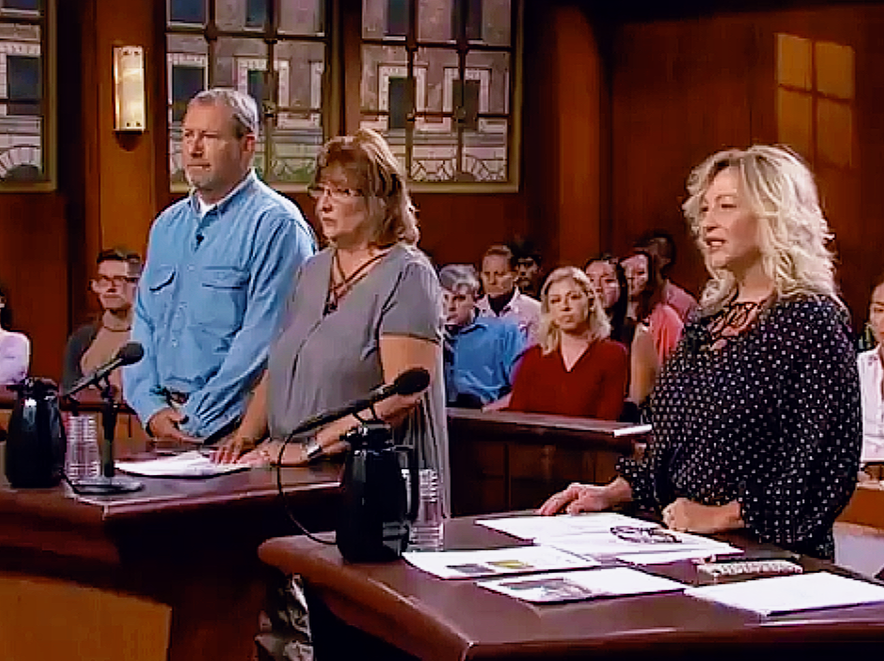
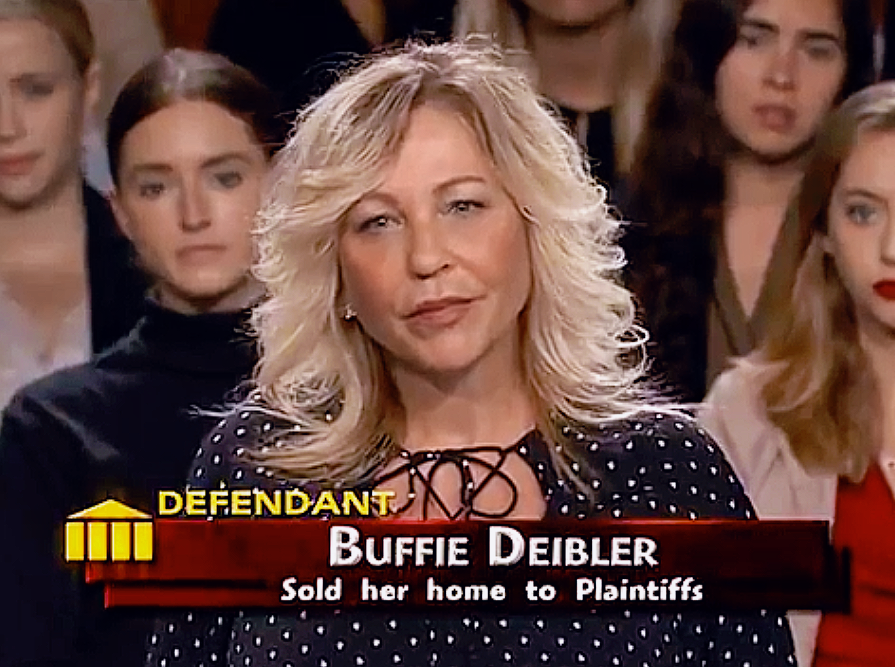
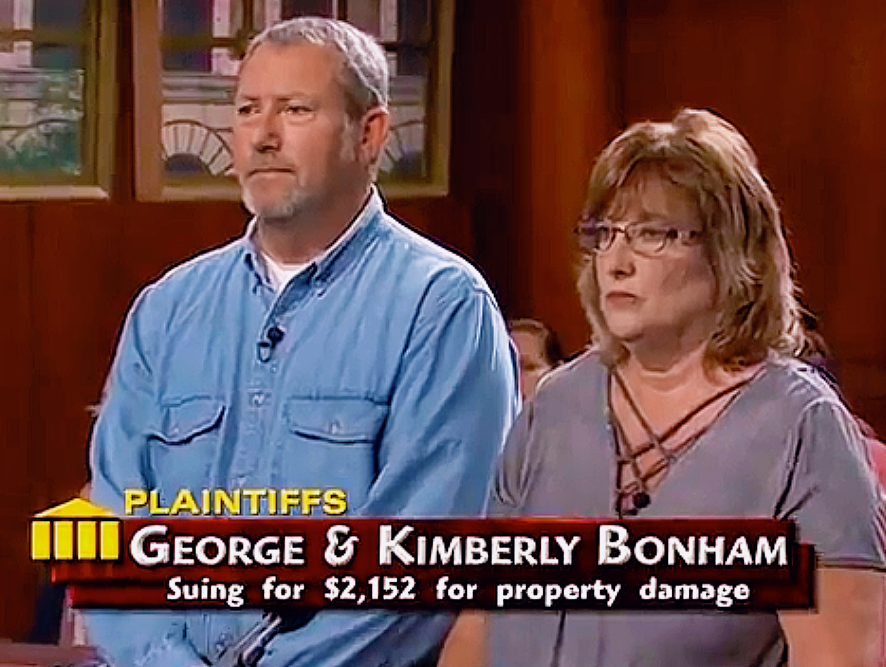
When George and Kimberly Bonham bought a home in Ponca City, Oklahoma, they believed they were purchasing a property whose above-ground pool had no known defects. The former owner, Buffy Deibler, had completed a seller’s disclosure form in September 2015. The form asked whether the property had known problems with the pool. Her answer, according to the testimony, was no.
The house did not sell immediately. It remained on the market through 2015 and 2016 before the Bonhams purchased it in December 2017. That timing became central to the case. By the time the buyers could fully examine the pool, the weather had affected what they could see. After the pool thawed, they found a deep cut in the liner.
What followed was not simply a disagreement about the cost of a repair. It was a dispute about knowledge, timing, and whether a seller’s earlier statement had remained accurate by the time the sale closed.
What happened before the sale
Deibler told Judge Judy that she and her family had used the pool during the summer of 2015 and that it had been fine. She also said the pool had already been at the house when she moved in during May 2005. In her account, the liner was fading, but there was no known damage when she completed the disclosure form.
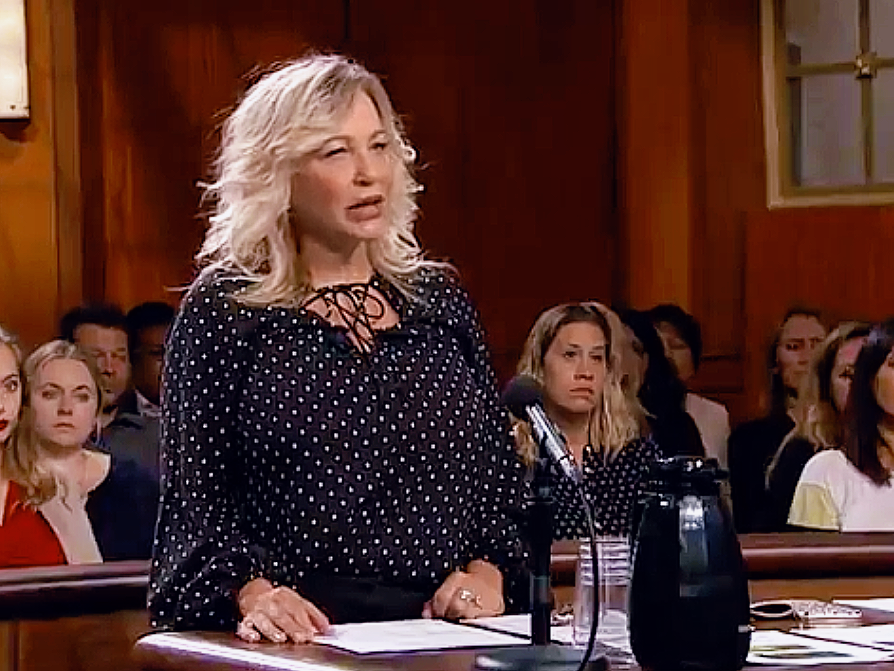
The questioning became sharper when Judge Judy asked when Deibler had contacted a pool company about a replacement liner. Deibler initially denied calling about a defect. She then acknowledged that she had asked about the cost of a new liner. Her answer about the date shifted during the exchange. The transcript records an answer of August 2001, followed by the court’s clarification that the relevant year was August 2015, before the home was listed for sale.
Deibler explained that the liner was fading and that she had simply inquired about the price, comparing the inquiry to looking at a purse without necessarily buying it. Judge Judy challenged that explanation. Her point was practical: a person normally does not call a pool company to ask about the cost of a new liner unless there is a reason to consider replacing it.
The buyers’ evidence supplied a later date. The transcript identifies March 14, 2016, when Deibler’s husband, Brad, contacted Quality Pools and Spas. The proposal concerned a 24-foot round beaded liner, new white goods, a face plate and eyeball, new foam and cove, the removal of dirt, and installation of a new liner. The quoted total was $2,152.81. The work was not completed at that time.
That proposal mattered because it came after the house had been listed and before the eventual sale. It suggested that the pool was no longer merely a cosmetic concern. Judge Judy reasoned that the inquiry was evidence of a problem with the pool, even though Deibler maintained that there had been no damage when she completed the earlier form.
The evidence that changed the case
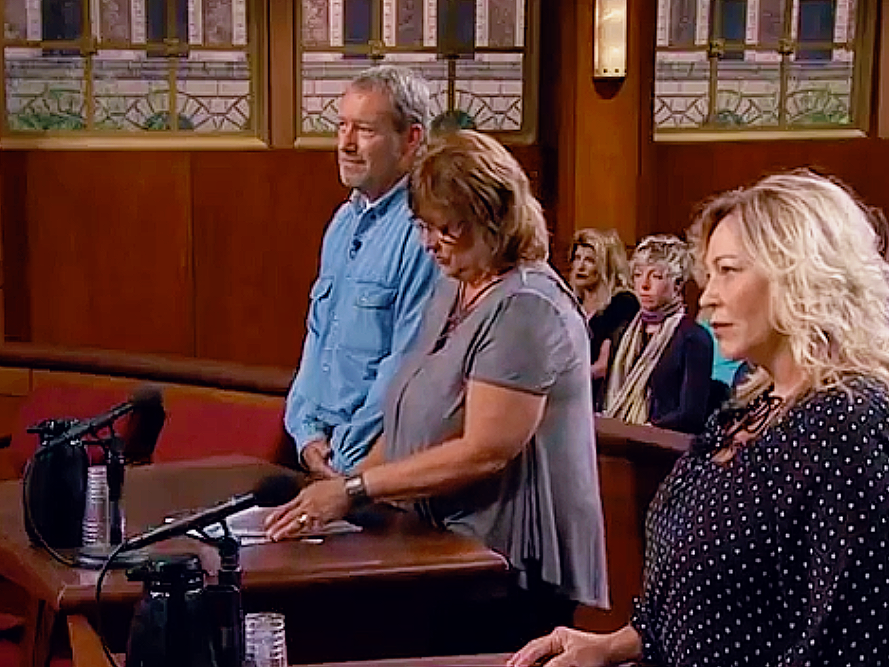
The Bonhams said they discovered the deep cut after the pool thawed. Their account placed the discovery after the December 2017 purchase, while the repair proposal showed that the former owners had already sought a price for a new liner in March 2016.
The courtroom also confronted an important distinction: a disclosure can be accurate when it is made and become inaccurate later. Judge Judy used a septic-tank example to explain the principle. If a seller states that a septic system is in good working order and it later collapses, the seller may have an obligation to update the statement before the sale. The same reasoning applied to a pool defect that could not be readily inspected because of snow, sleet, ice, or other conditions.
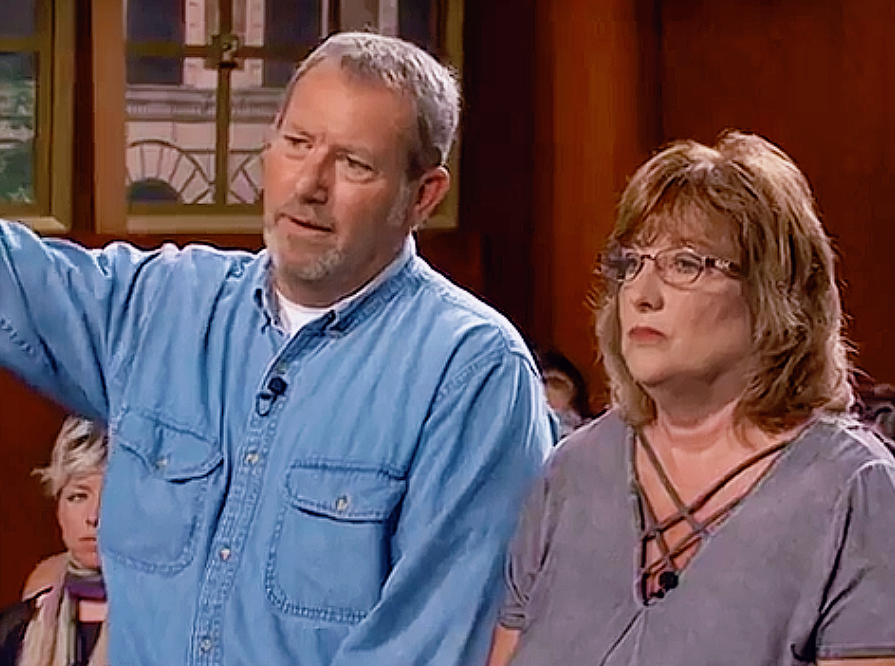
The defense argued that the buyers had opportunities to inspect the property and had signed paperwork purchasing the house “as is.” That argument did not end the dispute. The court focused on the separate obligation to disclose known conditions and to update a statement when circumstances change before closing.
The testimony also revealed a significant change in Deibler’s position. At first, the questioning concerned whether she knew about damage. Later, she maintained that there had been no damage when the form was completed, while also acknowledging that a replacement-liner inquiry had been made. Judge Judy treated the written proposal and the timing of the inquiry as more persuasive than the attempt to characterize the call as a casual price check.

Bonham v. Deibler: the judgment
After reviewing the paperwork, Judge Judy confirmed that the signature on the November 2017 statement belonged to Brad. She then issued judgment for the Bonhams in the amount of $2,152.81, matching the repair proposal discussed in court.
The first case therefore turned on a sequence of dates: the home was listed in September 2015; a pool-company inquiry occurred in March 2016; the house was sold to George and Kimberly Bonham in December 2017; and the buyers later identified a deep cut in the liner. The ruling reflected the court’s conclusion that the sellers’ disclosure did not adequately account for the known pool problem before the sale.
The case was not presented as a criminal prosecution. It was a civil dispute over a property condition and the cost associated with it. The court’s reasoning centered on the reliability of a seller’s representation when a buyer must depend on information that cannot be fully inspected at the moment of purchase.

Case Two : The Thanksgiving driveway collision
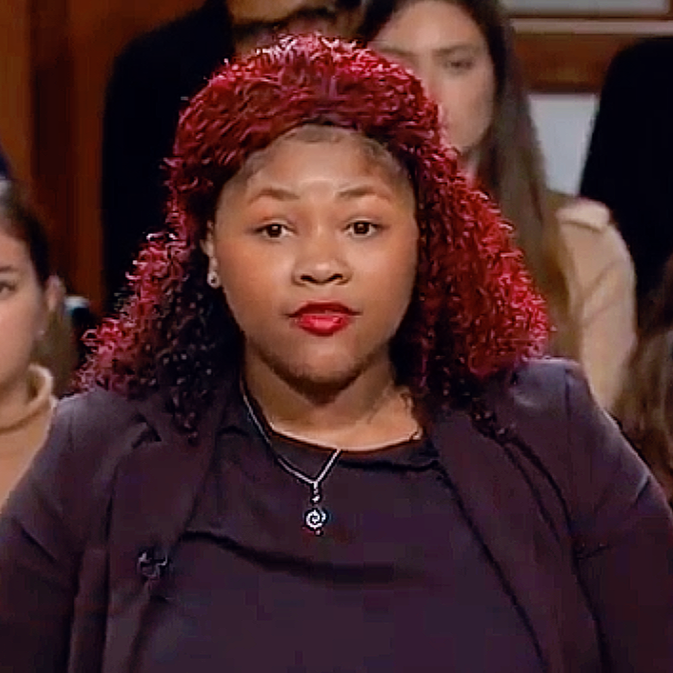
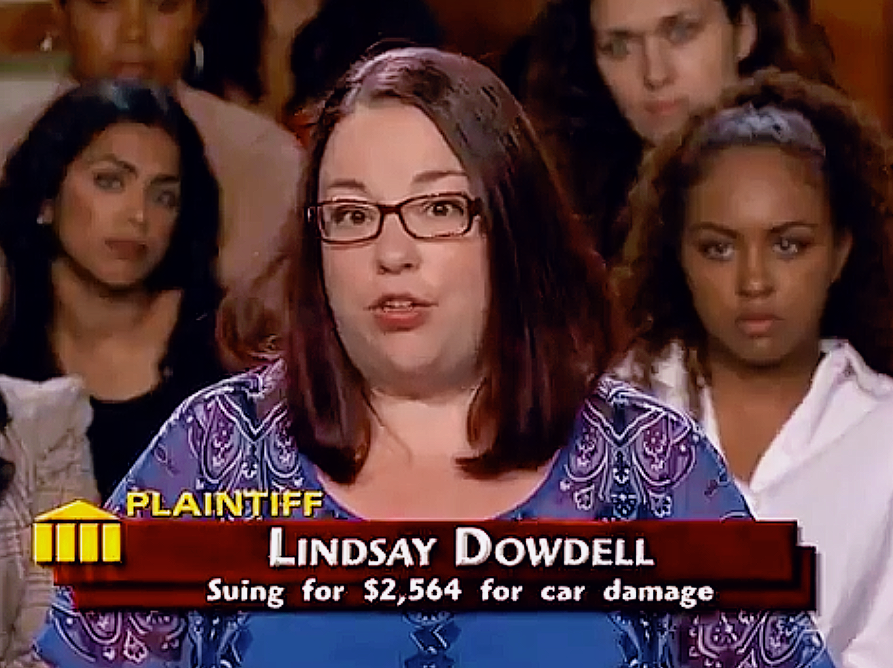
The second case involved former friends and a damaged vehicle. Lindsay Dowdell sued Clarence Mitchell and his girlfriend, Rebecca Adams, after a collision at or near her home on November 24, 2017. The evening had begun at Dowdell’s mother’s house, where the group ate Thanksgiving dinner and played cards.
Judge Judy began by asking who had been drinking that night. The testimony established that Mitchell, Adams, and others had consumed alcohol. Dowdell said she had not. Adams disputed that point and remembered Dowdell having a drink while they played cards. Dowdell explained that she had been cooking, moving between several locations, caring for four children, and expected to work the next day. She said she did not want to drink.

Another detail immediately complicated the account. Dowdell’s husband had been drinking and drove home approximately ten minutes before the others left. Judge Judy criticized that decision, but the case before her concerned the later damage to Dowdell’s truck.
Dowdell testified that she gathered leftovers and her children before getting into her truck. Mitchell and Adams got into their truck. As Dowdell began moving up and around the turnaround, Mitchell followed behind. She said he drove through the grass in the middle of the turnaround, failed to pay attention, and struck the side of her vehicle.
Photographs showed damage on the passenger side of Dowdell’s truck. Judge Judy described the marks as a dent and an indentation rather than a simple scrape. The damage supported the conclusion that one vehicle had hit the other, but the court still had to decide which driver caused the impact.
Two versions of the impact
Mitchell offered a different account. He said Dowdell pulled in first and he parked behind her because he and Adams planned to stop briefly so Adams could retrieve her purse and then return home to drop off her daughter. In his description, Dowdell got out, could not enter the house with her keys, returned to her vehicle, and pulled away.
Mitchell claimed that Dowdell’s vehicle moved into his truck. When Judge Judy asked whether he meant that Dowdell had slid into him from the side, he agreed. He said the front left portion of his truck had also been hit and that his photographs showed the contact.
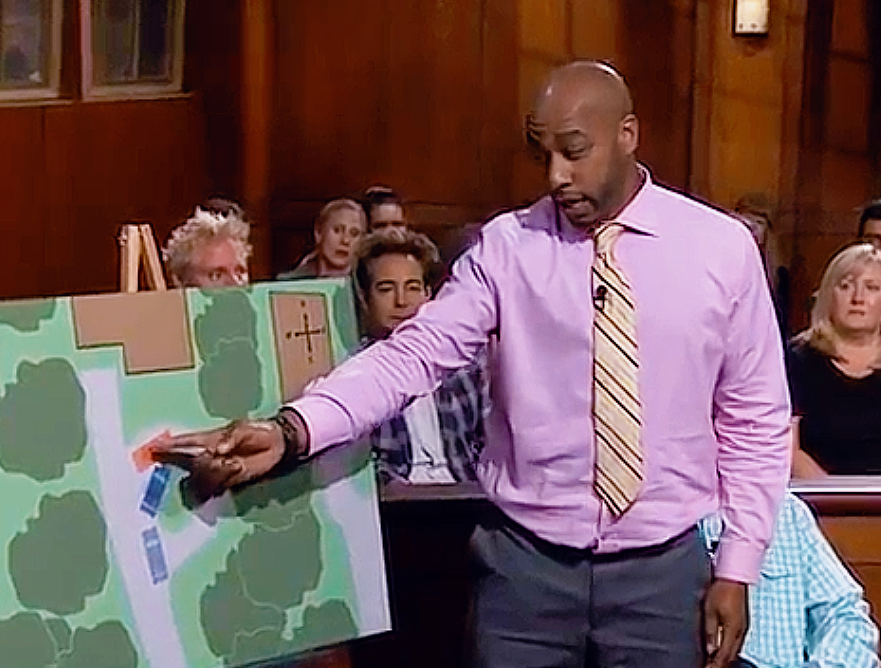
Dowdell rejected that version. She said photographs taken that night showed Mitchell’s truck in her grass, with gravel beside the vehicle. In her view, the position of the truck indicated that it had left the driveway and entered the yard before hitting her vehicle.
The court then examined the practical consequences of the competing stories. Mitchell’s insurance company had denied Dowdell’s claim. Dowdell had also filed a claim against the other insurance, but it was denied after the insurer heard a different account of the collision.

Adams had not obtained a daylight photograph of the alleged damage to her vehicle. She said she was not concerned about that damage and had not had the vehicle repaired. She also explained that, although her 2011 Denali had full coverage, using her policy would have required a $1,000 deductible and could have increased her insurance rates. She said she did not believe she should bear those consequences for an accident she attributed to Mitchell’s responsibility.
Judge Judy did not accept the claim that Dowdell’s vehicle had slid into Mitchell’s. The vehicle positions, the visible damage to Dowdell’s truck, and the lack of persuasive documentation for the defense account led the court to rule for Dowdell.
Dowdell v. Mitchell and Adams: the judgment
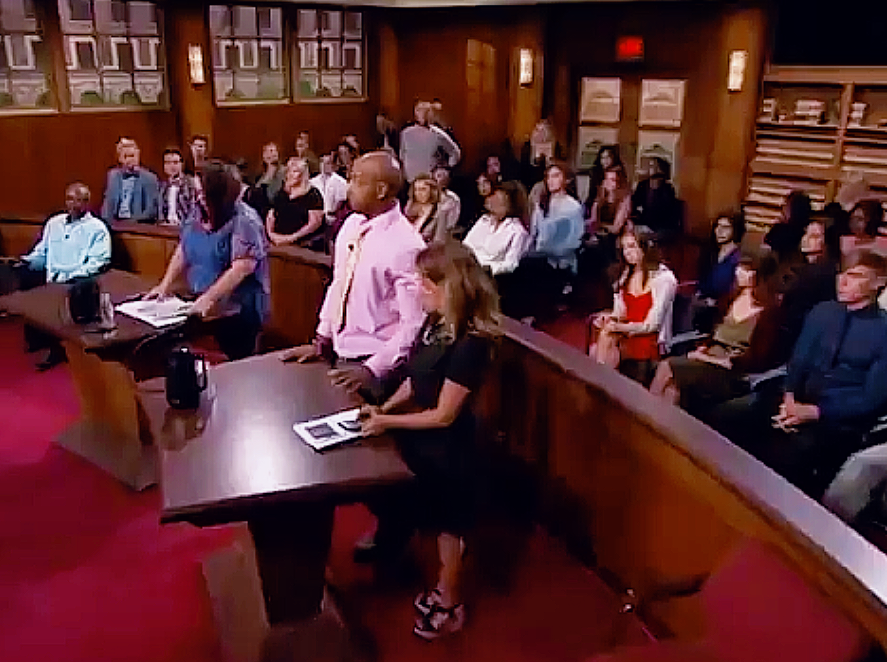
Judge Judy entered judgment for the plaintiff in the amount of $1,000. The parties were excused after the ruling.
The decision resolved a sharply disputed driveway collision, but it also exposed how quickly a social gathering can become a civil claim. The testimony moved from Thanksgiving dinner and card games to questions about alcohol, vehicle movement, photographs, insurance claims, deductibles, and conflicting descriptions of the same moment.
As in the pool case, the central issue was not simply who felt wronged. It was which account was supported by the evidence. The court gave greater weight to the physical damage and the surrounding circumstances than to the explanation that Dowdell’s vehicle had slid into the defendants’ truck.
What these cases reveal
The two disputes involved very different settings, but Judge Judy approached both through the same discipline: establish the timeline, test the written record, and compare each explanation with the physical evidence.
In the pool case, the crucial questions were when the disclosure was signed, when the pool-company inquiry occurred, and whether the seller had a duty to update the information before the sale. In the driveway case, the court examined where each vehicle was positioned, what the damage looked like, and whether the competing story fit the photographs.
Neither case was decided by the loudest accusation. The Bonhams prevailed because the repair proposal and the disclosure timeline undercut the claim that the pool problem was unknown. Dowdell prevailed because the vehicle damage and the disputed positions made the defendants’ explanation unpersuasive.
The episode also shows why civil disputes often depend on ordinary records. A disclosure form, a dated proposal, a photograph, an insurance claim, or the absence of a repair estimate can become decisive when memories conflict. The court’s task was to separate what the parties believed from what the evidence could support.
FAQ
What was Bonham v. Deibler about?
George and Kimberly Bonham sued Buffy Deibler over an alleged failure to disclose damage to the home’s above-ground pool. The case focused on the pool liner, the seller’s disclosure form, and a later replacement proposal.
How much did the Bonhams receive?
Judge Judy awarded the Bonhams $2,152.81, the amount associated with the pool-liner proposal discussed in court.
When was the pool problem discussed with a pool company?
The transcript identifies March 14, 2016, when Brad, Deibler’s husband, obtained a proposal from Quality Pools and Spas for replacement work.
What happened in the Dowdell case?
Lindsay Dowdell said Clarence Mitchell drove through the grass in a turnaround and hit her truck. Mitchell said Dowdell’s vehicle slid into his truck. Judge Judy ruled for Dowdell.
How much was the judgment in Dowdell v. Mitchell and Adams?
Judge Judy awarded the plaintiff $1,000.
Did the cases involve criminal charges?
No. The SRT presents both matters as civil courtroom disputes involving property damage, disclosure, and liability.