
A damaged fence can mark a property line. A prescription bottle can become a neighborhood accusation. And a relationship that once involved trust can end with a demand for repayment. In two cases heard before Judge Judith Scheindlin, the central question was not simply who felt wronged—it was what the evidence could actually prove.
Case One: Burks v. Bobo
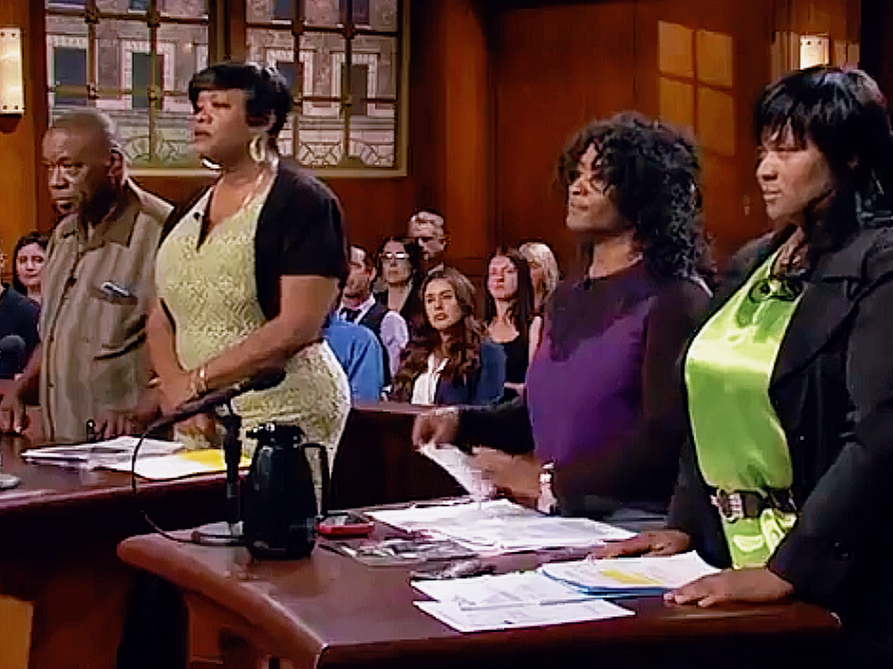
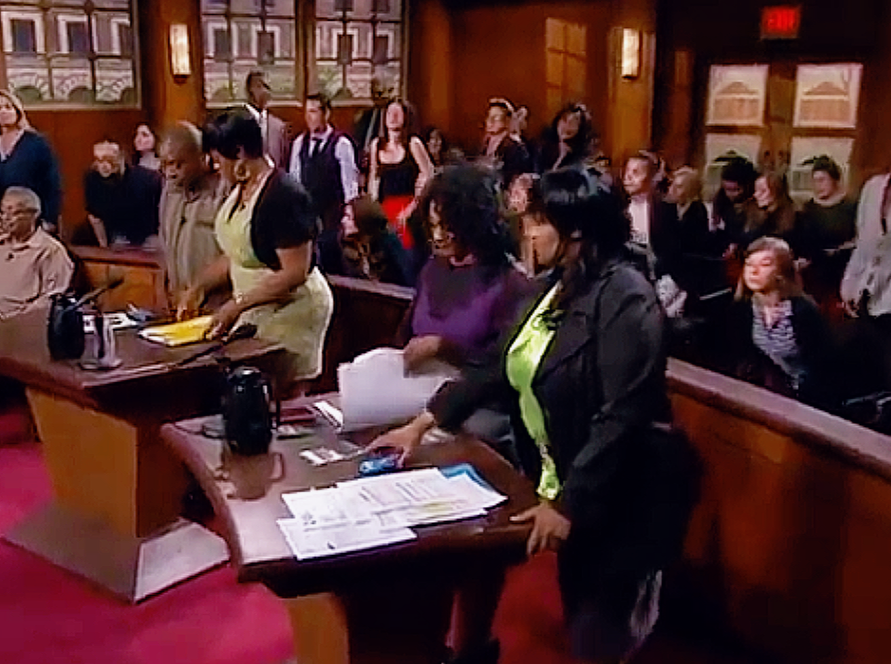
The first matter placed longtime neighbors across from one another. Gregory and Valerie Burks sued Lisa Bobo and her sister, Patricia, seeking half the cost of a replacement fence as well as damages connected to alleged slander and harassment. The dispute had apparently been building for years, but in court it narrowed into two connected questions: who was responsible for the boundary fence, and what could be shown about the accusations surrounding the Burks’ work as foster parents?
The Burks had lived in their home for 26 years. Lisa Bobo said she had lived next door since 2010. The older boundary arrangement included a chain-link fence and a row of trees. The Burks said the chain-link fence had been present when they moved in, while the trees stood on their side. Before Bobo and Patricia moved in, the trees were removed and the old, rusty chain-link fence was taken down. The Burks then had a wooden fence installed in roughly the same area, approximately 15 years before the hearing.
By the time of the case, that wooden fence needed replacement. The Burks had paid for new materials and wanted to install the replacement, but they said they needed access to the neighboring property. According to their account, the installation could not proceed because access was refused. Bobo disputed that description and maintained that the question of the property line had not been adequately settled.
The fence dispute
The testimony became a close examination of photographs, property lines, and a small mark in a fence. The Burks said the boundary had been surveyed by the city and that the fence sat down the middle. Bobo challenged the conclusion, pointing out that a mark associated with the Burks’ construction appeared to be on her property.
The mark was connected to work on an upgraded fence. The Burks’ workers were installing cement pillars and, according to Bobo, cut into a portion of her existing fence without permission. Valerie Burks described the incident as a misunderstanding. She said the workers spoke Spanish, and after she contacted the owner, he agreed to address the issue. The parties disagreed about whether the mark was the damage at issue and whether a repair—or an entirely new gate—was being demanded.

Judge Judy focused on the practical problem. If the mark was on Bobo’s property, she reasoned, the location of the Burks’ wooden fence also raised questions about whose land it occupied. The discussion did not produce a clean agreement about every measurement, but the hearing did establish one workable point: Bobo said the Burks could access her property, and the Burks had already paid for the replacement materials.

Judge Judy ordered that the fence be installed within two weeks. The Burks were required to give 72 hours’ written notice before workers entered the property, and the parties acknowledged that the work might take two or three days. The transcript does not state a separate monetary award for the fence or the slander allegations; it records the access and installation arrangement before the court moved to the second part of the claim.
A prior incident from 2013 also surfaced. Bobo said that when workers connected to the Burks were painting the fence white, overspray reached her brand-new 2013 car, which still had its dealership tag. The Burks acknowledged that Valerie paid for the vehicle damage, and the matter was described as settled. That exchange was important because it showed the neighbors had once been able to resolve a property-related problem directly, even though communication had later deteriorated.
The foster-care allegations
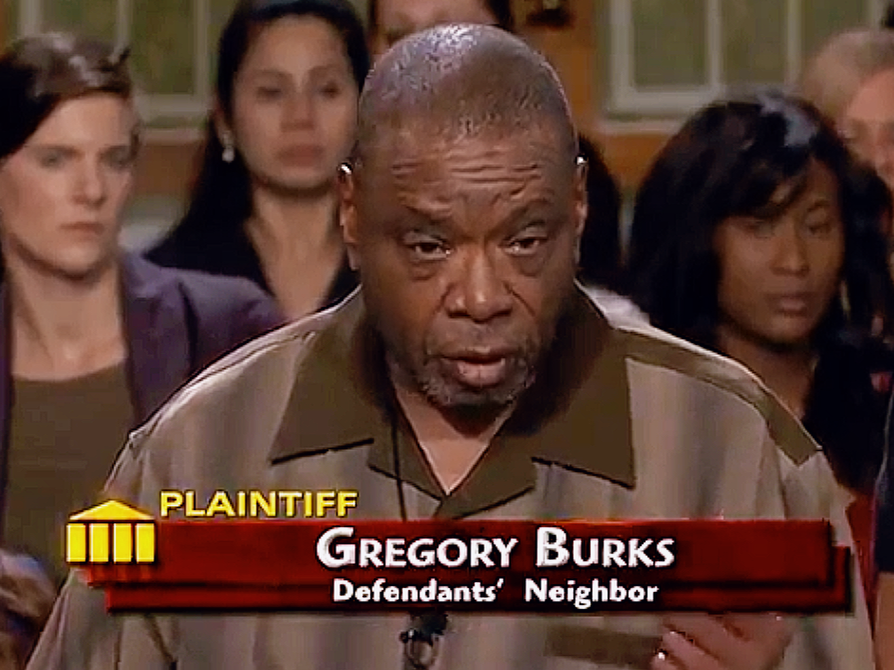
The second part of the Burks’ claim was more serious in personal consequence. Gregory and Valerie said they had been foster parents for more than 25 years, until January 2018. They alleged that slanderous remarks by the defendants contributed to the suspension of their foster-parent license while an investigation remained open.
Judge Judy pressed for specifics. Neither Lisa nor Patricia admitted filing a complaint with social services. The Burks said the Department of Social Services could not identify where the call had originated, and they described repeated police calls and hostile interactions as harassment. Valerie said the conflict had affected her health, her friendships, and the couple’s reputation in the neighborhood.

The specific accusation described in court was that the Burks had thrown hypodermic needles, medicine bottles, and other trash into Bobo’s yard. Bobo produced photographs showing pills, what appeared to be a syringe, and a medicine bottle bearing a name that did not belong to either defendant. She said she had begun photographing items she found on July 1, 2017, after discovering a prescription bottle among other objects.
But the photographs did not establish who placed the items there. When asked whether she had proof that the Burks had thrown the trash into her backyard, the response turned to an incident report. The report was not offered as proof of the accusation because, as the hearing made clear, it did not state that Bobo had said the Burks were responsible. Judge Judy declined to rely on a document that did not contain the necessary statement.
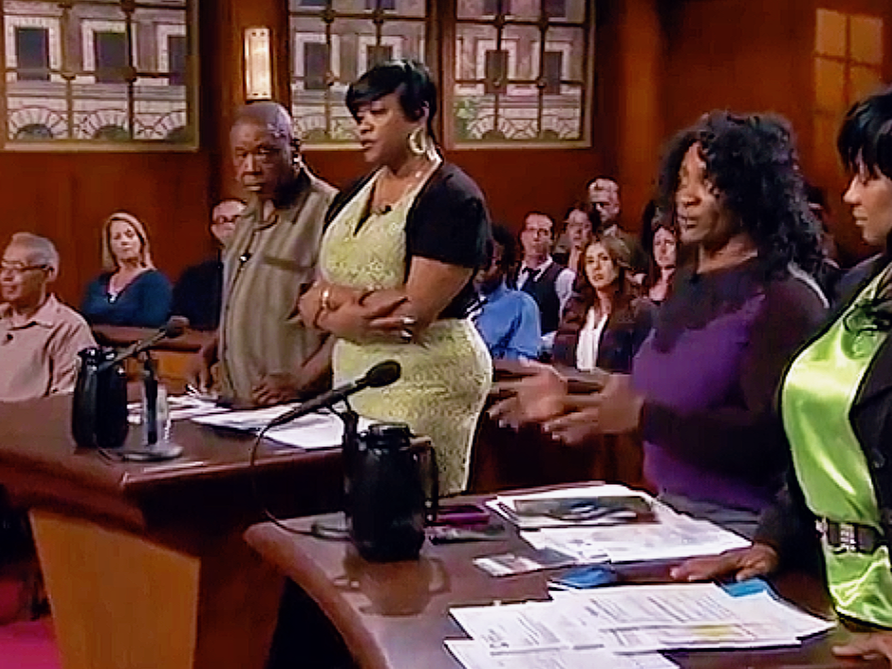
The questioning also exposed a key limit in the testimony. Bobo said she had seen a neighbor digging through trash, but when asked whether she had seen either of the two defendants take a bottle of pills from the trash, she answered no. The transcript therefore supports the existence of the objects and the accusation, but not direct proof that Lisa or Patricia placed them in the yard.
The testimony ended with both sides offering sharply different interpretations of the conflict. The Burks described damage to their reputation and repeated calls to authorities. Bobo characterized the Burks as strange and said they did not belong in Compton. Those remarks explain the hostility surrounding the case, but the hearing’s evidentiary focus remained narrower: what was said, who said it, and what could be proved.
Case Two: Tucker v. Lamoureux
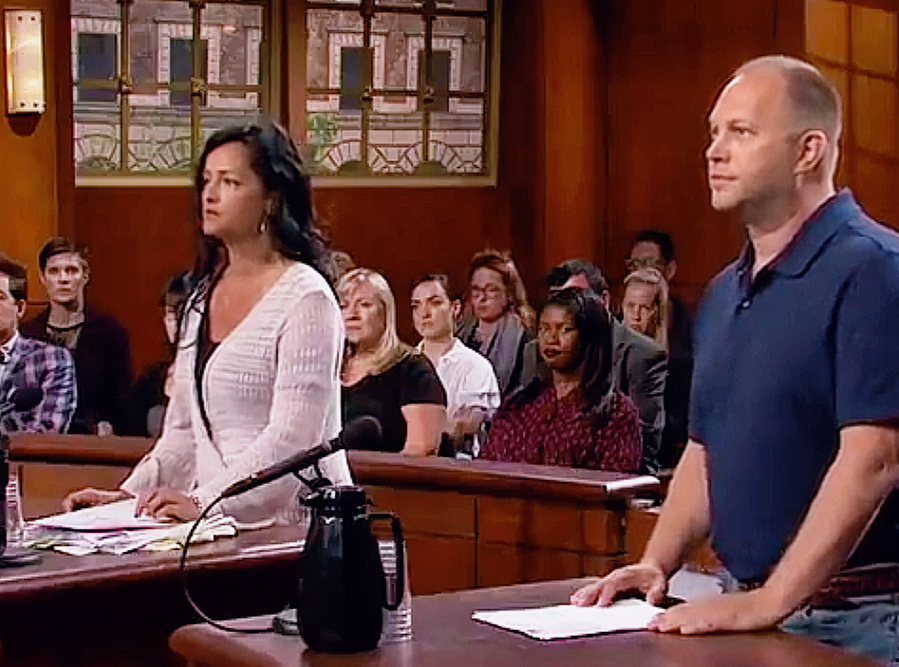
The next case shifted from a property-line conflict to the aftermath of a relationship. Jennifer Tucker sued her former boyfriend, Michael Lamoureux, over loans she said she made when he was experiencing financial difficulty. Their relationship began on June 16, 2016, and ended in September 2017.
Tucker said Lamoureux had been unemployed and was waiting for approximately $29,000 in retirement money from the state of Connecticut. During the relationship, she stayed at his house several nights a week. She said that beginning in September 2016, she spent the majority of the week there. Lamoureux later left abruptly for Hawaii for three months to care for his grandchildren, leaving Tucker in charge of his house, children, and pets, according to her testimony.
When relationship and repayment collided
The hearing quickly became a test of how the parties defined living arrangements and financial responsibility. Tucker said she had not paid rent at Lamoureux’s home. Instead, she said she carried her own mortgage while also paying household bills for his home and her own. She maintained that she had cared for his children, attended nursing school, and paid every household bill from June through January.
Judge Judy challenged Tucker’s account of custody. Tucker referred to joint legal custody of her children, but the judge distinguished legal custody from physical custody. The children lived with their father in Watertown, Connecticut, attended school from his home, and did not attend school from the residence where Tucker was staying. Judge Judy stated that the person caring for children Monday through Friday generally has physical custody, and pressed Tucker on whether she had actually held that role during the relevant period.

The exchange became increasingly direct. Tucker tried to explain that her children visited and that Lamoureux’s home served as a midway point. Judge Judy returned to the question of where the children lived and where they went to school. The transcript records Tucker acknowledging that the children lived with their father and attended school from his Connecticut home, while she described having joint legal custody and visitation.
Lamoureux’s side of the dispute also included a counterclaim involving two small dogs and chocolate. He said that while Tucker and her daughter were visiting, one of Tucker’s children left a box of chocolates out. A Chihuahua belonging to Lamoureux’s deceased wife ate the chocolate and died. On another occasion, Lamoureux said, cookies containing chocolate were left out, and another Chihuahua became ill and needed veterinary care. Tucker’s account of the relationship and household obligations was therefore met with a separate claim about responsibility for the dogs.
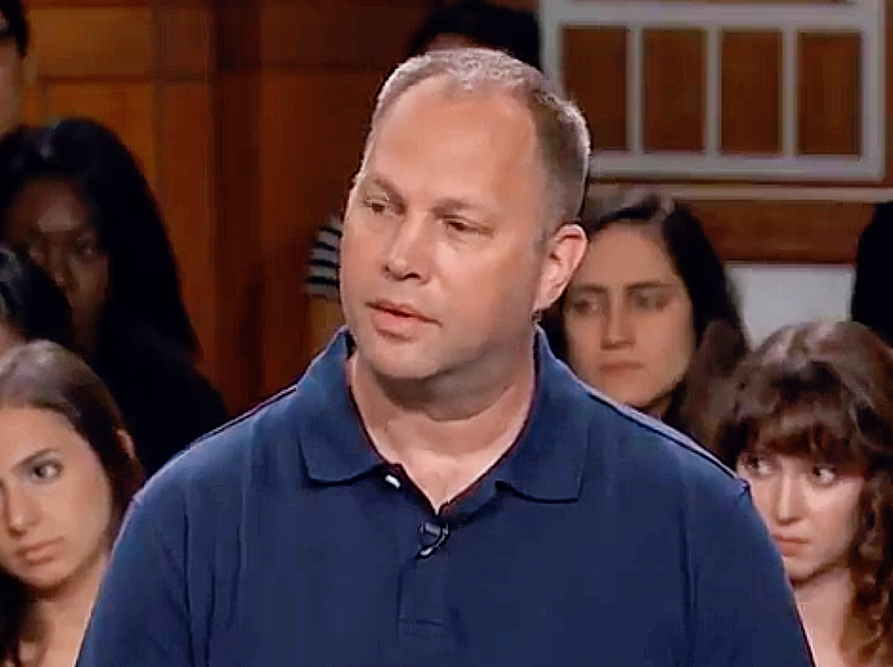
Judge Judy reacted to the counterclaim in blunt terms during the exchange, calling it “stupid” in the transcript. She then summarized the allegations about the chocolates and questioned whether that was what Lamoureux wanted the court to consider after Tucker’s claimed financial contributions. The supplied SRT does not state a formal ruling on that counterclaim.
The SRT ends before a final ruling on Tucker’s loan claim is stated. It also does not provide a precise total for the loans she sought to recover. What it does show is the court testing whether the requested repayment could be separated from the broader relationship: time spent at the house, unpaid rent, household bills, childcare, school arrangements, and the parties’ competing accounts of what they had promised one another.
What the Transcript Establishes
Taken together, the two cases show why small-claims testimony often turns on precision rather than volume. In Burks v. Bobo, the conflict involved a physical boundary and accusations that reached into the Burks’ foster-care status. The court established a procedure for replacing the fence, but the supplied transcript does not record a separate damages award on the slander claim.
In Tucker v. Lamoureux, the dispute concerned money exchanged during a relationship. Tucker described financial support and household responsibilities; Judge Judy focused on the difference between legal and physical custody and on the absence of rent payments. The available SRT ends before the loan dispute’s final outcome is announced.
Neither case is best understood through the loudest allegation alone. The record is more revealing when the claims are separated from the proof: a damaged fence is not automatically evidence of ownership; objects found in a yard do not identify who placed them there; and financial help given during a relationship is not automatically a recoverable loan without an enforceable understanding.
FAQ
Who sued whom in Burks v. Bobo?
Gregory and Valerie Burks sued neighbors Lisa Bobo and her sister, Patricia, over a fence dispute and allegations involving slander and harassment.
What did Judge Judy order about the fence?
The Burks were allowed to install the replacement fence with access to the neighboring property. They were given two weeks, had to provide 72 hours’ written notice, and expected the work to take two or three days.
Did the SRT prove that Lisa Bobo or Patricia threw needles into the Burks’ yard?
No. The transcript describes photographs of needles, pills, and a medicine bottle, but Bobo answered no when asked whether she had seen either defendant take a bottle from the trash. The incident report also did not contain the alleged statement identifying the Burks as responsible.
How long had the Burks been foster parents?
They testified that they had been foster parents for more than 25 years, until January 2018. Their license was described as suspended while an investigation continued.
When did Jennifer Tucker and Michael Lamoureux date?
Their relationship began on June 16, 2016, and ended in September 2017.
What was Tucker seeking from Lamoureux?
Tucker said Lamoureux owed her money for loans made when he was financially struggling. She also described paying household bills and supporting responsibilities connected to his home.
Does the supplied transcript include the final ruling in Tucker v. Lamoureux?
No. The SRT ends during the proceedings and does not state the final judgment on Tucker’s loan claim.