In one case, a driver crossed a concrete parking barrier, struck a neighbor’s parked car, and left without a note. In the next, a young couple said a former co-worker had taken back a car they were still paying for while personal belongings remained disputed. Both disputes came before Judge Judith Scheindlin, where the decisive evidence included photographs, security video, and a written agreement.
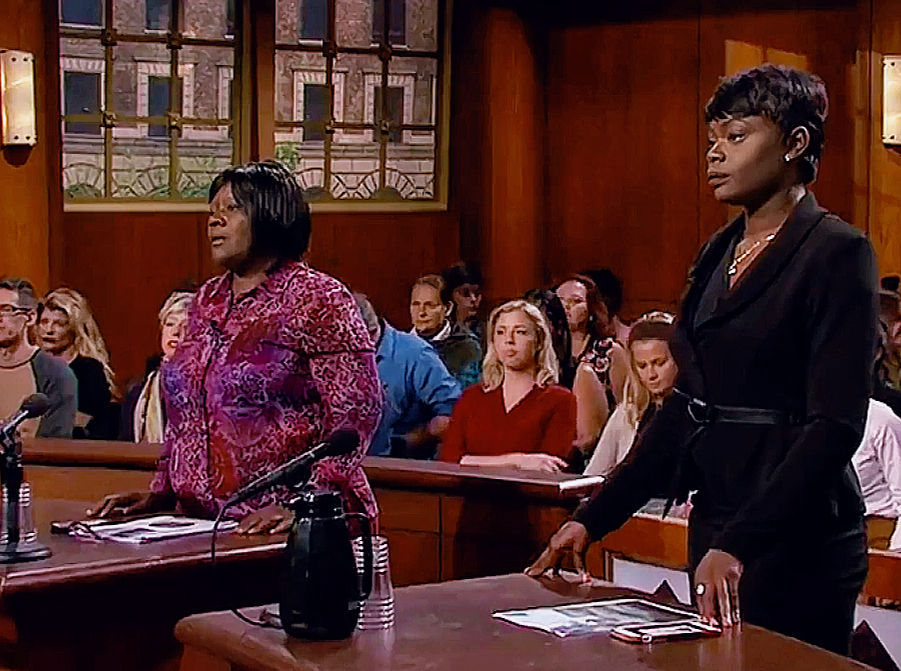
The First Case : The parking-lot collision
The first case, Barnes v. Lawal, began in an apartment-complex parking area. Carmen Barnes sued her neighbor, Kimberly Lawal, alleging that Lawal hit Barnes’s parked car while passing through a tight section of parking spaces. Barnes was not inside the vehicle. Her case relied on a neighbor’s eyewitness account, photographs of both cars, and building security footage.
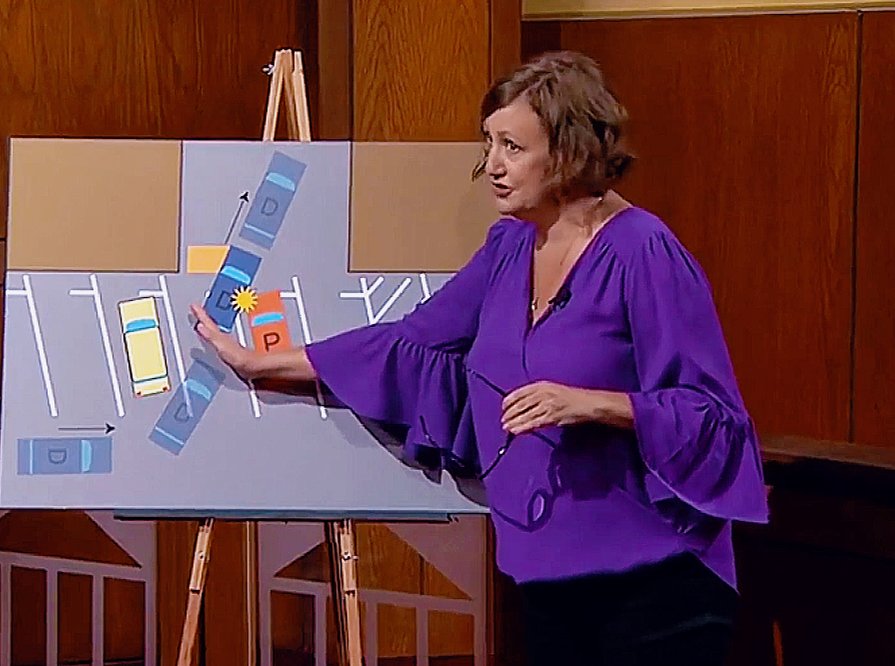
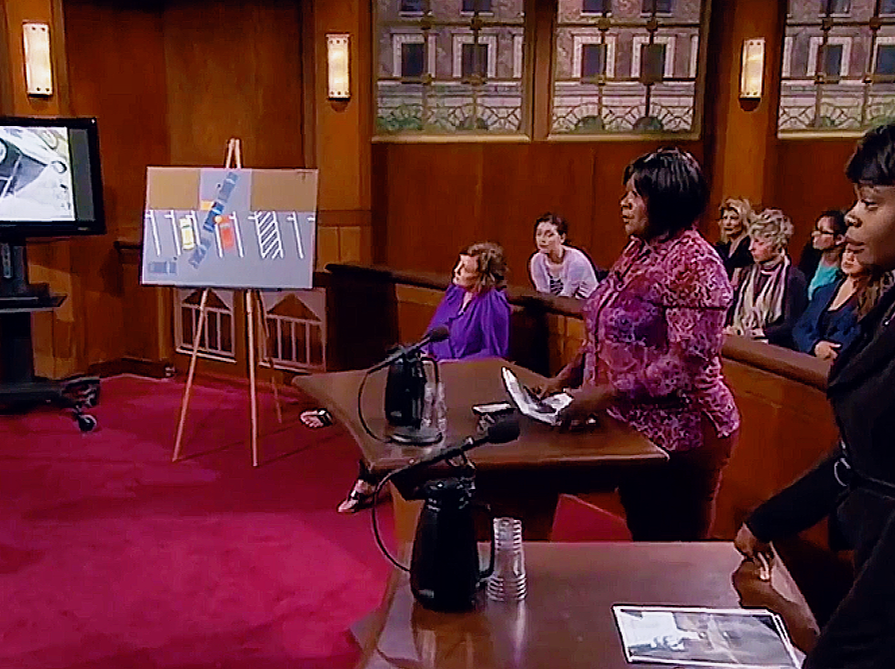
Lawal did not deny being in the area. Her position was narrower and central to the dispute: she said she had driven through the space but had never hit Barnes’s car. When Judge Judy asked the parties to explain the layout, the disagreement became a question of movement, distance, and what the available evidence showed.
The alleged collision took place on February 13, at approximately 7:45 a.m. That timing came from Sherry Kwok, who lived in a parallel building and was preparing to leave for work. Kwok said she was adjusting a mirror after her boyfriend had driven the car the previous evening when she saw Lawal’s vehicle in the rearview mirror.
Kwok initially thought Lawal might be trying to park at an angle and watched because the vehicle appeared capable of hitting her own car. It did not. According to Kwok, Lawal continued toward Barnes’s parked vehicle.
Kwok described the contact as minor. She said Lawal’s vehicle went over a small concrete bump and then impacted Barnes’s car. Kwok saw Barnes’s vehicle react. She expected Lawal might leave a note, but Lawal parked and went toward her unit instead.
Kwok said she waited because she felt obligated to document what she had seen. When no note was left, she called her boyfriend, who came down from the apartment. Photographs were taken of both vehicles; Kwok said Lawal’s car showed scratches and white paint associated with Barnes’s vehicle. Before leaving for work, Kwok sent the photographs to Blanca, the apartment manager, and reported the accident.
A witness, photographs, and security footage
Lawal offered a different account. She demonstrated that her car approached from another direction, passed through the area, and parked. She said she went upstairs to get her daughter and repeated that there had been no impact.
The courtroom also had security-camera footage from the garage area. The cameras were positioned at both ends, and the footage came from building management. Judge Judy asked to see the video before continuing with the photographs.
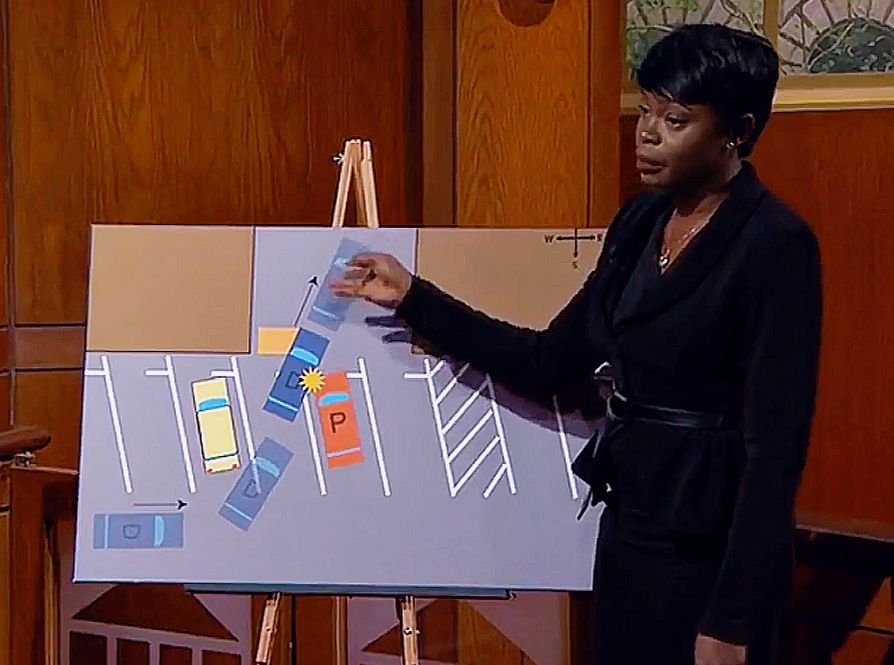
The video discussion focused on whether Lawal had driven over the concrete barrier. She acknowledged that she had, and argued that residents used the route regularly and that no sign prohibited it. Judge Judy’s focus was not whether the route was expressly forbidden, but what followed when a driver used it and made contact with another person’s car.
Lawal insisted that she had driven through the area many times without a problem. Judge Judy returned to the point that previous uneventful trips did not resolve what happened on this occasion.
Why the insurance response mattered
Lawal’s car was insured by GEICO. Judge Judy asked why Lawal had not responded when the insurer attempted to contact her. A letter stated that repeated attempts to reach the insured had failed and that, without contact, an objective police report, or an independent witness, the insurer could not take further action.
Lawal maintained that she had not hit Barnes’s car and said she did not feel an impact. Judge Judy said that was not a reason to ignore the insurer’s calls.
The court ultimately ruled for Carmen Barnes in the amount of $1,500. After the ruling, Lawal continued to say that she did not believe she had hit the car. Barnes, meanwhile, emphasized that an independent witness had taken photographs and reported what happened. Her point was simple: documenting the incident was the responsible thing to do.
The Second Case : The car sale that became a repossession dispute
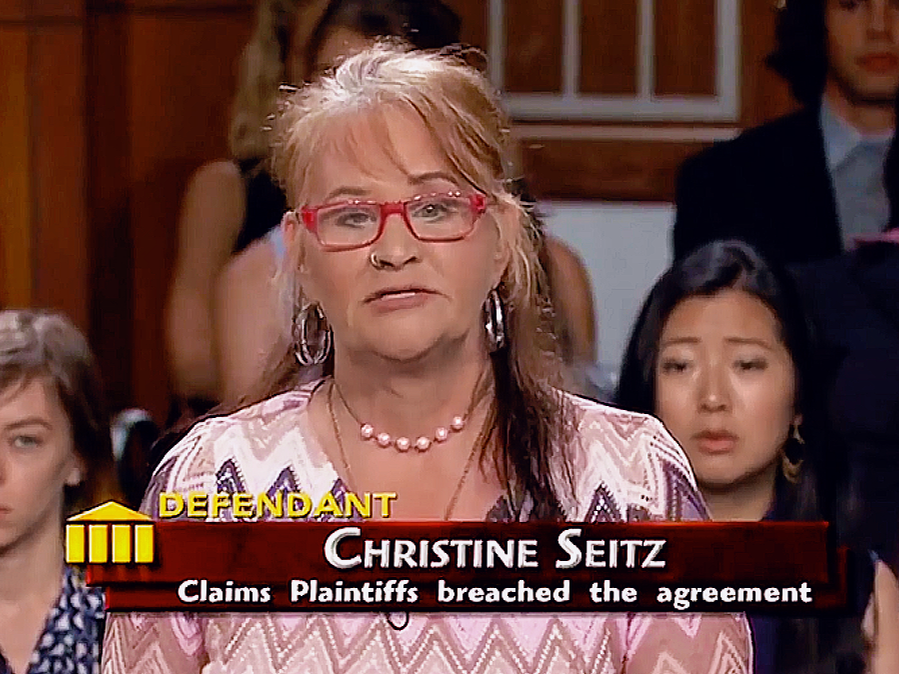
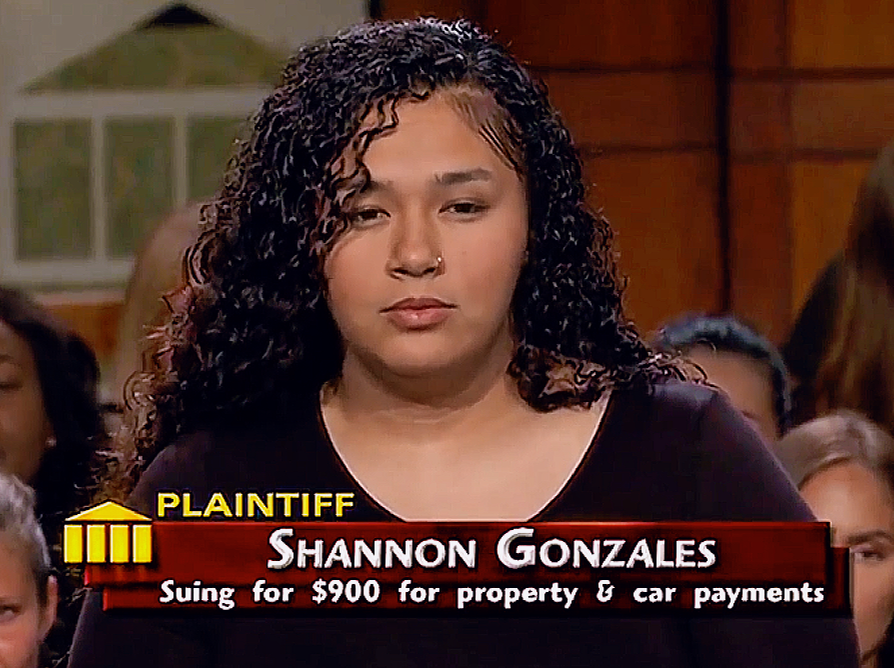
The second case, Gonzalez-Carter v. Seitz, involved Clinton Carter and his girlfriend, nineteen-year-old Shannon Gonzalez, suing Shannon’s former co-worker, Christine Seitz. They alleged an illegal repossession, sought the return of car payments, and claimed that property remained in the vehicle.
Seitz filed a countersuit for the cost of rekeying the car. The two women met at a job orientation. Gonzalez needed transportation to work, and Seitz offered to sell her a car at a favorable price.
The agreed purchase price was $2,300. Gonzalez took possession on March 27, 2018, after paying $50. The bill of sale required $150 on April 13, followed by $75 payments each pay period beginning May 11.
Gonzalez referred to different payment arrangements, including $175 per paycheck or $150 per month, but the bill of sale identified the schedule. She acknowledged that she did not pay the required $150 on April 13. She said she paid $75 that day and another $75 at the end of April.
By the next scheduled payment on May 11, she said she made no payment. In total, she had paid the $50 down payment and two $75 payments, or $200, while using the vehicle to drive to work and back home during March and April.
Missed payments and the written agreement
Gonzalez said she had tried to contact Seitz without a response. She also pointed to messages suggesting a $150 payment would be made on May 25. Seitz repossessed the vehicle on May 22, before that proposed date.
Judge Judy focused on the earlier breach: the first required payment was incomplete, the next was delayed, and the following payment was not made. The later discussion about May 25 did not erase the earlier failures.
Judge Judy rejected Gonzalez’s claim for money back. Seitz had transferred possession after receiving $50, and Gonzalez had used the vehicle for roughly two months before the agreement was breached. The judge also questioned Gonzalez about her employment. She said she had quit Target and later obtained another job; Judge Judy called her unreliable.
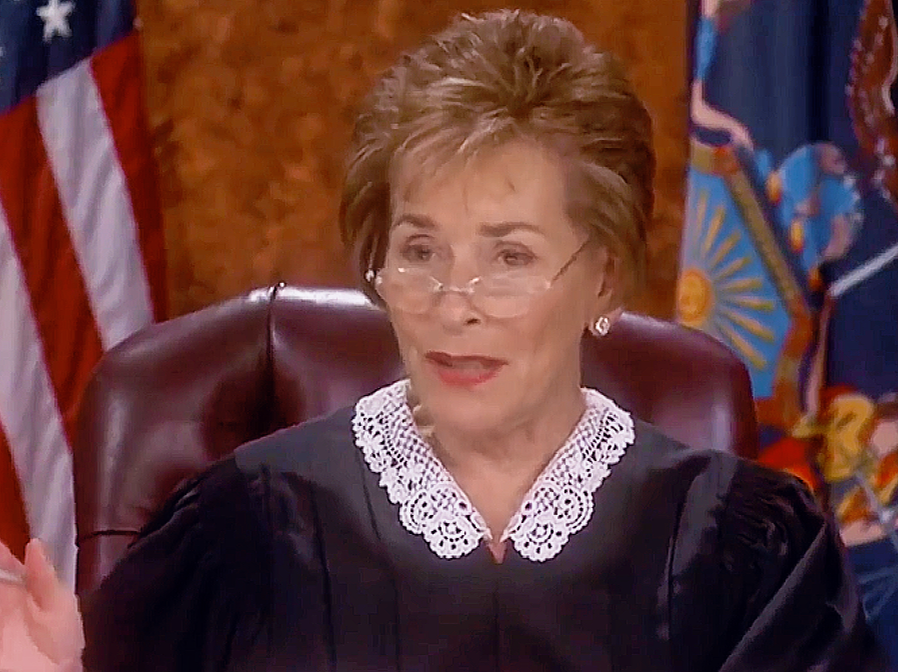
The belongings left inside the vehicle
The repossession claim also included property Gonzalez and Carter said had been inside the car: a glass television stand, a large new dog cage, a paycheck made out to Clinton and signed on the back, and bottled water.
Seitz said she opened the trunk but the shelves were too large to fit, so she placed the stand on the sidewalk between bushes near Gonzalez’s apartment complex. Gonzalez later called after finding the vehicle gone and saw the stand outside.
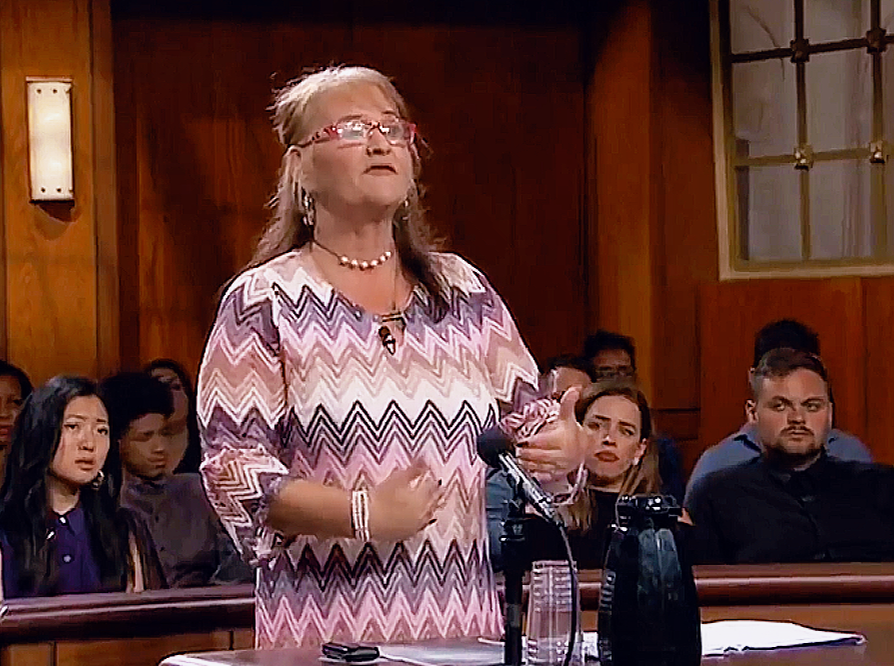
The plaintiffs also mentioned rugs and brooms for a new apartment. When Judge Judy asked whether those items were in the car at the end of May, the answer was no.
Judge Judy dismissed the case. She found that Gonzalez had failed to meet the written payment schedule and was not entitled to recover the money paid. The court also addressed the master key with a chip by pointing to rekeying as an option.
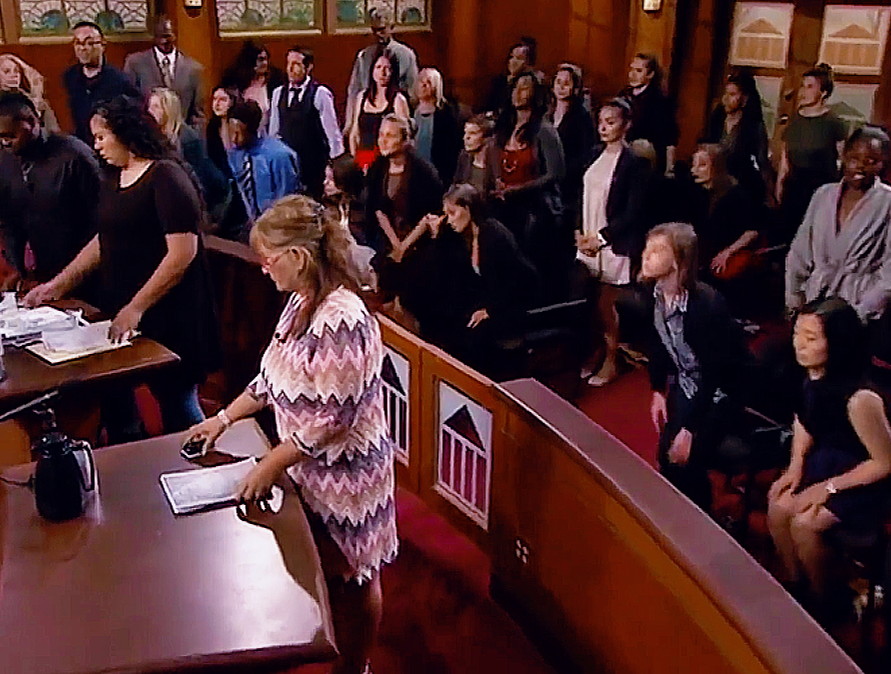
What the two rulings turned on
The two cases involved very different disputes, yet both turned on evidence that could be tested against the parties’ statements. In Barnes v. Lawal, an eyewitness, photographs, building-management footage, and the insurer’s unanswered attempts to make contact supported the plaintiff’s account. In Gonzalez-Carter v. Seitz, the bill of sale supplied dates, amounts, and obligations that could be compared with the payments actually made.
Neither case was decided simply because one side sounded more emotional. The first ruling centered on responsibility after a parking-lot impact. The second centered on whether a buyer had complied with the terms of a vehicle sale before demanding money or property back. In both, Judge Judy reduced a heated personal conflict to the evidence and the agreements in front of her.
FAQ
Who sued Kimberly Lawal?
Carmen Barnes sued Kimberly Lawal, alleging that Lawal hit Barnes’s parked car while maneuvering through an apartment-complex parking area.
Who witnessed the parking-lot collision?
Sherry Kwok testified that she saw Lawal’s vehicle approach, cross a concrete bump, and make minor contact with Barnes’s parked car. Kwok said she photographed both vehicles and notified the apartment manager, Blanca.
How much did Carmen Barnes win?
Judge Judy entered judgment for Carmen Barnes in the amount of $1,500.
Who were the plaintiffs in the repossession case?
The plaintiffs were Shannon Gonzalez and her boyfriend, Clinton Carter. They sued Christine Seitz over the repossession of a car and property they said had been inside it.
What was the agreed price of the car?
The bill of sale identified a purchase price of $2,300. Gonzalez paid $50 at the start and later made two $75 payments.
Why did Christine Seitz repossess the vehicle?
Judge Judy found that Gonzalez breached the payment agreement by failing to make the required payments on schedule. The repossession occurred on May 22, after incomplete or missed payments.
What happened to the belongings in the car?
The dispute involved a glass television stand, a large dog cage, a paycheck, and bottled water. Seitz said she placed the glass stand on a sidewalk between bushes near Gonzalez’s apartment complex. Judge Judy dismissed the case.