A horse stood in a boarding facility for months while its owner was rarely there. Then, in January 2018, the animal was found with a swollen leg and a deep, infected wound. Days later, the horse was taken to an equine hospital—but the dispute that followed was not only about medical care. It was also about five months and 16 days of unpaid boarding fees, broken promises, and who had the responsibility to act.
In the second case, a car purchased for $5,000 became the center of another unraveling agreement. One person had contributed $2,000. Another later paid $500. When the original buyer was deported and the car changed hands, Judge Judy had to determine who had been left with the money, the vehicle, and the benefit of the bargain.
These two cases from the episode are different in subject, but they turn on the same question: when an informal arrangement breaks down, who is still responsible for what was promised?
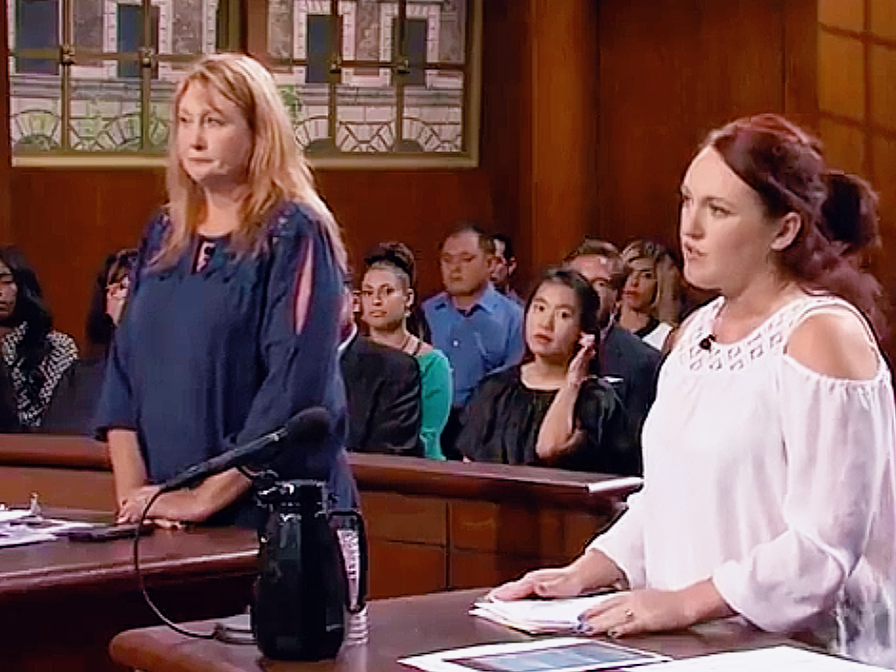
Case One: King v. Galanders
The first case placed ranch owner Beverly King against her former client, Brittany Galanders. King said Galanders owed money for boarding her horse and two dogs, along with additional costs. Galanders disputed the claim and countersued for veterinary expenses and emotional distress connected to the death of her horse.
King testified that she operated a boarding facility for animals, mainly horses, dogs, and cats. Galanders brought the horse to the facility on June 8, 2017. She explained that she had been in a relationship with a man serving in the military at Mountain Home Air Force Base and needed a nearby place for the horse on short notice.
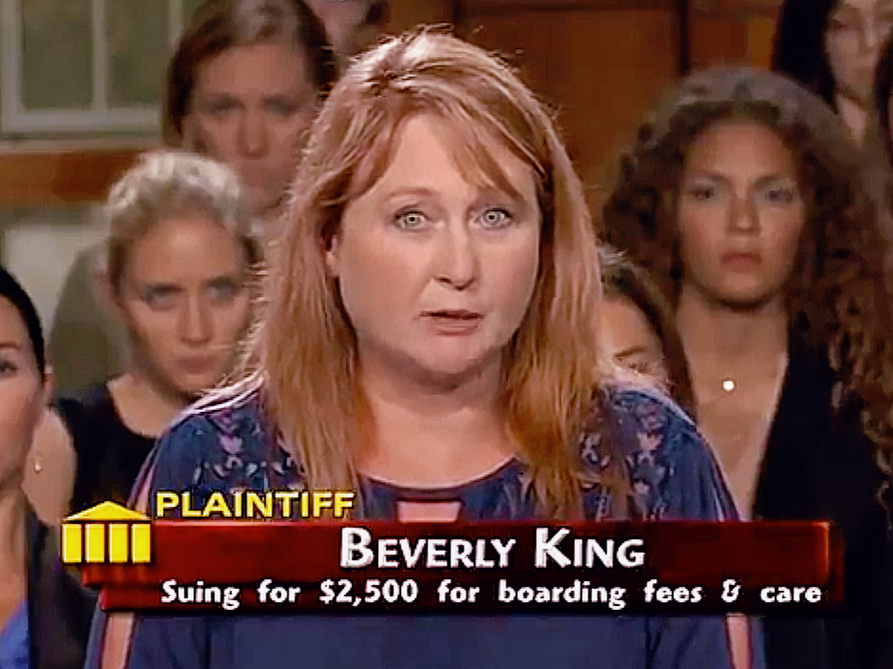
The horse remained at the facility for roughly a year. But Galanders acknowledged that she saw the animal only about three to five times during that period. She moved to Las Vegas, Nevada, in July, shortly after the horse arrived. She said the horse’s boarding cost was $225 per month.
The payment arrangement soon became unclear. Galanders said she paid for July, while King testified that Galanders’ boyfriend made that payment. Galanders did not pay for August and said she had been told the boyfriend would continue making payments. Judge Judy focused on the written agreement and on the fact that expectations about a third party’s promise did not replace the defendant’s own contractual responsibility.
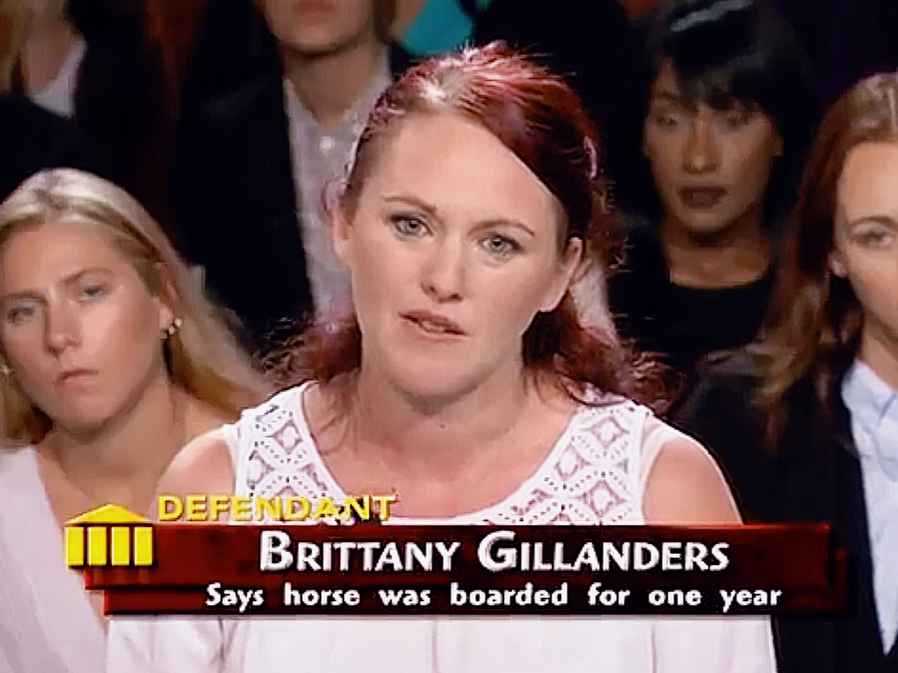
How the Horse Board Fell Into Arrears
According to King, the unpaid balance eventually reached approximately $2,500, although the amount was reduced through breaks and arrangements. Galanders’ ex-husband paid for two months in January and made a payment of $225 around the beginning of February. King said that payment did not go through the first time and required further arrangements.
The horse was removed on January 23, 2018. King testified that Galanders owed for five months and 16 days of boarding. The transcript also indicates that Galanders later acknowledged she knew in January that the boarding had not been paid, although she said she had believed her former boyfriend was handling the payments.
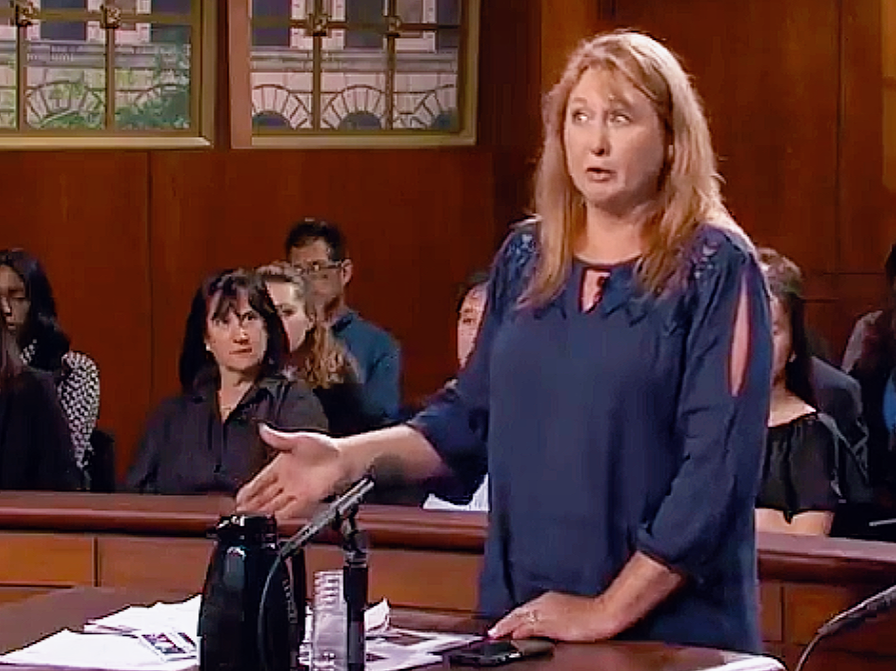
The dispute also involved two dogs. They had been boarded for 29 days at a rate of $32 per day, which would have totaled $928. King’s mother reduced that amount to $660. Galanders never paid the discounted amount. She gave the facility a check for $450, then texted that afternoon asking them not to cash it because it would bounce.
King also claimed unpaid farrier charges and extra feed costs. By the end of the hearing, Judge Judy calculated the total amount owed at $1,786.
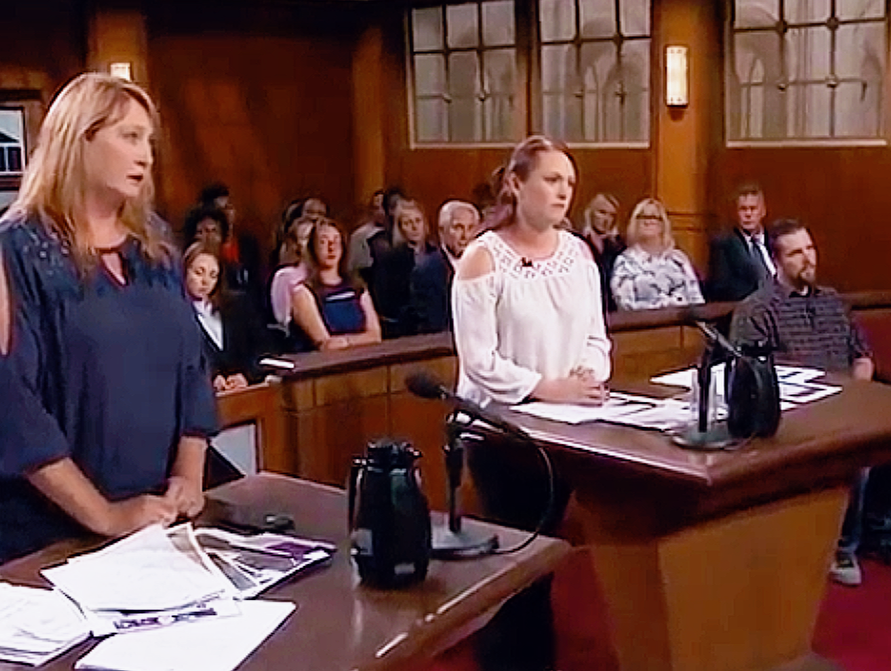
Jake’s Injury and the Fight Over Veterinary Care
The emotional center of the first case was the horse, identified in the testimony as Jake. King said the horses generally stayed outside together and were brought into individual stalls during feeding so she could monitor what each animal was eating and identify problems.
On January 14, King noticed that Jake was limping. She said she notified Galanders by text message and reported that the horse’s knee was swollen and bleeding. Galanders responded that she had started a new job and could not get to the facility until she had a day off. King said she suggested interim care and was given permission to call a veterinarian of her choice.
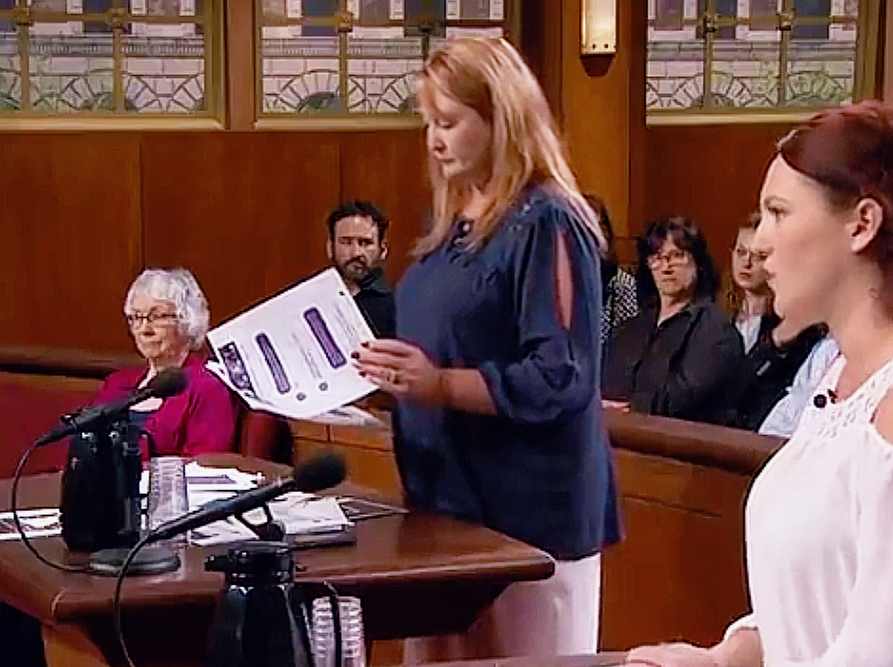
That permission became a central point of disagreement. Judge Judy questioned why King would incur a major veterinary bill for an owner who had not paid for six months. King maintained that she had been caring for the animal and that she was told veterinary care could proceed. Galanders, however, argued that the injury occurred while the horse was on King’s property and that the delay in treatment caused the condition to worsen.
King said she bandaged the injury, flushed it with Betadine, applied Neosporin, and made several calls for veterinary advice. Galanders challenged the timing and the adequacy of that response. When she later went to assess Jake, she said the leg was swollen from top to bottom, with an open, deep wound in the knee and yellow-green pus indicating infection.
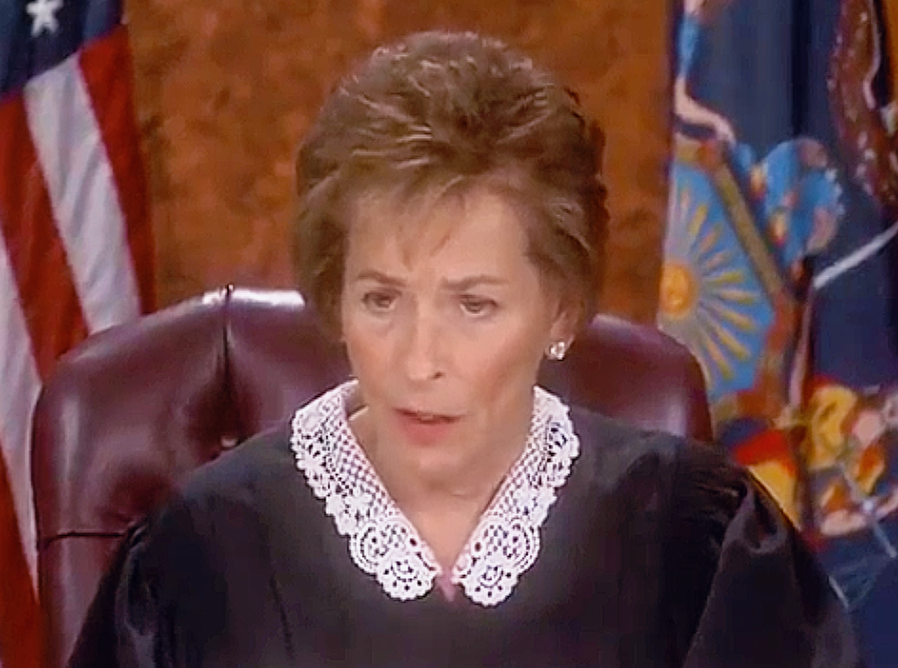
Galanders said she wanted emergency transport to an equine hospital in Nampa, Idaho. She described the facility as roughly an hour and a half to almost two hours away, depending on traffic. King said she suggested a local veterinarian only about 15 minutes away, but Galanders wanted the equine center.
The testimony differed over what happened on January 20. King testified that Galanders was in Twin Falls, roughly an hour and a half away, and did not leave until approximately 11:50 for a veterinarian scheduled to meet her at noon. King said the veterinarian did not wait. She also testified that Galanders went to a local feed store, where a veterinarian was administering vaccines for cats and dogs, and asked him to look at the horse. The testimony further indicated that the veterinarian had been waiting for Galanders, who was having lunch.
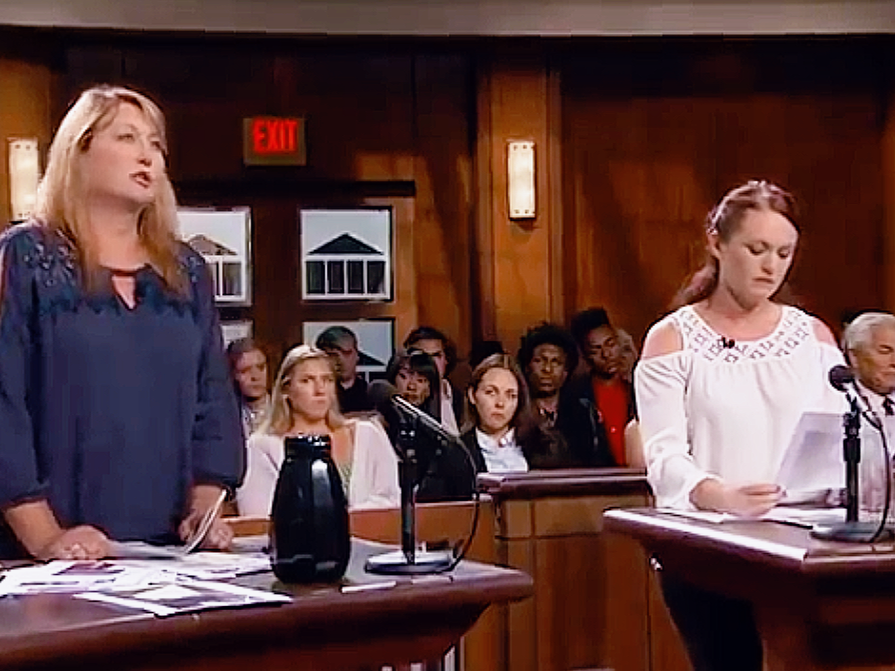
After transportation was arranged, King testified that two veterinarians recommended beginning penicillin injections. King and a friend administered shots twice a day, and King said she sent Galanders photographs showing the horse’s condition over time. Galanders and her ex-husband were present on one occasion when the injections were given.
The horse was ultimately taken to the equine hospital on January 23. Galanders later said the horse had to be put down because of negligence on the property and because the infection reached the bone. In a post-hearing statement included in the transcript, she described Jake as a $20,000 show jumper and said she had raised him since he was two days old. She blamed the loss on the delay in getting antibiotics administered. Those statements were Galanders’ allegations; the court’s ruling did not accept her counterclaim for veterinary bills.
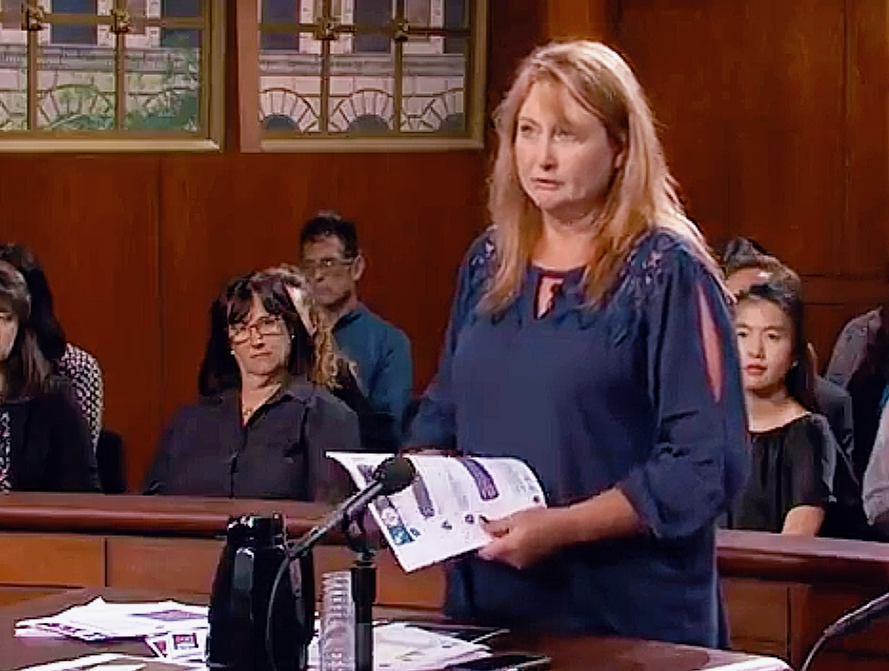
The Ruling in the Horse Case
Judge Judy’s ruling separated the emotional loss of the horse from the financial obligations established in the case. She found that Galanders owed Beverly King $1,786 for boarding, the dogs, and related costs. She dismissed Galanders’ counterclaim for veterinary bills and entered judgment for the plaintiff.
The reasoning, as reflected in the hearing, centered on the unpaid contract and the lack of persuasive proof that King was legally responsible for the veterinary expenses. Judge Judy also emphasized that King had continued feeding and caring for the horse despite the unpaid balance, and that Galanders had signed the boarding agreement.
The result left both sides dissatisfied. King received judgment for the unpaid charges. Galanders left arguing that her horse had died because treatment was delayed. The case illustrates how a small-claims decision can resolve a monetary claim without resolving every moral question surrounding the loss.
Case Two: Griffin v. McDonald
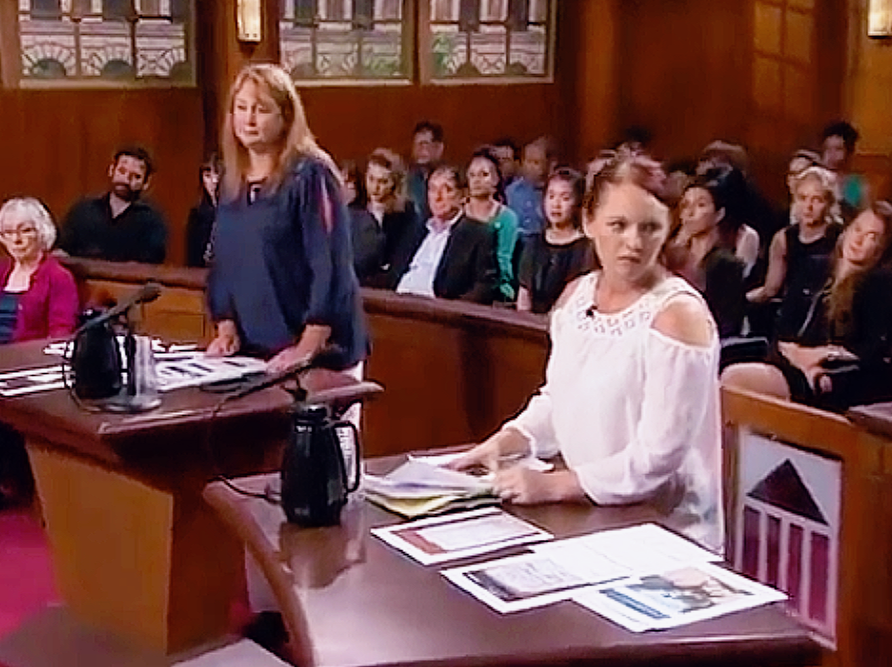
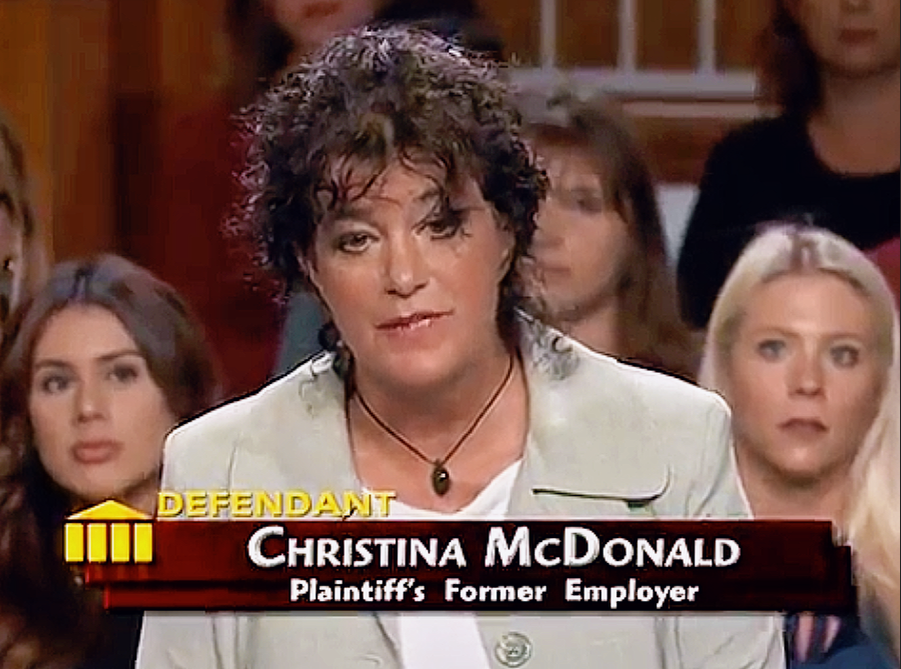
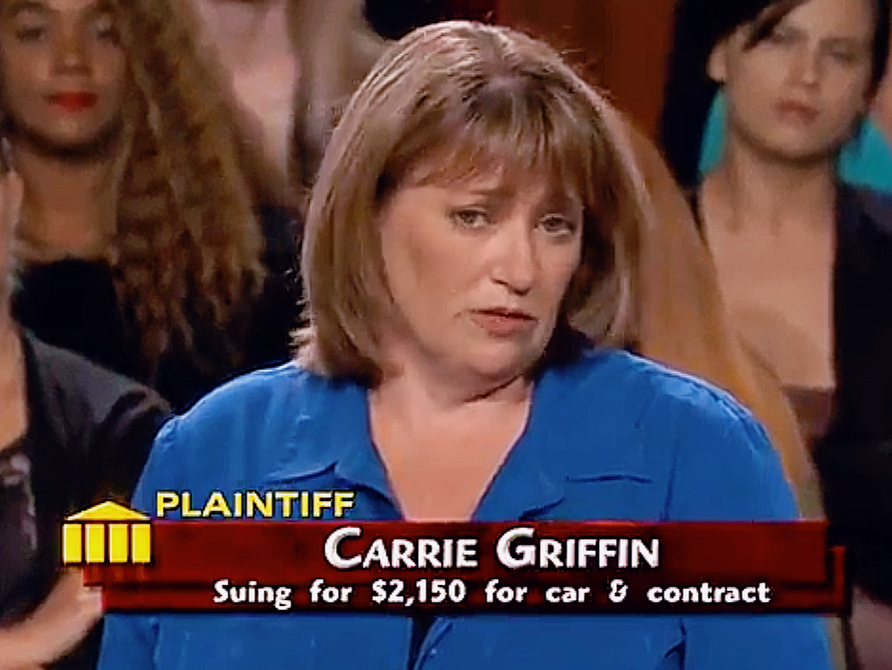
The second case involved Carrie Griffin and Christina McDonald. Griffin sued her former employer for breach of contract, the return of a car payment, rental car fees, and wrongful termination. The transcript focuses primarily on the car dispute.
McDonald owned a small restaurant and had employed a man referred to in the hearing as John. Judge Judy established that John had worked for McDonald before he was deported, approximately in February 2018. He needed a car, and McDonald found one priced at $5,000. When McDonald was asked when she bought it, the transcript records the answer “November of 2012,” followed immediately by Judge Judy’s remark “So 2017.” The exchange leaves the purchase year unclear, so the transcript does not support treating either year as definitively established.
The arrangement was not presented as a straightforward purchase. McDonald bought the vehicle in her own name, but it was intended for John. John paid $2,000 toward it. After he was taken into custody and deported, McDonald was left with a car still carrying approximately $3,000 in debt.
At some point, Griffin agreed to purchase the car for $3,000. The exact path to that agreement was disputed. McDonald said Griffin approached her, while Griffin’s position was treated as part of the broader disagreement over the transaction. Judge Judy reduced the issue to the deal itself: whatever brought the parties together, Griffin agreed to buy the car for $3,000.
Griffin paid $500. She later took control of the vehicle in March 2018. McDonald began requesting the car back on April 12, 2018. The hearing also established that McDonald had not returned John’s $2,000.
The Ruling in the Car Case
Judge Judy’s calculation was direct. McDonald had received $2,000 from John and $500 from Griffin, while retaining the car. Griffin had no car after it was repossessed, and John had no car after his deportation. The court treated the retained payment and the vehicle as evidence that McDonald had not been made whole merely by recovering the car.
The judge entered judgment for Griffin, returning her $500. The transcript does not provide a separate award for rental-car fees or wrongful termination, and the ruling described on air centers on the $500 car payment.
The case shows the danger of informal transactions layered on top of one another. The original arrangement involved an employer, an employee, a car bought in one person’s name, and money paid by another person. When John disappeared from the arrangement, the financial risk moved to McDonald. When Griffin later entered the picture, a second deal was made without a clean resolution of the first.
Two Cases, One Pattern: Promises Are Not the Same as Proof
The two hearings involve very different losses. In the first, the dispute concerned the death of a horse and the cost of caring for animals over many months. In the second, it concerned a car, several payments, and an agreement that changed as circumstances changed.
But Judge Judy returned to the same practical principles: written agreements matter, payment records matter, and a promise made by someone who is not legally responsible may not protect the person who relied on it. In King v. Galanders, the owner’s belief that a former boyfriend would pay did not erase the boarding debt. In Griffin v. McDonald, the fact that money had been paid into the car arrangement did not automatically give McDonald the right to keep both the vehicle and every payment.
The transcript does not establish every detail beyond the courtroom exchange. What it does show is how quickly informal arrangements can become legal disputes when responsibility is assumed rather than documented.
FAQ
Who sued whom in the horse boarding case?
Ranch owner Beverly King sued former client Brittany Galanders for unpaid boarding fees and related animal-care costs. Galanders countersued for veterinary expenses and emotional distress connected to her horse’s death.
How much did Brittany Galanders owe Beverly King?
Judge Judy calculated the amount at $1,786, including unpaid boarding, the two dogs’ 29-day stay, and additional charges discussed in court.
What happened to Brittany Galanders’ horse, Jake?
The testimony stated that Jake developed a limp on January 14, 2018, and later had a swollen leg and a deep infected wound. The horse was taken to an equine hospital on January 23. Galanders later said the horse had to be put down, but her counterclaim for veterinary bills was dismissed.
What was the outcome of King v. Galanders?
Judgment was entered for Beverly King for $1,786. Brittany Galanders’ counterclaim for veterinary bills was dismissed.
What was the second case about?
Carrie Griffin sued her former employer, Christina McDonald, over a disputed car transaction, including breach of contract, a car payment, rental-car fees, and wrongful termination.
How much did Carrie Griffin pay for the car?
The hearing established that Griffin paid $500 toward a deal for a car valued at $3,000. Judge Judy ordered that $500 returned to Griffin.
What was the outcome of Griffin v. McDonald?
Judge Judy entered judgment for Carrie Griffin. The ruling described in the transcript returned Griffin’s $500 payment.