The dispute began with what sounded like an ordinary Christmas mistake: a gift card worth $400 was reportedly handed to the wrong person. But by the time Minnie Sanders and Tina Edwards faced Judge Judith Scheindlin, the disagreement had grown into accusations of property damage, unwanted complaints to building management, a surveillance camera aimed toward a neighbor’s door, and a demand for peace inside a shared apartment complex. These were civil disputes presented in court, not criminal cases or findings of criminal wrongdoing.
The First Case : When Neighbors Were Also Friends
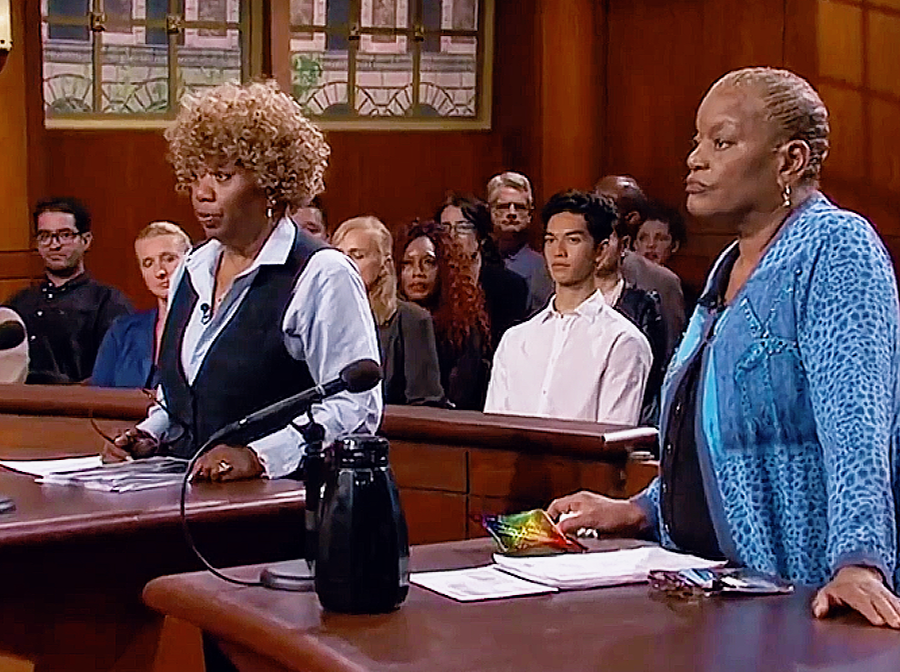
Minnie Sanders had lived in her home for nine years. Tina Edwards had been her neighbor for roughly the same length of time, having lived there for about ten years. At first, Sanders described the relationship as more than simple proximity. The two women had been friendly, and Sanders believed she was helping Edwards financially when Edwards was short on money.
That history mattered because the case was not presented as a conflict between strangers. It was a relationship that had once included trust, shared Christmas gifts, and repeated loans. Sanders told the court that she had lent Edwards money every month and that Edwards generally paid her back. Edwards acknowledged that she had borrowed money from Sanders several times before January 2018—more than three times, according to her testimony.
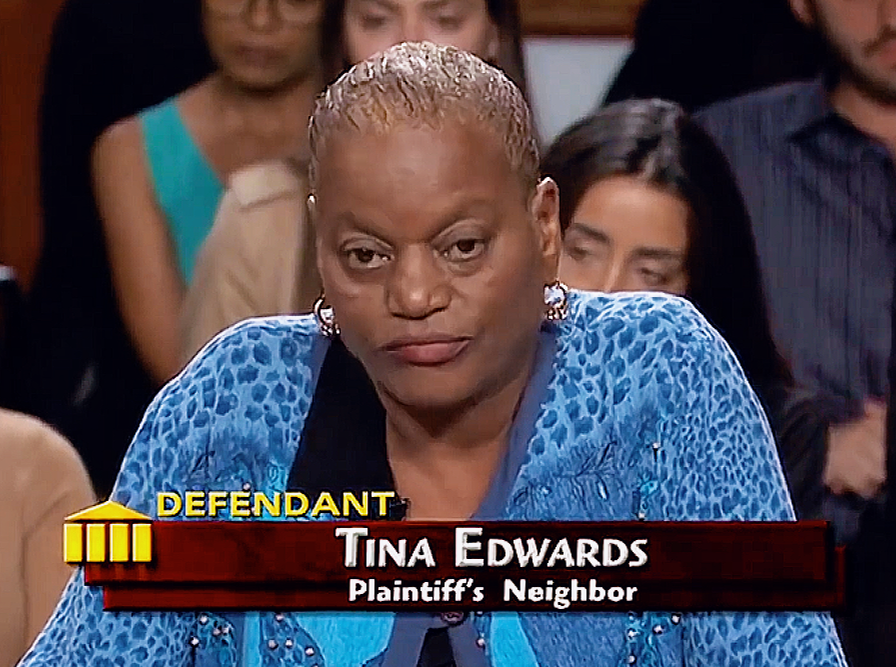
The arrangement ended when Sanders decided they would no longer conduct financial business together. In Sanders’s account, that boundary was the point at which “all the ugly stuff” began. Edwards remembered the relationship differently. She said Sanders had seemed like a nice person, but that she later believed she had seen Sanders’s “real” character.
The conflicting accounts turned a small-neighborhood disagreement into a credibility battle. Each woman presented the other as the person who had crossed the line first.

The Gift-Card Mistake That Changed the Relationship
The first major flashpoint involved Christmas in December 2017. Sanders said she purchased gift cards: one worth $100 for Edwards, a $200 card for herself, and another card worth $400. According to Sanders, she accidentally gave Edwards the $400 card instead of the $100 card.
Sanders did not immediately confront her neighbor. She said she kept the mistake to herself and watched what Edwards did next. Sanders recalled seeing Edwards purchase pink Timberland boots priced at $99, followed by other shopping that included pots, toys for grandchildren, and a toilet costing about $100. To Sanders, the spending appeared to confirm that Edwards had used the more valuable card.
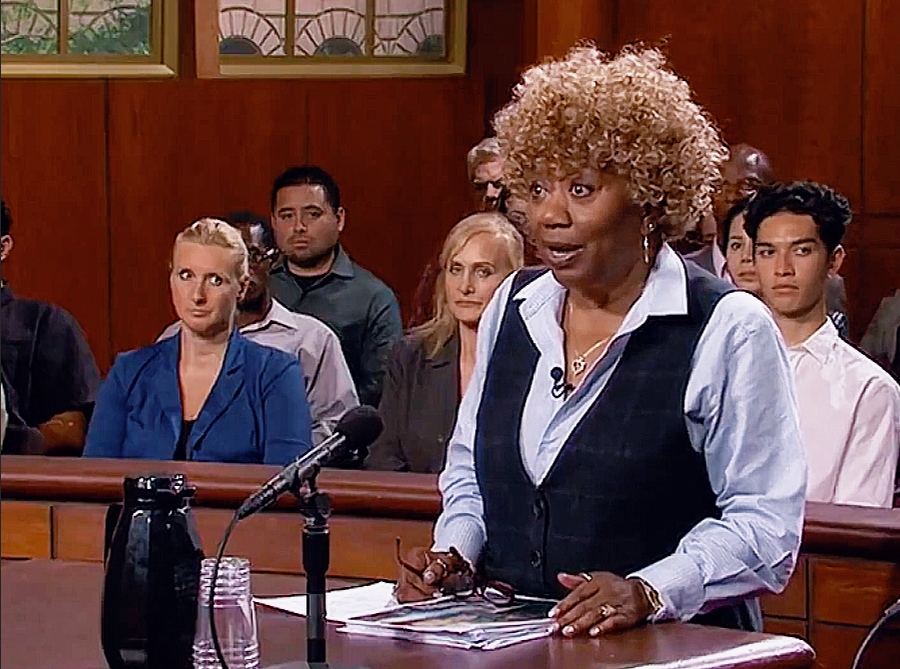
Judge Judy focused on the point Sanders had not addressed at the time: if the $100 card was still in her purse, why had she not told Edwards immediately that the wrong card had been delivered? Sanders believed Edwards had spent the more valuable card, but the transcript does not independently verify what happened to it. The judge’s questioning made clear that the failure to clarify the exchange allowed the dispute to grow.
Edwards’s account shifted during questioning. She first said Sanders had given her a $400 card and that she had returned it after Sanders explained the error. She then said Sanders had given her the $100 card. At another point, Edwards described the card as something Sanders had sold to her rather than a Christmas gift. Judge Judy repeatedly returned to the same question: what exactly had Edwards received for Christmas in 2017?
Edwards ultimately said she did not remember. The exchange left the court with two sharply different narratives and no simple way to reconstruct the private handoff from memory alone.
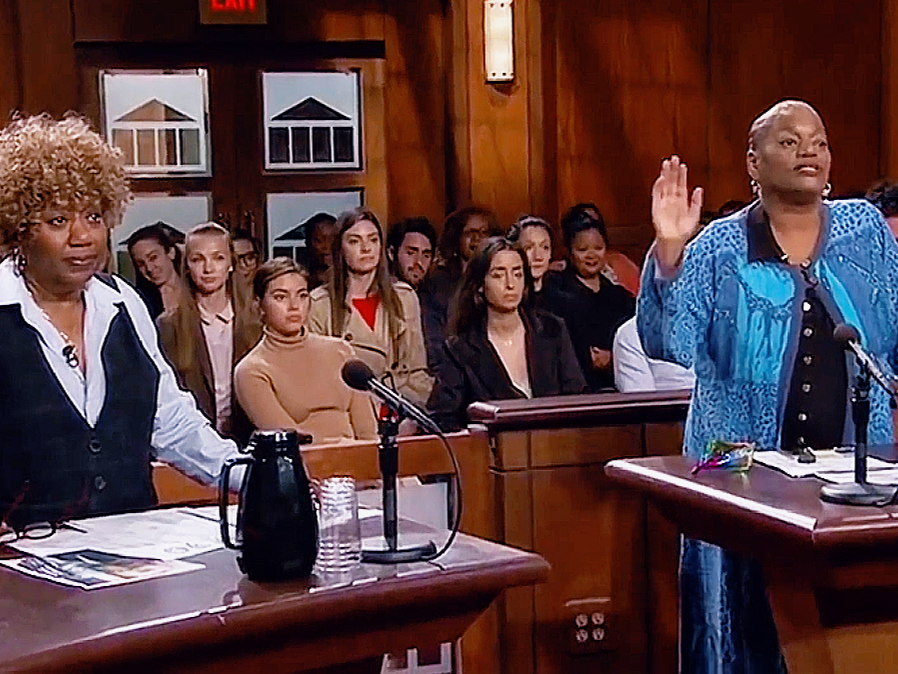
From Money Disputes to Cut-Down Decorations
The gift-card argument was only the beginning of Sanders’s broader complaint. Sanders said she had also loaned Edwards $100 to purchase a purse. When Edwards later told her the purse was counterfeit, Sanders insisted that she had not been selling a purse; she had been expecting the $100 loan to be repaid. Judge Judy moved the discussion along, treating the purse disagreement as separate from the property and harassment claims actually before the court.
The conflict then became physical—at least in the sense that objects around the homes were allegedly being altered or removed. Sanders testified that she opened her door after hearing a noise and saw Edwards cutting down outdoor hanging decorations, described in the hearing as mobiles. Sanders said she had installed an awning between the two doors to block the sun and that the decorations had been in place for five years. She also alleged that a hole had been put in her bench.
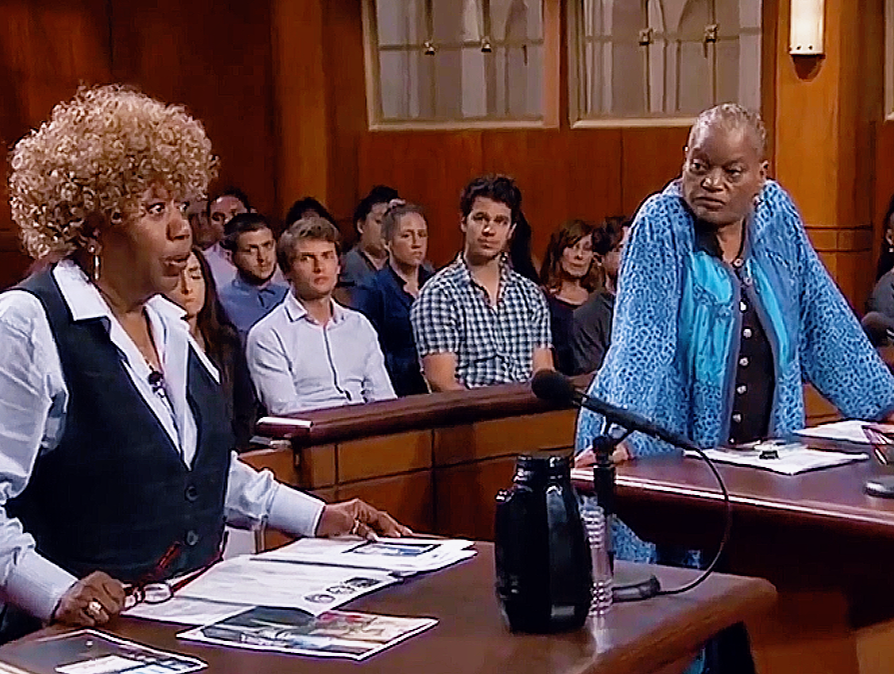
The date became another point of correction. Sanders initially referred to December, then January, and Judge Judy established that the incident had to have occurred in January 2018 because the disputed gift cards were exchanged in December 2017. Sanders said she confronted Edwards and asked what she was doing. Edwards allegedly responded that she was tired of looking at the decorations and had put up new ones.
Edwards eventually acknowledged that she had cut the decorations, although she framed the action as replacing worn or damaged items. She said she had cut them with scissors because she intended to put up new ones and later suggested she had been trying to make Sanders happy. Judge Judy did not accept the attempt to avoid a direct answer. When asked whether she had cut down Sanders’s property, Edwards’s answer was ultimately yes.
The admission established that an act had occurred, but it did not by itself establish the damages Sanders wanted the court to award. Judge Judy told Sanders that she appeared frustrated with Edwards, but that the case, as presented, was not yet persuasive as a legal claim.

The Camera, the Complaints, and the Courtroom Breakdown
After Sanders called the police, she said officers told her they could not arrest Edwards because the incident would amount to one neighbor’s word against the other’s. Sanders testified that police suggested installing a surveillance camera. She purchased one the following week and pointed it toward the area near Edwards’s door.
That decision created a new dispute. Sanders said Edwards began contacting the building owner and claiming the camera violated her privacy. Sanders acknowledged that management required her to remove it. She maintained that management had initially said the camera was acceptable, but the practical result was the same: the camera came down.
Sanders also testified that management began sending her notices to vacate because of continuing complaints from Edwards. She emphasized that she worked every day, left for work at 1:30 p.m., and did not return until midnight. She said she wanted to remain in her apartment and live peacefully, not relocate.
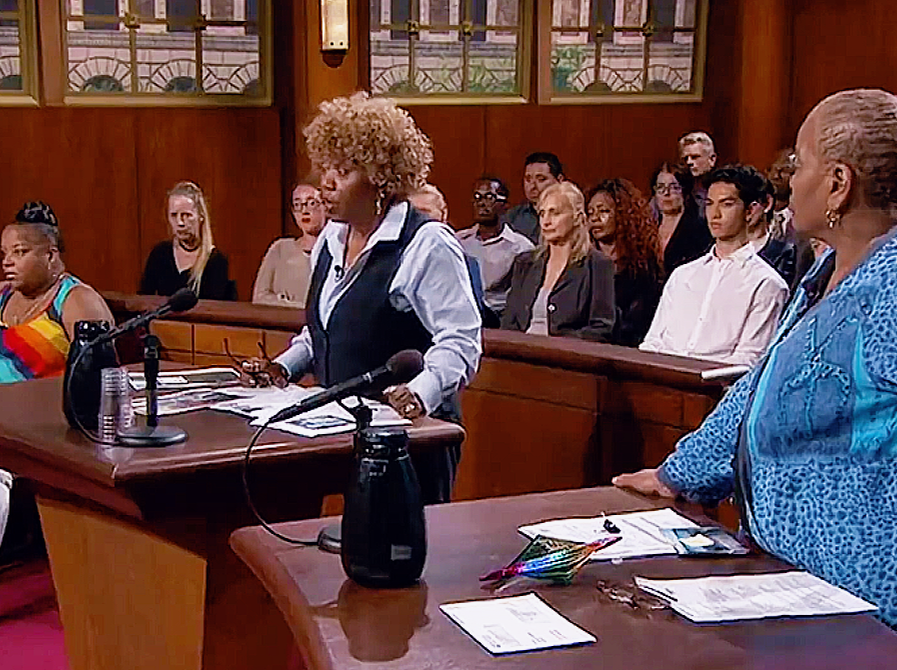
The hearing became increasingly difficult to control. Sanders described Edwards and her guests sitting near her doorway, using her furniture, and talking about her. She said she felt threatened by comments involving someone named James who might come over and remove or do something to her property. Edwards repeatedly attempted to respond, while Judge Judy interrupted both sides and insisted on short, direct answers.
At that stage, Judge Judy told Sanders to forget the gift card, the decorations, and the surveillance-camera dispute. She said Sanders had no counterclaim and that she was not seeing a legal case that justified the requested relief. The judge also acknowledged that Edwards appeared to have a bad attitude, but made clear that personal frustration was not the same as a proven legal cause of action.

Judge Judy’s Practical Answer
Judge Judy’s advice was not the resolution Sanders wanted. She told Sanders that she had no legal case against Edwards and suggested that, if living there had become unbearable, Sanders should find another apartment where she could enjoy peace in her home. Sanders objected that she did not want to move; she wanted Edwards to stop calling management and stop harassing her.
The judge then addressed Edwards directly: stop harassing Sanders through management and stop harassing her as a neighbor. The segment ended without a monetary award to Sanders being stated in the transcript. The lasting message was practical rather than punitive: even when a neighbor relationship has collapsed, accusations and anger do not substitute for evidence that supports a legal claim.
The emotional force of the case came from the distance between the women’s former relationship and their final courtroom posture. One believed years of assistance had been answered with hostility. The other believed she had been misjudged and targeted. The record preserved both accounts, but Judge Judy found that the evidence did not establish the legal remedy Sanders sought.
A Second Case: A Landlord, a Tenant, and a $1,897 Deposit
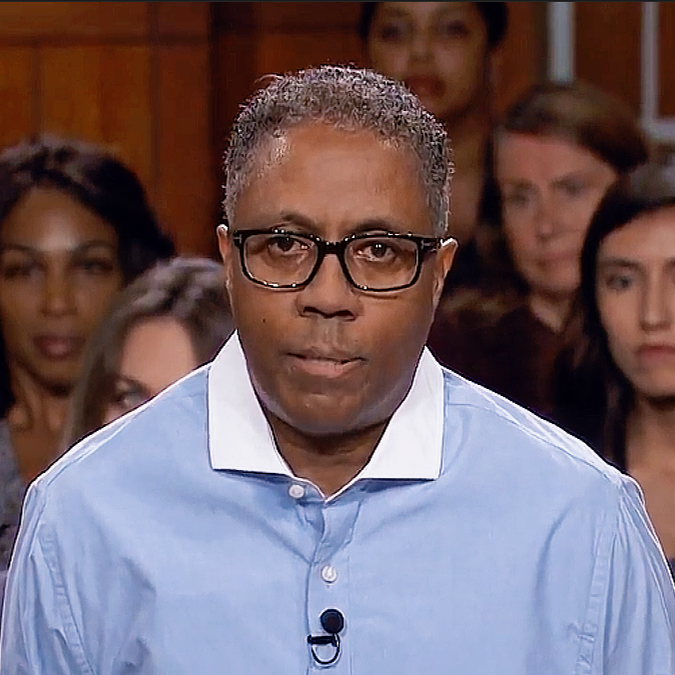
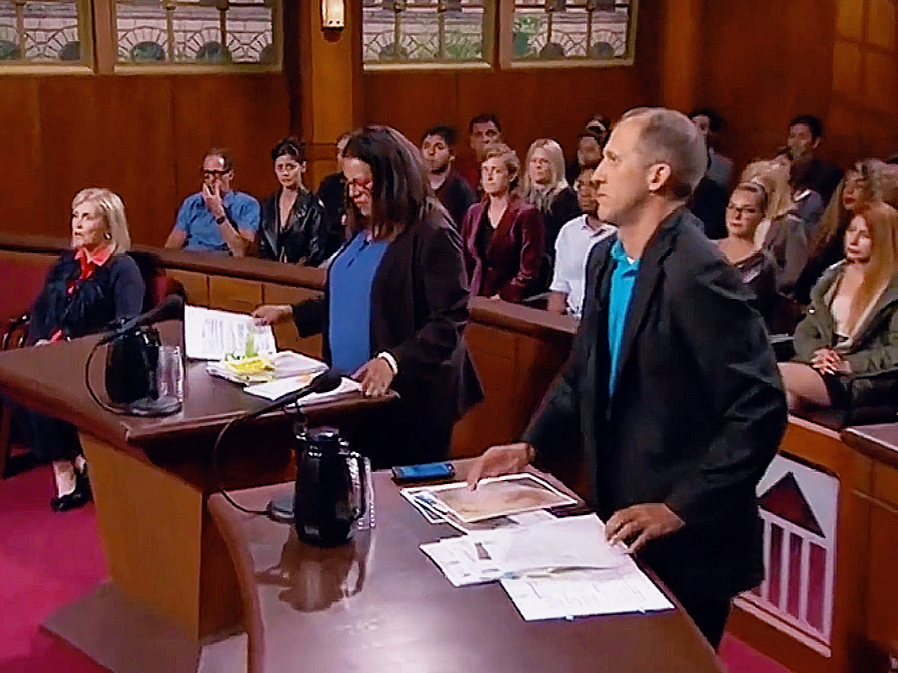
The episode then turned to a shorter dispute: Lisa Smith v. William Geis. Smith sued her former tenant for alleged vandalism, property damage, and the cost of removing junk. Geis had rented Smith’s townhouse for approximately four and a half years and moved out on September 30.
Smith said she had purchased the property for “115” and sold it in February for “360.” The transcript does not specify the currency, units, or whether the figures were abbreviated, so they should not be converted into dollar amounts without another source. Judge Judy characterized the sale as a substantial profit and told Smith she had no cause of action for the claimed property damage after selling the home. The judge said she was not considering Smith’s cleanup bills as the basis for an award.
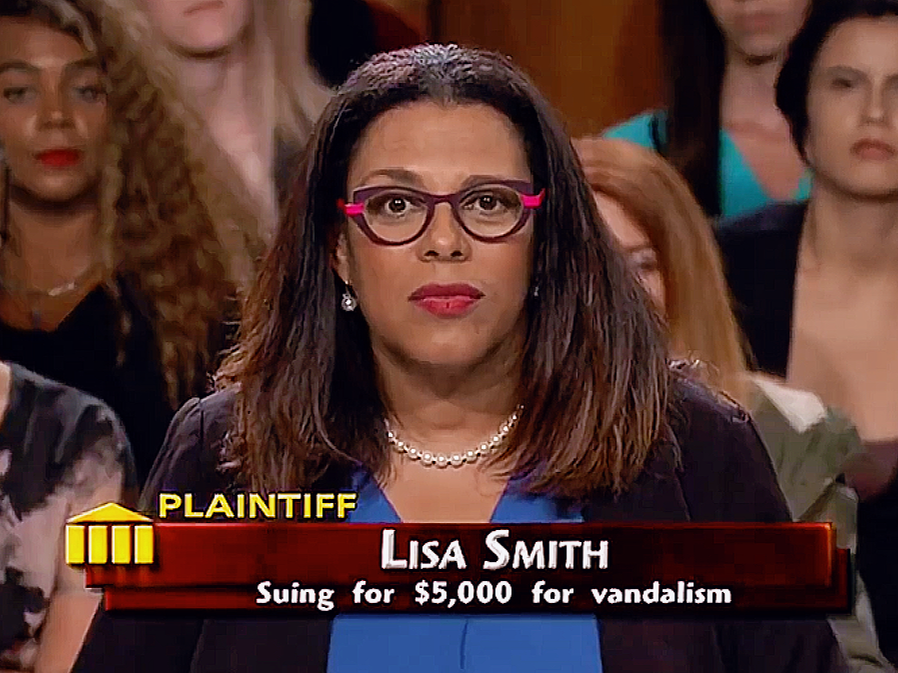
Instead, the court focused on Geis’s counterclaim for the return of his $1,897 security deposit. Geis said he had completed a walkthrough before leaving and had tried to recover the deposit. Smith disputed his account and described serious damage, including carpets that allegedly smelled strongly of dog urine. The property manager’s written finding, however, was that the carpets had been cleaned but should be replaced after four and a half years.

Judge Judy dismissed Smith’s case and told her that Geis would not be held responsible for the amount she demanded. The segment concluded with the $1,897 deposit as the central amount in Geis’s claim, followed by the judge’s instruction that the parties were finished. In a brief post-case statement attributed by the segment to Geis, he said he was satisfied with the decision and believed the deposit was due. Smith maintained that there had been tagging and damage in the home and argued that the repairs had gone beyond ordinary wear.
Together, the two cases showed different versions of a familiar courtroom problem: claims may feel compelling to the person living through them, but the court must separate personal conflict, ordinary wear, disputed memories, and legally provable loss.
FAQ
What was Minnie Sanders suing Tina Edwards for?
Sanders sued Edwards over alleged property damage, stolen items, the cost of a surveillance system, and harassment. The transcript specifically discusses a disputed gift card, cut-down decorations, a damaged bench, the surveillance camera, and complaints to building management.
How much was the disputed gift card worth?
Sanders said she accidentally gave Edwards a $400 gift card instead of a $100 gift card during Christmas in December 2017.
Did Tina Edwards admit cutting down Minnie Sanders’s decorations?
Yes. After initially describing the action as replacing old decorations, Edwards ultimately acknowledged that she cut them down with scissors.
What did Judge Judy decide in the neighbor dispute?
Judge Judy told Sanders that she had no legal case against Edwards and advised her to consider moving if she could no longer live peacefully in the apartment. She also told Edwards to stop harassing Sanders through building management.
Who was involved in the second case?
The second case was Lisa Smith v. William Geis. Smith was the former landlord, and Geis was the former tenant.
How much was William Geis’s security deposit?
The transcript identifies the security deposit as $1,897. Judge Judy dismissed Smith’s claim for damages and focused on Geis’s counterclaim for the deposit.