When the lights went out at Charmaine Ankle’s beauty workspace, the dispute quickly moved beyond unpaid rent. A landlord demanded money after Ankle left; Ankle said she had been told to pack up, and later discovered that salon property was missing. In the next case, a solar salesman admitted he was not licensed, bonded, or insured to trim trees—then faced a claim after cutting back trees connected to a homeowners association. Two civil cases, two very different settings, and one shared question: who should bear the cost when a business arrangement goes wrong?

Case One: Ankle v. Watson
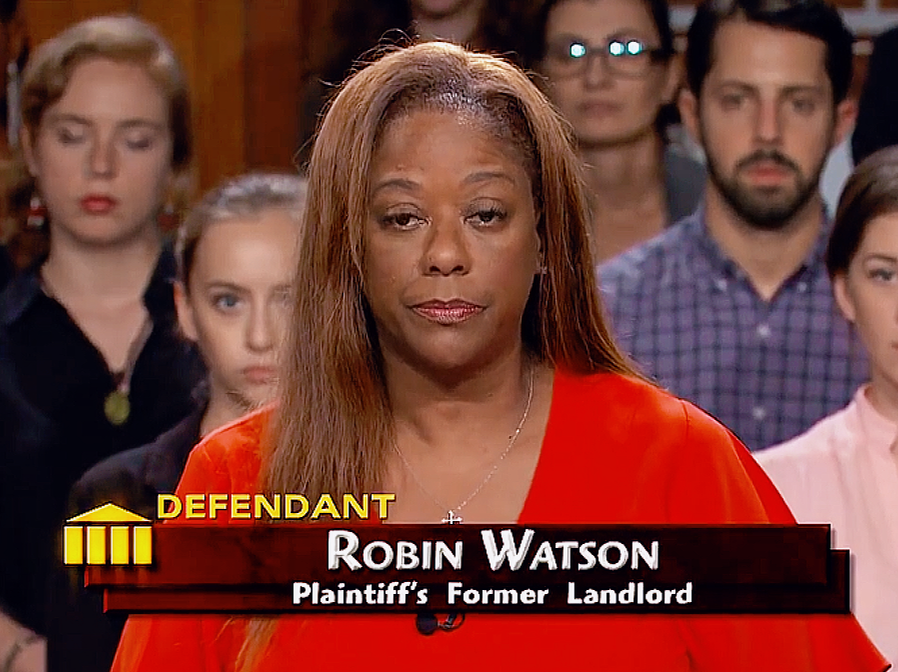
The first case began with an unusual commercial arrangement. Robin Watson rented more than 2,500 square feet and sublet smaller commercial areas. One space—approximately 300 square feet—went to hairstylist Charmaine Ankle for a beauty salon.
Ankle’s tenancy began on April 6, 2018. She said she used the salon seven days a week. Watson confirmed the business use, even though the written lease said the property could be used only as a private single-family residence. Watson acknowledged preparing the lease from an application; Ankle signed it because she wanted to begin working.

The lease problem
The document also shaped Watson’s countersuit. Watson claimed Ankle had left before the end of the lease and sought payment for the remaining year. The judge first examined whether Ankle had actually been behind on rent.
Watson initially said Ankle owed approximately $600 for April, May, June, and July. Under questioning, however, Watson clarified that Ankle had paid those months’ rent, although the payments had been late. The judge treated the key issue as whether the rent had been paid, not whether it had arrived on time. Watson ultimately confirmed that Ankle was current for those months.
The central event occurred on Friday, August 3, 2018. Ankle arrived at work and found that the salon had no lights. The building had apparently been sold, and the new owner had not placed the electricity on the new account. Whatever the reason, the practical result was the same: Ankle could not operate a beauty salon without power.
When the salon lost its electricity
The judge described the situation as a constructive eviction. Ankle had not been locked out in the traditional sense. No one had changed the locks or physically barred her from entering. But the space could no longer be used for the purpose for which it had been rented.
A salon requires more than an unlocked door. Ankle explained that she needed electricity to work with clients, including to operate equipment used to dry and style hair. Without power, the premises were effectively unusable as a salon.

Watson argued that she had not understood the legal effect of the situation and said that free rent had been offered. The judge rejected that as an answer to the countersuit. Watson was the landlord in the arrangement, and the court placed responsibility on her to understand the conditions affecting the commercial space. The judge dismissed Watson’s claim for the full remaining rent, finding that Ankle had been effectively evicted by the loss of electricity.
Ankle said that on August 3, Watson told her to pack her things and leave. Ankle took a bag, left, and called the following Monday to retrieve the rest of her belongings. At that point, she said, Watson told her that everything had been stolen.

The missing property dispute
The property Ankle described included a wall-mounted salon station, a chair, a station mat, a radio bar, and a 19-inch television. She presented a video showing how she had renovated the suite, including the earlier condition and the final appearance after additional work.
Watson disputed the account surrounding the suite. She said Ankle had originally rented suite three but moved to suite four while Watson and her son were away in Mexico. Watson placed that move on June 17 and said Ankle had not received written permission, although the parties disagreed about what had been discussed and whether there had been an agreement to pay the difference in rent.
Watson also reported that the building had been broken into. According to her testimony, there was no broken window or forced door. She believed someone with a key had entered and identified a person connected to Ankle as a suspect. The SRT refers to that person as both “Terrance” and “Terranicia” in different exchanges; the court discussion describes the person as a makeup artist and friend who had access to a suite in the building.

The judge focused on what the evidence could actually establish. Watson had filed a police report stating that property was missing, including her own belongings. That report, and the absence of forced entry, did not prove that Ankle had stolen anything or that Watson had caused the loss. The judge told Ankle that liability would require evidence of negligence by Watson or proof that Watson had taken the property herself.
Ankle did not claim that she had witnessed Watson stealing the items. Instead, she argued that the dispute began when she returned for her belongings and learned that they were gone. The judge did not find that enough to make Watson responsible for the burglary or the missing property.
Ankle did establish a narrower financial claim. She had paid $125 for a week of rent, with a Cash App receipt dated July 31. The payment covered the period through August 6, but the salon had become unusable that weekend. The judge awarded Ankle the $125 because she could not work during the paid period.

The judgment in the first case
The outcome divided the issues rather than treating the entire dispute as one accusation. Watson’s countersuit for the remaining lease payments was dismissed because the lack of electricity had effectively prevented Ankle from operating the salon. Ankle did not recover for the missing property because the record did not show that Watson had stolen it or was legally responsible for the break-in.
She did recover the $125 rent payment for the period in which she could not work. The judgment was for the plaintiff, and the parties were excused.
Afterward, Watson said she believed Ankle had broken into her own salon and taken property, while Ankle said she had lost clients during the disruption. Those post-hearing statements reflected the continuing hostility between the parties, but the court’s ruling remained narrower: it resolved the rent issue without assigning responsibility for the reported theft.

Case Two: Loyola v. Cranny
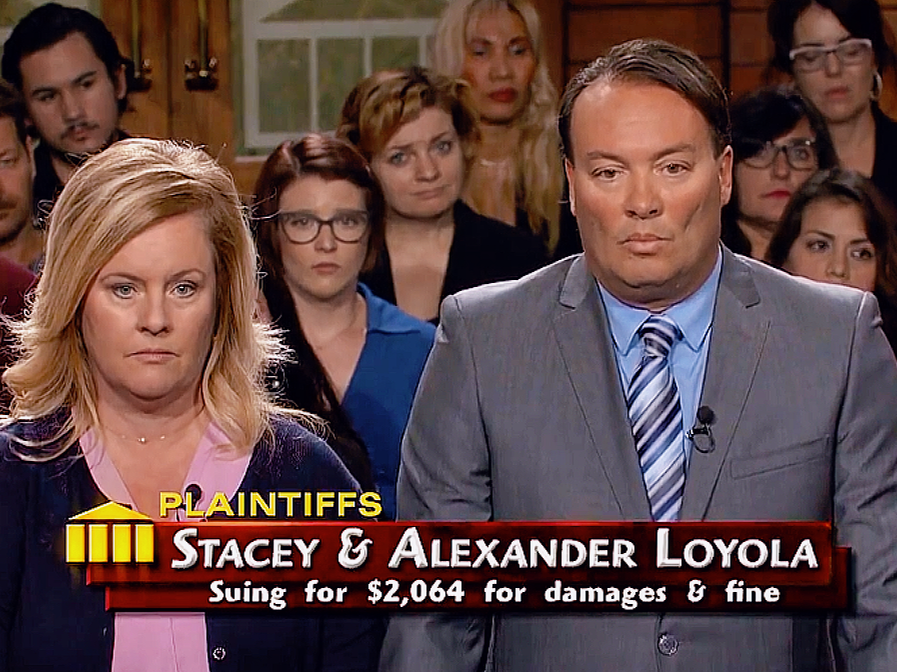
The second case involved Alexander and Stacy Loyola, who sued solar-panel salesman John Cranny for damages after he trimmed trees at their property in connection with a proposed solar installation.
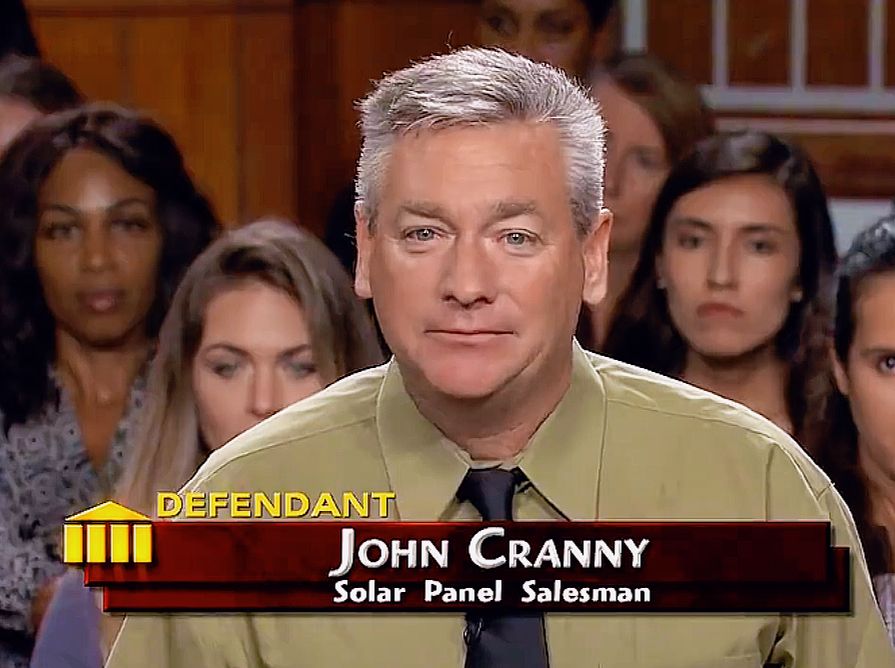
Cranny testified that he worked as a 1099 salesperson for DeLion Electrical Contractors, Freedom Solar, and other solar companies. He had been selling solar since 2012 and did not yet have his own company. The judge pressed him on a basic question: when had he become a tree trimmer?
Cranny said he had been trimming trees since he was about 12 years old, when he was old enough to climb. But he also acknowledged that he was not licensed, bonded, or insured for tree trimming or tree removal. His explanation was that he did not generally work as a tree trimmer; he only cut branches when necessary to make a solar installation possible and allow sunlight to reach the roof.
The tree-trimming agreement
Cranny had been referred to the Loyolas because they were interested in solar panels. He told them that some trees needed to be trimmed before the panels could be installed and said he would charge $500 for that work, in addition to the commission he expected from selling the panels.
He accepted that he had damaged a fence while trimming and later repaired it. The Loyolas described additional damage: a neighbor’s trellis, a sprinkler pipe, and a sprinkler head. The more significant allegation involved trees that the homeowners association, rather than the Loyolas, controlled.
According to the testimony, Cranny trimmed trees he was not supposed to cut. The homeowners association then fined the Loyolas and required action concerning the damaged tree. Cranny acknowledged that the disputed trimming and resulting fine were why the parties were in court.
The photographs and the HOA bill
The judge examined photographs of the property and asked to see what had been cut. The evidence included a eucalyptus tree and images taken before and after the trimming. The Loyolas did not have every requested photograph, but Cranny had photographs showing the trees before the work.
One image became particularly important. The judge asked Cranny to identify the trees he had been asked to trim and the homeowners association’s trees. When the judge examined the tree at the Loyola home, Cranny explained that he had removed approximately ten feet from the top because it shaded the roof. He said he did not think anyone would mind because the tree’s effect on the house would be reduced.
The judge disagreed sharply with his assessment. A tree cut flat across the top, the judge said, could look as though its head had been removed. When Cranny presented an image of the result and said he had not finished, the judge called the appearance “absolutely outrageous.”

The financial evidence was more concrete than the disagreement over aesthetics. Cranny had paid Stacy Loyola $250. The homeowners association’s bill for cutting down the damaged tree was $1,450. Stacy also presented a letter from the association and an email from a former HOA manager stating that Cranny was responsible for the other costs.
The Loyolas did not have photographs proving the alleged sprinkler damage, so that part of the claim was not supported in the same way. The court nevertheless found sufficient evidence for the main damages associated with the tree work and the association’s charge.
The judgment in the second case
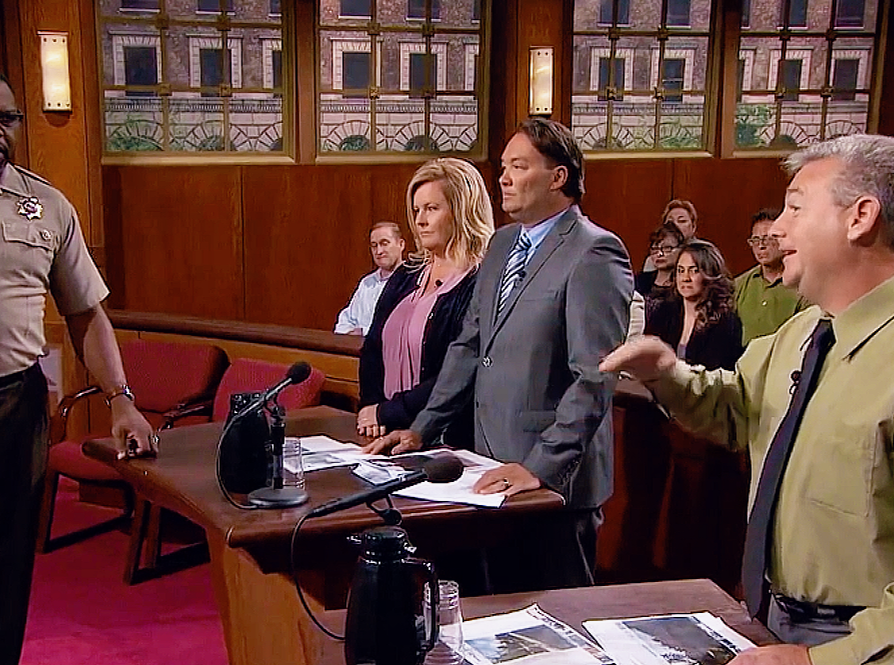
Judge Judy awarded the Loyolas $1,650 and entered judgment for the plaintiffs. The transcript discusses the $1,450 homeowners association bill and the $250 payment, but does not provide a separate itemized calculation for the final figure. The judgment is therefore reported as the total announced in court: $1,650.
The case did not turn on whether solar energy was worthwhile. It turned on authorization, professional responsibility, and the consequences of cutting property without the proper qualifications or clear limits. Cranny’s work was connected to a solar sale, but the court treated the tree damage as a separate obligation requiring accountability.
Two disputes, one courtroom lesson
The two cases involved different kinds of property and different kinds of loss. Charmaine Ankle’s salon became unusable when the electricity disappeared, but the court did not automatically hold Robin Watson responsible for property reported stolen later. Alexander and Stacy Loyola, by contrast, presented a direct chain between John Cranny’s admitted tree work, the disputed trimming, and the homeowners association’s bill.
In both cases, Judge Judy separated suspicion from proof. A landlord’s belief about a break-in was not enough to establish liability. A contractor’s belief that a homeowner would not mind a severe trim did not replace permission or competent work. The decisions were grounded in what the evidence supported—and no more.
FAQ
What was Ankle v. Watson about?
Charmaine Ankle sued Robin Watson over rent, a security deposit, and property she said was damaged or stolen after she left a rented beauty-salon workspace. Watson countersued for the remaining lease rent.
Why was Robin Watson’s countersuit dismissed?
The court found that the loss of electricity prevented Ankle from operating the commercial salon. Judge Judy described this as a constructive eviction and dismissed Watson’s claim for the remaining lease payments.
Did Charmaine Ankle win compensation for the missing salon property?
Not on the evidence presented in the SRT. The court did not find proof that Watson stole the property or was legally responsible for the break-in. Ankle did receive $125 for rent covering a period when she could not work.
Who won Loyola v. Cranny?
Alexander and Stacy Loyola won. Judge Judy awarded them $1,650 for the tree-related damages discussed in court.
Was John Cranny licensed or insured for tree trimming?
No. Cranny acknowledged that he was not licensed, bonded, or insured for tree trimming, although he said he only trimmed branches when needed for solar work.
What happened to the trees in the Loyola case?
Cranny said he removed about ten feet from the top of one tree because it shaded the roof. The court also heard that trees associated with the homeowners association were trimmed and that the Loyolas received a $1,450 HOA bill.